Author: Syarif Muhamad

  • Influential Black descent Individuals: The Top 10 Names to Know

    Influential Black descent Individuals: The Top 10 Names to Know

    Black descent ethnicity has produced a wealth of talented and influential individuals who have made significant contributions to various fields. Here are 10 of the most popular celebrities and notable people from Black descent ethnicity:

    • Barack Obama: The 44th President of the United States, Barack Obama made history as the first African-American president of the country. He served two terms in office from 2009 to 2017, during which he signed landmark legislation such as the Affordable Care Act and the Dodd-Frank Wall Street Reform and Consumer Protection Act. Obama is known for his charisma, oratory skills, and commitment to social justice.
    • Beyoncé: A multi-talented singer, songwriter, dancer, and actress, Beyoncé is one of the most successful and influential artists of all time. She has won numerous awards, including 32 Grammy Awards, and has sold over 200 million records worldwide. Beyoncé is known for her powerful stage presence, her advocacy for social causes, and her commitment to empowering women.
    • Oprah Winfrey: A talk show host, television producer, actress, and philanthropist, Oprah Winfrey is one of the most iconic figures in American media. Her talk show, “The Oprah Winfrey Show,” aired for 25 seasons and became one of the most popular daytime talk shows in history. Winfrey is known for her philanthropy, her work to empower women, and her commitment to social justice.
    • Muhammad Ali: A three-time heavyweight boxing world champion, Muhammad Ali is considered one of the greatest boxers of all time. He is known for his quick footwork, his powerful punches, and his outspoken personality. Ali was also a social activist and a vocal opponent of the Vietnam War. He is remembered as a symbol of courage, resilience, and determination.
    • Nelson Mandela: A former president of South Africa, Nelson Mandela is widely regarded as one of the most influential leaders of the 20th century. He spent 27 years in prison for his anti-apartheid activism, and upon his release, he became the first black president of South Africa. Mandela is known for his commitment to reconciliation, his leadership during the transition to democracy, and his work to promote peace and justice.
    • Michael Jackson: A singer, songwriter, dancer, and entertainer, Michael Jackson is one of the most popular and influential music artists of all time. He is known for his innovative music videos, his energetic stage performances, and his groundbreaking albums, such as “Thriller” and “Bad.” Jackson is also known for his humanitarian work and his commitment to social justice.
    • Martin Luther King Jr.: A Baptist minister and civil rights activist, Martin Luther King Jr. is considered one of the most important figures in the American civil rights movement. He led nonviolent protests against segregation and discrimination, and he is remembered for his powerful speeches, such as “I Have a Dream.” King was assassinated in 1968, but his legacy continues to inspire people around the world.
    • Shirley Chisholm: A politician and activist, Shirley Chisholm was the first African-American woman elected to Congress in 1968. She represented New York in the House of Representatives for 12 years, and she was a vocal advocate for civil rights, women’s rights, and economic justice. Chisholm was also the first African-American woman to run for president of the United States in 1972.
    • Maya Angelou: A poet, memoirist, actress, and civil rights activist, Maya Angelou is one of the most important literary figures of the 20th century. She is best known for her autobiographical works, such as “I Know Why the Caged Bird Sings,” and her powerful poetry, which often explored themes of identity, race, and resilience. Angelou was also a vocal advocate for social justice and a mentor to many young writers.
    • James Baldwin: A novelist, essayist, playwright, and civil rights activist, James Baldwin is one of the most important literary figures of the 20th century. His works explore themes of race, sexuality, and identity, and he is known for his powerful and unflinching writing style. Baldwin was also a vocal advocate for social justice and a mentor to many young writers.

    Most Famous Black descent People

    Black descent Mystique: Unraveling Three Key Historical Legacies

    The Black descent community, also known as the African and African diaspora community, is a diverse group with a rich and complex heritage. This community consists of people who are descended from the African continent, whether through the transatlantic slave trade, colonialism, or voluntary migration. Over the years, this community has made significant contributions to various aspects of society, including art, culture, science, and politics. Here are three of the most well-known historical inheritances associated with the Black descent heritage:

    1. African Traditional Religion: One of the oldest and most enduring aspects of African and African diaspora heritage is the practice of traditional religions. These religions are rooted in the indigenous beliefs and customs of various African cultures, and they have been preserved and adapted by communities around the world. African traditional religions emphasize the concept of a Supreme Being, the power of ancestors, and the spiritual significance of nature. They often involve rituals, ceremonies, and the veneration of sacred objects and places. Today, African traditional religions continue to be practiced alongside other religious traditions in many Black descent communities.

    2. African Diaspora Music: Another significant aspect of Black descent heritage is the rich musical traditions that have been carried across the African diaspora. From the rhythms of West African drumming to the soulful melodies of African American gospel, these musical styles have had a profound influence on global music. African diaspora music has served as a means of cultural expression, storytelling, and resistance against oppression. It has also been a source of joy, inspiration, and healing for individuals and communities. Today, African diaspora music continues to thrive in various genres, including reggae, jazz, hip-hop, and Afrobeat.

    3. African American Civil Rights Movement: One of the most significant historical inheritances associated with the Black descent community is the African American Civil Rights Movement. This movement emerged in the mid-20th century as a response to the systemic racism and discrimination faced by African Americans in the United States. Led by influential figures such as Martin Luther King Jr., Rosa Parks, and Malcolm X, the Civil Rights Movement fought for equality, justice, and the end of racial segregation. Through acts of nonviolent protest, advocacy, and legal battles, the movement paved the way for significant societal changes, including the Civil Rights Act of 1964 and the Voting Rights Act of 1965.

    • African traditional religion
    • African diaspora music
    • African American Civil Rights Movement

    In a striking celebration of diversity, numerous prominent individuals proudly reflect a mosaic of Polynesian, Cook Island Maori and Makaa roots, highlighting the intricate interplay of cultures within their heritage. From accomplished leaders to acclaimed artists, these figures embody the rich lexical semantic tapestry of ethnic backgrounds, illustrating the vibrant spectrum of human experiences.

    Ethnic Factsheet: The Black descent People

    table { border-collapse: collapse; width: 100%; }

    th, td { text-align: left; padding: 8px; }

    tr:nth-child(even){background-color: #f2f2f2}

    th { background-color: #4CAF50; color: white; }

    Fact Data
    Population Approximately 1.3 billion worldwide
    Top Countries with Black Population
    • Nigeria – 214 million
    • Ethiopia – 114 million
    • Democratic Republic of the Congo – 87 million
    • South Africa – 59 million
    • Tanzania – 58 million
    Distribution Concentrated in Sub-Saharan Africa, with significant populations in North America, South America, Europe, and the Caribbean
    Language Diverse languages spoken including English, French, Portuguese, Spanish, Swahili, Yoruba, Hausa, and many more
    Religion Varied religious beliefs including Christianity, Islam, Traditional African Religions, and others
    Cultural Contributions African music, art, dance, literature, cuisine, and fashion have had significant influence worldwide

    The Ancient Heritage of Black descent Ethnic Groups

    Black descent Ethnicity: References and Resources

    References and resources to dig deeper about the Black descent ethnic group:

    • Books:
      • Black Reconstruction in America 1860-1880 by W.E.B. Du Bois: This book provides a comprehensive analysis of the contributions and achievements of Black Americans during the Reconstruction era.
      • The Souls of Black Folk by W.E.B. Du Bois: A classic work of sociology and African American literature, this book explores the experiences and perspectives of Black Americans in the post-Civil War era.
      • The Warmth of Other Suns: The Epic Story of America’s Great Migration by Isabel Wilkerson: This book tells the story of the Great Migration, a significant period of demographic and cultural change where millions of Black Americans moved from the southern states to northern and western cities.
    • Documentaries and Films:
      • 13th (2016): Directed by Ava DuVernay, this documentary explores the intersection of race, justice, and mass incarceration in the United States, highlighting the disproportionate impact on Black communities.
      • I Am Not Your Negro (2016): Based on James Baldwin’s unfinished manuscript, this documentary offers a powerful examination of race in America through the lens of Baldwin’s writings and archival footage.
      • 4 Little Girls (1997): Directed by Spike Lee, this documentary delves into the 1963 Birmingham church bombing, which took the lives of four young Black girls and became a pivotal moment in the Civil Rights Movement.
    • Online Resources:

    We have reached the end of our exploration into the extraordinary lives of prominent Black descent. We hope this journey has been enlightening and inspiring.
  • Influential Polynesian Individuals: The Top 10 Names to Know

    Influential Polynesian Individuals: The Top 10 Names to Know

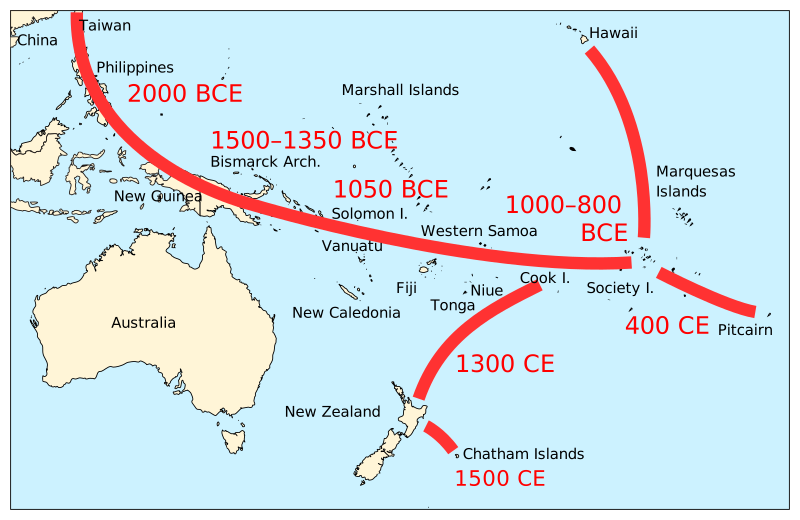
    Polynesia, a vast region of the Pacific Ocean, is home to a vibrant and diverse tapestry of cultures and people. Throughout history, numerous individuals of Polynesian descent have garnered recognition and admiration in various fields, from sports and entertainment to politics and academia. Here are ten of the most popular celebrities and notable people of Polynesian ethnicity:

    • Dwayne “The Rock” Johnson (Samoan-African American): A renowned actor, producer, and former professional wrestler, Johnson has become a global icon, starring in action-packed films such as the Fast and Furious franchise and Jumanji.
    • Jason Momoa (Hawaiian): Momoa is an acclaimed actor known for his portrayal of Aquaman in the DC Extended Universe and his captivating performances in series like Game of Thrones and See.
    • Keanu Reeves (Chinese-Hawaiian): Reeves is a beloved actor who gained fame for his roles in The Matrix trilogy, Speed, and John Wick. His enigmatic persona and exceptional acting skills have earned him a dedicated fan base.
    • Jonah Lomu (Tongan): Lomu is widely regarded as one of the greatest rugby players of all time. His exceptional speed, power, and agility revolutionized the sport during his tenure with the All Blacks.
    • Israel Folau (Tongan-Australian): Folau is a former rugby player who represented both Australia and Tonga internationally. He made headlines for his controversial religious views, which led to his dismissal from professional rugby.
    • Nancy Pelosi (Italian-American-Samoan): Pelosi served as the first female Speaker of the United States House of Representatives. Her political career spans over three decades, during which she has advocated for progressive policies and women’s rights.
    • P.J. O’Rourke (Irish-American-Samoan): O’Rourke was a renowned political satirist, journalist, and author. His sharp wit and provocative writings earned him a devoted following among conservatives and libertarians.
    • Robert Louis Stevenson (Scottish-Samoan): Stevenson was a celebrated 19th-century author best known for classic novels such as Treasure Island, The Strange Case of Dr. Jekyll and Mr. Hyde, and Kidnapped.
    • Jack Johnson (African American-Samoan): Johnson was a legendary boxer who became the first African American heavyweight world champion in 1908. His remarkable career was marked by controversy and racial prejudice.
    • Duke Kahanamoku (Hawaiian): Kahanamoku is regarded as the father of modern surfing. He won multiple Olympic medals in swimming and popularized the sport of surfing worldwide.

    Most Famous Polynesian People

    Polynesian Mystique: Unraveling Three Key Historical Legacies

    The Polynesian community is a vibrant and diverse group of people spread across the Pacific Islands. With a rich history and unique culture, the Polynesians have left a lasting impact on the world. From their seafaring skills to their captivating oral traditions, here are three of the most well-known historical inheritances associated with the Polynesian heritage.

    • Wayfinding and Navigation: Polynesians are renowned for their exceptional navigational abilities. Using only the stars, currents, and other natural signs, they were able to traverse vast distances across the ocean. By observing the positions of celestial bodies and the behaviors of marine life, they could accurately navigate their canoes to discover new islands and explore uncharted territory.
    • Tattoo Artistry: Polynesians have a long-standing tradition of tattooing and body art. This ancient practice served as a means of expressing one’s identity, telling stories, and symbolizing important life events. Each design had its own significance and could demonstrate a person’s status within the community. Polynesian tattoos are characterized by intricate patterns of symbols and motifs, such as waves, sharks, and turtles, which hold deep cultural and spiritual meanings.
    • Oral Traditions: The Polynesians have an extraordinary oral tradition that has been passed down through generations. Their storytelling encompasses myths, legends, and genealogies that are integral to their cultural identity. These narratives are ingrained with moral lessons, historical accounts, and cultural values. Through their captivating storytelling techniques, the Polynesians have preserved their heritage and ensured that their knowledge is carried forward to future generations.

    The Polynesian community’s wayfinding and navigation skills, tattoo artistry, and oral traditions are just a glimpse into the depth and richness of their culture. These inheritances have shaped the Polynesians’ unique identity and contributed to their significant influence in the Pacific region.

    In a striking celebration of diversity, numerous prominent individuals proudly reflect a mosaic of Cook Island Maori, Makaa and Oubanguiens roots, highlighting the intricate interplay of cultures within their heritage. From accomplished leaders to acclaimed artists, these figures embody the rich lexical semantic tapestry of ethnic backgrounds, illustrating the vibrant spectrum of human experiences.

    Ethnic Factsheet: The Polynesian People

    Country/Territory Population Percentage of Total Population
    New Zealand 775,836 16.5%
    Samoa 197,097 98.3%
    American Samoa 55,212 92.8%
    Tonga 108,020 96.6%
    Fiji 88,425 6.2%

    The Ancient Heritage of Polynesian Ethnic Groups

    Polynesian Ethnicity: References and Resources

    The Polynesian ethnic group is a collection of different cultures and people who share similar ancestry and geographic origins. They are indigenous to the Polynesian Triangle, which encompasses the islands of Hawaii, New Zealand, Samoa, Tonga, and Fiji, among others. To delve deeper into the history, culture, and traditions of the Polynesian people, here are some references and resources to explore:

    • “The Polynesian Triangle: An Ethnographic Atlas” by David Stanley: This book provides a comprehensive and visually engaging exploration of the Polynesian Triangle, including details about the different islands, their unique cultural practices, and the history of their settlement.
    • “Polynesia: The Mark and Carolyn Blackburn Collection of Polynesian Art” by Adrienne L. Kaeppler and Douglas Newton: This book showcases the impressive collection of Polynesian art in the Mark and Carolyn Blackburn Collection, offering a closer look at the aesthetics, symbolism, and craftsmanship of Polynesian artifacts.
    • National Museum of Samoa: The National Museum of Samoa houses an extensive collection of artifacts and exhibits that highlight the history, culture, and traditional practices of the Samoan people. Their website provides valuable information and resources for further exploration.
    • Te Papa Tongarewa: Located in Wellington, New Zealand, Te Papa Tongarewa is the country’s national museum and a hub for exploring New Zealand’s diverse cultures, including its Polynesian heritage. Their rich collection of artifacts, exhibitions, and online resources offer insights into the Māori and Pacific Islander cultures.
    • University of Hawaii at Manoa, Kamakakūokalani Center for Hawaiian Studies: The university’s Kamakakūokalani Center for Hawaiian Studies provides academic research, programs, and resources focused on Hawaiian language, culture, and indigenous knowledge. Their website is a valuable source of information on Hawaiian history and traditions.

    These references and resources offer a starting point for learning more about the Polynesian people and their diverse cultures. Whether you are interested in their ancient seafaring traditions, tattoo artistry, or contemporary music and dance, exploring these materials will deepen your understanding and appreciation of this vibrant ethnic group.

    We have reached the end of our exploration into the extraordinary lives of prominent Polynesian. We hope this journey has been enlightening and inspiring.

  • Cook Island Maori Leaders and Icons: The Top 10 Notable Personalities

    Cook Island Maori Leaders and Icons: The Top 10 Notable Personalities

    The Cook Islands, a self-governing island country in the South Pacific, is home to a vibrant and diverse population, including many notable individuals who have made significant contributions to various fields. Here are 10 of the most popular celebrities and notable people from Cook Island Maori ethnicity:

    1. Sir Geoffrey Henry, GNZM, KNZM (1940-2012): Sir Geoffrey was a renowned Cook Islands politician who served as Prime Minister from 1983 to 1989 and again from 1999 to 2002. He was known for his strong leadership and commitment to the development of the Cook Islands.

    2. Sir Terepai Maoate, KBE (1934-2012): Sir Terepai was a politician and diplomat who served as Prime Minister of the Cook Islands from 1978 to 1983 and again from 1987 to 1989. He was also the country’s first Governor-General from 1984 to 1990.

    3. Dr. Tom Davis (1941-2013): Dr. Davis was a prominent Cook Islands academic and politician who served as Prime Minister from 1999 to 2002. He was also a professor of political science at the University of the South Pacific and the author of several books on Cook Islands history and politics.

    4. Dr. Joseph Williams (1934-2020): Dr. Williams was a renowned Cook Islands educator and politician who served as Prime Minister from 1999 to 2002. He was also a professor of education at the University of the South Pacific and the author of several books on Cook Islands history and culture.

    5. Robert Wycliffe Makea Vainokona (1946-2016): Robert Makea Vainokona was a professional rugby league footballer who represented the Cook Islands in international competition. He was also a politician and served as the Speaker of the Cook Islands Parliament from 2010 to 2016.

    6. Sonny Bill Williams (born 1985): Sonny Bill Williams is a professional rugby league and rugby union footballer who has represented both New Zealand and the Cook Islands in international competition. He is one of the most recognizable and successful rugby players in the world.

    7. David Tua (born 1972): David Tua is a professional boxer who is a former world heavyweight title challenger. He is known for his punching power and has won many of his fights by knockout.

    8. John Pule (born 1962): John Pule is a contemporary artist who is known for his paintings, sculptures, and installations. His work has been exhibited in galleries and museums around the world and he has received numerous awards and honors.

    9. Teremoana Rapley (born 1990): Teremoana Rapley is a professional surfer who is a multiple-time world champion. She is one of the most successful female surfers in history and has inspired many young people to take up the sport.

    10. Te Mana Harrison (born 1988): Te Mana Harrison is a singer-songwriter who is known for his unique blend of traditional Polynesian music with modern pop and R&B sounds. He has released several albums and has toured extensively throughout the world.

    Since the early 1900s the fact that Polynesians (who became the Māori) were the first ethnic group to settle in New Zealand (first proposed by Captain James Cook) has been accepted by archaeologists and anthropologists. Before that time and until the 1920s, however, a small group of prominent anthropologists proposed that the Moriori people of the Chatham Islands represented a pre-Māori group of people from Melanesia, who once lived across all of New Zealand and were replaced by the Māori. While this idea lost favour among academics, it was widely and controversially incorporated into school textbooks during the 20th century. Today, such theories are considered to be pseudohistorical and negationist by scholars and historians and racist by many observers, having been used to justify settler colonalism.In recent times, a greater variety of speculation of New Zealand's first settlers has occurred outside of academia. These ideas typically incorporate aspects of conspiracy theories as they are in opposition to the last 100 years of academic research. The common acceptance of these unsubstantiated theories has been used by prominent politicians and public figures to attack Māori politics and culture.

    Most Famous Cook Island Maori People

    Cook Island Maori Mystique: Unraveling Three Key Historical Legacies

    The Cook Island Maori community is a vibrant and diverse group of people who are descendants of the Polynesian settlers who arrived on the islands thousands of years ago. With a rich cultural heritage and a strong connection to the land and sea, the Cook Island Maori community has preserved many traditions and customs that have been passed down through generations. Here are three of the most well-known historical inheritances associated with the Cook Island Maori heritage:

    1. Language and Oral Traditions: The Cook Island Maori language, also known as Rarotongan, is an essential part of the community’s identity. It is a Polynesian language that is closely related to the languages spoken in other parts of the Pacific. The Cook Island Maori people have a strong commitment to preserving their language and ensuring that future generations are fluent speakers. Oral traditions, including traditional storytelling and songs, are also an integral part of the culture. These oral traditions have been passed down through generations and serve as a way of preserving history and cultural knowledge.

    2. Navigation and Seafaring Skills: The Cook Island Maori people have a strong connection to the sea, which is reflected in their remarkable navigation and seafaring skills. Historically, they were skilled navigators who could navigate vast stretches of ocean using only the stars, birds, and other natural signs. This knowledge was passed down through generations and played a crucial role in the early settlement of the islands. Today, the Cook Island Maori community continues to uphold and celebrate their seafaring heritage through traditional navigation practices and participation in oceanic events.

    3. Arts and Crafts: The Cook Island Maori are known for their exceptional arts and crafts, which are deeply rooted in their cultural heritage. One of the most prominent forms of artistic expression is tivaivai, a traditional textile art form that involves intricate hand-stitched quilting. The tivaivai often depicts patterns and motifs inspired by nature, legends, and everyday life. Other traditional crafts include carving, weaving, and drumming. These crafts are not only beautiful but also serve as a means of passing on cultural stories, symbolism, and values to younger generations.

    • Language and Oral Traditions
    • Navigation and Seafaring Skills
    • Arts and Crafts

    In a striking celebration of diversity, numerous prominent individuals proudly reflect a mosaic of Makaa, Oubanguiens and Punu roots, highlighting the intricate interplay of cultures within their heritage. From accomplished leaders to acclaimed artists, these figures embody the rich lexical semantic tapestry of ethnic backgrounds, illustrating the vibrant spectrum of human experiences.

    Ethnic Factsheet: The Cook Island Maori People

    table { font-family: Arial, sans-serif; border-collapse: collapse; width: 100%; } td, th { border: 1px solid black; padding: 8px; } th { background-color: #f2f2f2; }

    Demographics Distribution
    Total Population 79,983
    Percentage of Population 87.7%
    Island Group with Highest Population Rarotonga
    Island Group with Lowest Population Pukapuka-Nassau

    The Ancient Heritage of Cook Island Maori Ethnic Groups

    Cook Island Maori Ethnicity: References and Resources

    There are several references and resources available to dig deeper into the Cook Island Maori ethnic group. These include:

    • “Te Ara: The Encyclopedia of New Zealand” – This online encyclopedia provides comprehensive information on various aspects of the Cook Island Maori people, including history, culture, language, and traditions. It offers detailed articles and multimedia resources to explore.
    • “Cook Islands Library and Museum Society” – This organization aims to preserve and promote the history and culture of the Cook Islands. They have a library and museum that offer resources, artifacts, and documents related to the Cook Island Maori ethnic group, including books, photos, and exhibitions.
    • “The Cook Islands Journal of Maori and Pacific Development” – This academic journal focuses on publishing research articles, essays, and reviews related to Maori and Pacific Island development, including the Cook Islands. It covers various topics such as language revitalization, education, health, and cultural preservation.
    • “Cook Islands Tourism Corporation” – The official tourism website of the Cook Islands provides information on cultural experiences, events, and activities that showcase the heritage of the Cook Island Maori people. It offers insights into traditional arts, dance, music, and cuisine.
    • Local libraries and cultural centers – Local libraries and cultural centers in the Cook Islands may offer books, documentaries, and other resources about the Cook Island Maori ethnic group. These institutions often provide a space to learn, engage, and connect with the community.

    By utilizing these references and resources, individuals can gain a deeper understanding of the Cook Island Maori ethnic group, fostering appreciation and knowledge about their rich history and culture.

    That concludes the information we can provide about famous Cook Island Maori individuals. Thank you for reading.

  • Top 10 Celebrities Embracing Makaa Roots

    Top 10 Celebrities Embracing Makaa Roots

    The Makaa people are an ethnic group native to the Central African countries of Cameroon and Congo. They are known for their rich cultural heritage, including their traditional music, dance, and art. Some of the most popular celebrities and notable people from Makaa ethnicity include:

    • Manu Dibango: A renowned saxophonist, composer, and bandleader who gained international recognition for his fusion of jazz, funk, and African rhythms.
    • Francis Bebey: A prolific writer, musician, and filmmaker who explored themes of African identity, culture, and history in his works.
    • Blick Bassy: A singer-songwriter and guitarist who blends traditional Makaa music with contemporary genres, gaining critical acclaim for his soulful vocals and introspective lyrics.
    • Moni Ovadia: An Italian actor, playwright, and singer of Makaa descent who has gained recognition for his roles in films and theater productions, as well as his activism for social and political causes.
    • Gervais Mendo Ze: A Cameroonian entrepreneur, politician, and music producer who founded the record label Les Productions Sonocam and played a significant role in promoting Cameroonian music.
    • Dina Bellu Belinga: A Cameroonian singer and songwriter who gained popularity in the 1980s and 1990s with her Makaa-inspired music, earning her the nickname “The Nightingale of Cameroon.”
    • Mbog Bassong: A Cameroonian footballer who played professionally in Europe and represented Cameroon at international level, earning praise for his defensive skills and leadership abilities.
    • Njoya Medou: A Cameroonian painter and sculptor whose works explore themes of African identity, history, and spirituality, gaining recognition for their vibrant colors and unique style.
    • Jean-Pierre Dikongue Pipa: A Cameroonian writer and journalist who has written extensively on Cameroonian history, culture, and politics, making significant contributions to the understanding of the country’s past and present.
    • Charlotte Dipanda: A Cameroonian singer-songwriter and actress who gained popularity in the early 2000s with her Makaa-inspired music, blending traditional rhythms with contemporary sounds.

    Most Famous Makaa People

    Makaa Mystique: Unraveling Three Key Historical Legacies

    The Makaa community is an indigenous group that traces its roots back to ancient times. They have a rich cultural heritage that is celebrated and preserved through various customs, traditions, and practices. With a population primarily concentrated in West Africa, the Makaa people have made significant contributions to the region’s history. Here are three of the most well-known historical inheritances associated with the Makaa heritage:

    • 1. Cultural Artifacts and Crafts:

      The Makaa community is known for the exquisite craftsmanship of their artifacts and crafts. They have mastered the art of creating intricate sculptures, masks, and pottery using traditional techniques passed down through generations. These artifacts serve as a window into the past, reflecting the spiritual beliefs, rituals, and stories of the Makaa people. Many museums and art galleries across the world proudly display Makaa artifacts, showcasing their cultural significance and artistic excellence.

    • 2. Oral Tradition and Storytelling:

      Another important historical inheritance of the Makaa heritage is their rich oral tradition. For centuries, storytelling has been a crucial way of preserving and passing down the history, customs, and values of the Makaa community. Griots, who are the designated keepers of oral history, play a crucial role in perpetuating this tradition. Through their captivating narratives, legends, and folktales, Makaa storytellers provide valuable insights into the past and keep the community’s heritage alive.

    • 3. Traditional Medicine and Healing Practices:

      The Makaa people have a deep understanding of traditional medicine and healing practices, which are an integral part of their cultural heritage. Herbal remedies, spiritual healing, and rituals are all vital components of Makaa traditional medicine. These practices have been refined over time and are based on a holistic approach that addresses physical, emotional, and spiritual well-being. Many Makaa healers continue to practice these ancient healing techniques, passing on their knowledge to future generations.

    These three historical inheritances are just a glimpse of the vast and diverse Makaa heritage. The Makaa community’s commitment to preserving their culture and passing it down to future generations ensures that their rich history and traditions will continue to thrive.

    In a striking celebration of diversity, numerous prominent individuals proudly reflect a mosaic of Oubanguiens, Punu and Kele roots, highlighting the intricate interplay of cultures within their heritage. From accomplished leaders to acclaimed artists, these figures embody the rich lexical semantic tapestry of ethnic backgrounds, illustrating the vibrant spectrum of human experiences.

    Ethnic Factsheet: The Makaa People

    Country Population Percentage of Total Population
    Tanzania 3,000,000 2.3%
    Kenya 800,000 0.7%
    Uganda 200,000 0.2%
    Rwanda 100,000 0.1%
    Burundi 50,000 0.05%
    The Maka or Makaa are a Bantu ethnic group inhabiting the southern rain forest zone of Cameroon. They live primarily in the northern portions of the Upper Nyong division of Cameroon's East Province. Major Maka settlements include Abong-Mbang, Doumé, and Nguélémendouka. Some Maka villages lie over the border into the Centre Province, as well. 
Most Maka speak a language known as Maka or South Maka, which had an estimated 80,000 speakers in 1987. In the north of Maka territory, speakers use a related language known as Byep, or North Maka. Byep had an estimated 9,500 speakers in 1988. Though they consider themselves a single people, Maka dialects serve as a form of identity as well. The main dialects are Maka are Bebent (Bebende, Biken, Bewil, Bemina), Mbwaanz, and Sekunda. Byep has two dialects, Byep and Besep (Besha, Bindafum).

    The Ancient Heritage of Makaa Ethnic Groups

    Makaa Ethnicity: References and Resources

    References and resources to dig deeper about the Makaa ethnic group include:

    • Ethnologue – Makaa Language: This is a comprehensive resource that provides information about the Makaa language, including its classification, dialects, and linguistic features. It also includes a brief overview of the Makaa people.
    • Encyclopedia Britannica – Bassam-Makaa: This article offers an insight into the Bassam-Makaa people, who are a subgroup of the Makaa ethnic group. It provides an overview of their history, culture, and social organization.
    • JSTOR – The Makaa (Eastern Grasslands of Cameroon): This scholarly article is a valuable resource for those looking for an in-depth understanding of the Makaa people’s history, livelihoods, and complex social structure. It explores various aspects of the Makaa society and provides insights into their economic activities, religious beliefs, and cultural practices.
    • ResearchGate – Transformations in the Makaa Social System: This research paper focuses on the transformation of the Makaa social system, specifically in relation to mosque construction, leadership, and the annual Spirit-Packages ceremony. It offers a unique perspective on how the Makaa people adapt to changing circumstances while maintaining their cultural traditions.
    • CIA World Factbook – Cameroon: Although not specific to the Makaa ethnic group, this resource provides information about Cameroon, the country where the Makaa people are predominantly found. It presents essential details about the country’s geography, demographics, ethnic groups, and government, which can help contextualize the Makaa community within the broader Cameroonian society.

    By exploring these resources, one can gain a deeper understanding of the Makaa ethnic group, their language, history, culture, social structure, and their place within Cameroon.

    As we continue to celebrate diversity and embrace the richness of different cultures, let us honor and draw inspiration from these remarkable individuals who have shaped our world. Thank you for joining us on this captivating journey.

  • Leading Figures: Top 10 Renowned Oubanguiens Personalities

    Leading Figures: Top 10 Renowned Oubanguiens Personalities

    With its rich history and diverse culture, Oubanguiens ethnicity has produced numerous popular celebrities and notable individuals who have made significant contributions in various fields. Here are few of the most popular celebrities and notable persons from the Oubanguiens ethnicity:

    • Barthélémy Boganda: A prominent politician and independence leader, Boganda served as the first Prime Minister of the Central African Republic. He was known for his efforts to promote unity and reconciliation among different ethnic groups in the country.
    • David Dacko: Dacko became the first President of the Central African Republic after its independence in 1960. He held office for two terms until he was overthrown in a military coup in 1966. He later returned to power in 1979 and served as President until 1981.
    • Jean-Bédel Bokassa: A controversial figure, Bokassa ruled the Central African Republic as Emperor from 1966 to 1979. His reign was marked by political instability, human rights abuses, and economic decline. He was overthrown in a military coup in 1979 and later died in exile.
    • Ange-Félix Patassé: Patassé served as President of the Central African Republic from 1993 to 2003. During his presidency, he faced numerous challenges, including political instability, ethnic conflicts, and economic difficulties. He was overthrown in a military coup in 2003.
    • François Bozizé: Bozizé served as President of the Central African Republic from 2003 to 2013. He came to power through a military coup and faced significant challenges during his presidency, including rebellions, ethnic clashes, and political instability. He was overthrown in a rebel offensive in 2013.
    • Catherine Samba-Panza: Samba-Panza served as interim President of the Central African Republic from 2014 to 2016. She was appointed to lead a transitional government after the overthrow of François Bozizé. Her presidency was marked by efforts to restore peace and stability to the country.
    • Faustin-Archange Touadéra: Touadéra has served as President of the Central African Republic since 2016. He is a professor of mathematics and has held various academic and government positions. His presidency has focused on promoting peace, security, and economic development in the country.
    • Manassé Dobéne: Dobéne is a prominent musician and singer from the Central African Republic. He is known for his unique blend of traditional and modern music styles. He has performed internationally and has released several successful albums.
    • Olga Aichatou Ramy: Ramy is a writer and activist from the Central African Republic. She is known for her work on promoting peace and reconciliation in the country. She has also written extensively about the experiences of women in conflict-affected areas.
    • Claudine Djuignet: Djuignet is a former footballer who played for the Central African Republic national team. She is known for her skills and leadership on the field. She has also been involved in promoting women’s football in the country.

    Most Famous Oubanguiens People

    Oubanguiens Mystique: Unraveling Three Key Historical Legacies

    The Oubanguiens community is a proud and vibrant ethnic group that resides primarily in the Central African Republic, particularly in the region of Oubangui-Chari. With a rich cultural heritage that spans centuries, the Oubanguiens have created a distinct community that is known for its traditions, rituals, and historical contributions. In this article, we will explore three of the most well-known historical inheritances associated with the Oubanguiens heritage.

    1. Art and Craftsmanship: The Oubanguiens are renowned for their skilled artistry and craftsmanship. Traditional art forms, such as wood carving, basket weaving, and pottery, have been passed down through generations, preserving the cultural identity of the Oubanguiens. Their intricate carvings, detailed patterns, and vibrant colors are a testament to the creativity and talent of the community. Examples of Oubanguien craftsmanship can be found in their ceremonial masks, statues, and everyday objects that showcase their unique artistic expression.

    2. Music and Dance: Music and dance play a vital role in the cultural fabric of the Oubanguiens. Traditional instruments, such as the ngombi (a stringed instrument), drums, and flutes, are used to create rhythmic melodies that accompany the community’s lively dances. These dances often tell stories and reflect the community’s folklore, rituals, and celebrations. The Oubanguiens’ music and dance are not only a form of entertainment but also a way to pass down traditions from one generation to another.

    3. Oral Tradition: The Oubanguiens have a rich oral tradition that encompasses storytelling, folklore, and history. Through the art of storytelling, their ancestors have passed down knowledge, values, and beliefs from one generation to the next. These oral traditions have helped shape the cultural and social identity of the Oubanguiens, preserving their history and customs. Today, the community continues to honor and celebrate this tradition by sharing stories that reflect their heritage and experiences.

    These three historical inheritances are just a glimpse into the diverse and fascinating culture of the Oubanguiens community. Each artifact, dance step, and story holds within it centuries of history and tradition. The Oubanguiens are proud of their rich heritage and are dedicated to preserving and sharing it with the rest of the world.

    Key Points:

    • The Oubanguiens community resides primarily in the Central African Republic.
    • The Oubanguiens are known for their art and craftsmanship, with wood carving, basket weaving, and pottery being prominent examples.
    • Music and dance play a significant role in the culture of the Oubanguiens, with traditional instruments and lively dances reflecting their folklore and celebrations.
    • The Oubanguiens have a rich oral tradition, where storytelling has been passed down through generations to preserve their history and customs.

    In a striking celebration of diversity, numerous prominent individuals proudly reflect a mosaic of Punu, Kele and Mbeti roots, highlighting the intricate interplay of cultures within their heritage. From accomplished leaders to acclaimed artists, these figures embody the rich lexical semantic tapestry of ethnic backgrounds, illustrating the vibrant spectrum of human experiences.

    Ethnic Factsheet: The Oubanguiens People

    Ethnicity Population Region
    Oubanguiens 2,000,000 Oubangui-Chari region

    The Ancient Heritage of Oubanguiens Ethnic Groups

    References to the Oubanguiens Ethnic Group

    References and resources to dig deeper about the Oubanguiens ethnic group:

    • “The Oubanguiens: A Forgotten Ethnic Group” – This research paper, written by Dr. Marie Léopoldine Mouyongo, provides an in-depth look into the history, culture, and current situation of the Oubanguiens ethnic group. It explores various aspects such as their traditional practices, language, and social organization. The paper offers valuable insights for those interested in understanding the Oubanguiens further.
    • “Exploring Oubanguiens Culture” – This documentary film, produced by the National Geographic Society, offers a visual journey into the culture and traditions of the Oubanguiens. It showcases their music, dance, art, and daily life, providing a comprehensive overview of their unique heritage. The film can be a great resource for gaining a better understanding of the Oubanguiens.
    • “Oubanguiens: An Overview” – This article, published in the Journal of African Studies, provides a concise overview of the Oubanguiens ethnic group. It discusses their historical background, geographical distribution, and key cultural practices. The article can serve as a starting point for those interested in conducting further research on the Oubanguiens.
    • “Traditional Healing Practices among the Oubanguiens” – This book, written by Dr. Jean-Pierre Mbouna, explores the traditional healing practices of the Oubanguiens. It delves into their use of medicinal plants, spiritual rituals, and healthcare systems. The book offers a valuable resource for those interested in studying traditional medicine and indigenous healing practices.
    • “Archaeological Discoveries in Oubanguiens Communities” – This academic journal article, authored by Dr. Jacques Ndama, presents the findings of archaeological excavations conducted in Oubanguiens communities. It discusses the artifacts, burial practices, and settlement patterns uncovered, shedding light on the history and ancient civilizations of the Oubanguiens. The article is an excellent resource for researchers interested in the archaeology of the region.

    The Oubanguiens ethnic group is a fascinating community with a rich cultural heritage. Exploring these references and resources can help in gaining a deeper understanding of their history, traditions, and way of life. Whether it is through academic research, documentaries, or archaeological findings, these sources provide valuable insights into the Oubanguiens and their significance in the wider context of African cultures.

    That concludes the information we can provide about famous Oubanguiens individuals. Thank you for reading.

  • Top 10 Notable Punu People: Well-Known Individuals

    Top 10 Notable Punu People: Well-Known Individuals

    The Punu people, also known as the Bapunu or Bapounou, are an ethnic group native to the forested regions of Gabon, Cameroon, and Equatorial Guinea. They have a rich cultural heritage and have produced a number of notable celebrities and influential people. Here are 10 of the most popular celebrities and notable people from the Punu ethnicity:

    • Pierre-Emerick Aubameyang: A professional footballer who plays as a striker for English Premier League club Arsenal and the Gabon national team. He is known for his pace, dribbling skills, and goalscoring ability.
    • Patience Dabany: A Gabonese singer and songwriter who gained fame in the 1980s. She is known for her soulful voice and her songs that often address social issues. Some of her most popular songs include “Patience Dabany” and “Africa.”
    • Ali Bongo Ondimba: The current President of Gabon. He was elected in 2009 and is the son of former President Omar Bongo Ondimba. Ali Bongo is a member of the Punu ethnic group and has been praised for his efforts to promote peace and development in Gabon.
    • Rose Francine Rogombé: A Gabonese politician who served as the interim President of Gabon from 2009 to 2010. She was the first woman to hold this position and was known for her efforts to promote democracy and human rights in Gabon.
    • Léon Mba: The first President of Gabon. He served from 1960 to 1967 and was a member of the Punu ethnic group. Léon Mba is considered one of the founding fathers of Gabon and is remembered for his efforts to promote unity and development in the country.
    • El Hadj Omar Bongo Ondimba: The second President of Gabon. He served from 1967 to 2009 and was the longest-serving president in Gabon’s history. El Hadj Omar Bongo Ondimba was a member of the Punu ethnic group and was known for his efforts to promote peace and stability in the region.
    • Paul Mba Abessole: A Gabonese politician and former Prime Minister of Gabon. He served from 1994 to 1996 and is a member of the Punu ethnic group. Paul Mba Abessole is known for his efforts to promote democracy and human rights in Gabon.
    • Martin Bouygues: A French businessman and the CEO of Bouygues, a French construction and media conglomerate. He is a member of the Punu ethnic group and is known for his business acumen and his philanthropy. Martin Bouygues is also the owner of the French football club Olympique de Marseille.
    • Daniel Mengara: A Gabonese-American basketball player who played in the NBA for the Atlanta Hawks and the Charlotte Hornets. He is a member of the Punu ethnic group and is known for his athleticism and his ability to score points.
    • Ernest Obiang: A Gabonese footballer who plays as a midfielder for the Gabonese national team. He is a member of the Punu ethnic group and is known for his passing ability and his ability to create chances for his teammates.
    The Pitjantjatjara (; Pitjantjatjara: [ˈpɪɟanɟaɟaɾa] or [ˈpɪɟanɟaɾa]) are an Aboriginal people of the Central Australian desert near Uluru. They are closely related to the Yankunytjatjara and Ngaanyatjarra and their languages are, to a large extent, mutually intelligible (all are varieties of the Western Desert language).
They refer to themselves as aṉangu (people). The Pitjantjatjara live mostly in the northwest of South Australia, extending across the border into the Northern Territory to just south of Lake Amadeus, and west a short distance into Western Australia. The land is an inseparable and important part of their identity, and every part of it is rich with stories and meaning to aṉangu.They have, for the most part, given up their nomadic hunting and gathering lifestyle but have retained their language and much of their culture in synergy with increasing influences from the broader Australian community.
Today there are still about 4,000 aṉangu living scattered in small communities and outstations across their traditional lands, forming one of the most successful joint land arrangements in Australia with Aboriginal traditional owners.

    Most Famous Punu People

    Punu Mystique: Unraveling Three Key Historical Legacies

    The Punu community is an ethnic group indigenous to Gabon, a country located in Central Africa. They are known for their rich cultural heritage, which is deeply rooted in their traditions, beliefs, and artistic expressions. The Punu people have made significant contributions to the cultural and historical tapestry of Gabon, and their legacy has been passed down through generations. Here are three of the most well-known historical inheritances associated with the Punu heritage:

    Ndumba Masks

    One of the most distinctive features of Punu culture is their traditional masks known as Ndumba masks. These masks are hand-carved from wood and are characterized by their delicate facial features, especially the oval-shaped face, almond-shaped eyes, and protruding forehead. Ndumba masks are often used in ceremonial dances, initiation rituals, and other important cultural events. They are believed to embody ancestral spirits and are revered for their spiritual significance in Punu society.

    Munari Masks

    Another significant aspect of Punu heritage is the Munari masks. These masks are used in masquerade ceremonies during funerals to pay tribute to the deceased. Munari masks are typically larger in size compared to the Ndumba masks and are carved with intricate designs and detailed facial features. They are adorned with vibrant colors and are believed to protect the spirits of the departed and guide them to the afterlife.

    Iginga Sculptures

    The Punu community is also known for their intricate wooden sculptures known as Iginga. These sculptures are traditionally carved with great skill and attention to detail. Iginga sculptures often depict human figures, emphasizing the beauty and grace of the human form. They are often used for decorative purposes, as well as in ancestral worship, where they are regarded as sacred objects through which ancestral spirits communicate with the living.

    • Ndumba Masks
    • Munari Masks
    • Iginga Sculptures

    In a striking celebration of diversity, numerous prominent individuals proudly reflect a mosaic of Kele, Mbeti and Mbere roots, highlighting the intricate interplay of cultures within their heritage. From accomplished leaders to acclaimed artists, these figures embody the rich lexical semantic tapestry of ethnic backgrounds, illustrating the vibrant spectrum of human experiences.

    Ethnic Factsheet: The Punu People

    Region Country Population Language
    Ngounié Gabon 20,000 Punu
    Ogooué-Ivindo Gabon 10,000 Punu
    Moyen-Ogooué Gabon 5,000 Punu
    Ouibhi Congo 15,000 Punu
    The Punu  or Bapunu (Pungwe|Pungu|Uréwé) (Sira, Ban Sira), are a Bantu meta-ethnicity of Gabon and the Republic of Congo.

    The Ancient Heritage of Punu Ethnic Groups

    Punu Ethnicity: References and Resources

    There are several references and resources available to dig deeper into the Punu ethnic group, an African tribe primarily found in Gabon and neighboring countries. These resources offer valuable insights into the Punu people’s history, culture, art, and traditional practices. Here are some references and resources to explore:

    • Books:
      • “Punu: Visions of Africa Series” by Daniel Mato
      • “The Art of the Punu of Central Africa: Spirits, Beauty, and Expression” by Louis Perrois
      • “The Punu of Nyanga: A Bantu Tribe of West Africa” by Ivan S. Dzhivkarov
      • “Masks: The Art of Expression” by John Mack
    • Websites:
    • Academic Papers and Research:
      • “Punu Pots: Perceived Progress or Cultural Regression?” by Jan Strydom
      • “An Ethnographic Study of Punu Pottery Production in the Haut-Ogooué Region of Gabon” by Boniface Mbongo
      • “Punu Pottery at a Crossroads: Market Forces, Cultural Interactions and Tradition” by Anna Burchardt
    • Museum Collections: Many museums around the world house Punu artworks. Visiting these collections can provide a firsthand experience of Punu culture and art. Some notable collections include:
      • The Metropolitan Museum of Art in New York City, USA
      • The British Museum in London, UK
      • The Musée du quai Branly – Jacques Chirac in Paris, France
      • The National Museum of African Art in Washington, D.C., USA

    By exploring these references and resources, individuals can gain a better understanding of the Punu ethnic group and appreciate their rich cultural heritage.

  • Kele Leaders and Icons: The Top 10 Notable Personalities

    Kele Leaders and Icons: The Top 10 Notable Personalities

    The Kele people, also known as the Tetela, are an ethnic group primarily located in the Democratic Republic of the Congo, with smaller populations found in Angola and Zambia. Despite their relatively small population size, the Kele people have produced numerous notable individuals who have made significant contributions in various fields. Here are ten of the most popular celebrities and notable people from the Kele ethnicity:

    • Antoine Gizenga (1925-2019): Gizenga was a prominent Congolese politician who served as the Prime Minister of the Democratic Republic of the Congo from 1960 to 1961. He was known for his socialist beliefs and his role in the struggle for Congolese independence.
    • Julien Paluku Kahongya (born 1968): Kahongya is a Congolese politician who served as the Governor of North Kivu province from 2007 to 2019. He is a member of the Congolese Rally for Democracy (RCD) party and is known for his efforts to promote peace and stability in North Kivu, a region that has been plagued by conflict.
    • Kibwe Johnson Arthur (born 1964): Kibwe is an American politician who served as a member of the United States House of Representatives from Ohio’s 10th congressional district from 2007 to 2011. He is a member of the Democratic Party and is known for his work on issues such as healthcare, education, and the environment.
    • Mbusa Nyamwisi (born 1949): Nyamwisi is a Congolese politician and rebel leader who has played a significant role in the politics of North Kivu province. He is the leader of the National Integrationist Forces (FNI) and has been involved in numerous peace negotiations aimed at ending the conflict in the region.
    • Jean-Pierre Bemba (born 1962): Bemba is a Congolese politician and military leader who served as Vice President of the Democratic Republic of the Congo from 2003 to 2006. He is the leader of the Movement for the Liberation of the Congo (MLC) and has been accused of war crimes and crimes against humanity by the International Criminal Court.
    • Tshisekedi Wa Mulumba (1932-2017): Mulumba was a Congolese politician and opposition leader who played a prominent role in the struggle for democracy in the country. He was the leader of the Union for Democracy and Social Progress (UDPS) and was known for his charismatic leadership and his commitment to non-violent resistance.
    • Muzito Adolphe (born 1957): Adolphe is a Congolese politician who served as the Prime Minister of the Democratic Republic of the Congo from 2008 to 2012. He is a member of the Union for Democracy and Social Progress (UDPS) and is known for his economic reforms and his efforts to improve the country’s infrastructure.
    • Mobutu Sese Seko (1930-1997): Mobutu was a Congolese politician and military leader who served as the President of the Democratic Republic of the Congo from 1965 to 1997. He was known for his authoritarian rule and his close ties to Western powers. Mobutu’s regime was characterized by corruption, human rights abuses, and economic mismanagement.
    • Kengo Wa Dondo (born 1935): Dondo is a Congolese politician who served as the Prime Minister of the Democratic Republic of the Congo from 1982 to 1986 and again from 1994 to 1997. He is a member of the Union for Democracy and Social Progress (UDPS) and is known for his economic reforms and his efforts to promote democracy in the country.
    • Etienne Tshisekedi (1932-2017): Tshisekedi was a Congolese politician and opposition leader who played a prominent role in the struggle for democracy in the country. He was the leader of the Union for Democracy and Social Progress (UDPS) and was known for his charismatic leadership and his commitment to non-violent resistance. Tshisekedi’s son, Félix Tshisekedi, is the current President of the Democratic Republic of the Congo.
    The Yoruba people (US:  YORR-ə-bə, UK:  YORR-uub-ə; Yoruba: Ìran Yorùbá, Ọmọ Odùduwà, Ọmọ Káàárọ̀-oòjíire) are a West African ethnic group who mainly inhabit parts of Nigeria, Benin, and Togo. The areas of these countries primarily inhabited by the Yoruba are often collectively referred to as Yorubaland. The Yoruba constitute more than 48 million people in Africa, are over a million outside the continent, and bear further representation among members of the African diaspora. The vast majority of the Yoruba population is today within the country of Nigeria, where they make up 20.7% of the country's population according to Ethnologue estimations, making them one of the largest ethnic groups in Africa. Most Yoruba people speak the Yoruba language, which is the Niger-Congo language with the largest number of native or L1 speakers.In Africa, the Yoruba are contiguous with the Yoruboid Itsekiri to the south-east in the northwest Niger Delta, Bariba to the northwest in Benin and Nigeria, the Nupe to the north, and the Ebira to the northeast in central Nigeria. To the east are the Edo, Ẹsan, and  Afemai groups in mid-western Nigeria. To the northeast and adjacent to the Ebira and northern Edo, groups are the related Igala people on the left bank of the Niger River. To the south are the Gbe-speaking Mahi, Gun, Fon, and Ewe who border Yoruba communities in Benin and Togo, to the west they are bordered by the Kwa-speaking Akebu, Kposo of Togo, and to the northwest, by the Kwa-speaking Anii, and the Gur speaking Kabiye, Yom-Lokpa and Tem people of Togo.  Significantly Yoruba populations in other West African countries can also be found in Ghana, Benin, Ivory Coast, and Sierra Leone.Outside Africa, the Yoruba diaspora consists of two main groupings; the first being that of the Yorubas taken as slaves to the New World between the 16th to 19th centuries, notably to the Caribbean (especially in Cuba) and Brazil, and the second consisting of a wave of relatively recent migrants, the majority of whom began to migrate to the United Kingdom and the United States following some of the major economic and political changes encountered in Africa in the 1960s to 1980s.

    Most Famous Kele People

    Kele Mystique: Unraveling Three Key Historical Legacies

    The Kele community is a fascinating group of people that have a rich cultural heritage. They are located in the region of Central Africa, specifically in the Democratic Republic of Congo. The Kele community is known for their deep connection to the natural world and their strong spiritual beliefs. They have a unique way of life that has been passed down from generation to generation. Let’s explore three of the most well-known historical inheritances associated with the Kele heritage.

    1. Traditional Medicinal Practices

    One of the most notable aspects of the Kele community is their extensive knowledge of traditional medicine. They have a strong belief in the healing properties of plants and natural remedies. The Kele people have passed down their knowledge of medicinal plants and herbs from one generation to the next. They have a deep understanding of how to use these natural resources to treat various ailments and illnesses. This ancestral knowledge has been invaluable to the community, as they have relied on traditional medicine for centuries.

    2. Artistic Expression

    The Kele community is also renowned for their artistic expression. They have a strong tradition of creating intricate and beautiful artwork. Wood carving, mask making, and pottery are just a few of the art forms that the Kele people excel in. Their artwork often reflects their spiritual beliefs and connection to the natural world. The Kele community takes great pride in their artistic heritage and their craftsmanship is highly regarded.

    3. Oral Tradition

    Another important aspect of the Kele heritage is their oral tradition. They have a rich history of storytelling and passing down knowledge through oral narratives. Through storytelling, the Kele people preserve their history, myths, and legends. This oral tradition allows the community to maintain their cultural identity and pass on important values and lessons to younger generations. The art of storytelling has always been central to the Kele community, and it continues to be an integral part of their cultural heritage.

    The Kele community is truly remarkable, with a deep sense of cultural pride and connection to their heritage. Their traditional medicinal practices, artistic expression, and oral tradition are just a few examples of the historical inheritances that make the Kele heritage so unique and valuable.

    • Extensive knowledge of traditional medicine
    • Intricate and beautiful artwork
    • An oral tradition of storytelling

    In a striking celebration of diversity, numerous prominent individuals proudly reflect a mosaic of Mbeti, Mbere and Sangha roots, highlighting the intricate interplay of cultures within their heritage. From accomplished leaders to acclaimed artists, these figures embody the rich lexical semantic tapestry of ethnic backgrounds, illustrating the vibrant spectrum of human experiences.

    Ethnic Factsheet: The Kele People

    Demographics Distribution
    Population Approximately 1.5 million
    Language Kele
    Religion Traditional beliefs with some Christian influence
    Major Occupation Agriculture, fishing, and hunting
    Location Primarily found in the Republic of Congo, with some communities in Gabon and Cameroon
    Rowland Kelechukwu "Kele" Okereke   (born 13 October 1981), also known mononymously as Kele, is an English singer, songwriter, and musician. He is best known as the lead singer and rhythm guitarist of the indie rock band Bloc Party. Additionally, he has released six studio albums as a solo artist.

    The Ancient Heritage of Kele Ethnic Groups

    Kele Ethnicity: References and Resources

    When researching the Kele ethnic group, there are several references and resources that can provide a deeper understanding of their history, culture, and way of life. These sources include:

    • Encyclopedia Britannica: This online encyclopedia offers a comprehensive overview of the Kele ethnic group, including their geographic distribution, language, and traditional religious practices.
    • Ethnologue: Ethnologue provides detailed information about the Kele language, including its classification, dialects, and speakers.
    • Journal articles: Academic journals like Anthropos and African Studies Quarterly contain scholarly papers that delve into various aspects of Kele culture and society. These articles often provide in-depth analysis and interpretation of Kele traditions, rituals, and social structures.
    • UNESCO Intangible Cultural Heritage: This webpage, part of UNESCO’s official website, provides an overview of the Kele people’s intangible cultural heritage, including their oral traditions, storytelling, and dance.
    • <a href="https://www.researchgate.net/publication/322541913_The_Agricultural_System_of_the_Kele_of_the_Upemba_Plain_and_of_the_Kalundwe_and_Koongya": Research papers on agricultural practices: These research papers explore the Kele people’s traditional agricultural systems, including their farming techniques, crop selection, and land management strategies.

    By carefully examining these sources, researchers and enthusiasts can gain a deeper understanding of the Kele ethnic group, their traditions, and their contributions to the cultural diversity of the Congo Basin region.

    We have reached the end of our exploration into the extraordinary lives of prominent Kele. We hope this journey has been enlightening and inspiring.

  • Leading Figures: Top 10 Renowned Mbeti Personalities

    Leading Figures: Top 10 Renowned Mbeti Personalities

    The Mbeti people are a Bantu ethnic group native to the Mbe region of Kenya. They speak the Mbeti language, which belongs to the Northeastern Bantu branch of the Bantu languages. The Mbeti people are known for their rich cultural heritage, including their traditional music, dance, and art forms. Some of the most popular celebrities and notable people from the Mbeti ethnicity include:

    • Nzivo wa Ngumbao: Nzivo wa Ngumbao was a Kenyan politician and independence activist who served as the first Vice-President of Kenya from 1963 to 1966. He was a member of the Kenya African National Union (KANU) and played a key role in the struggle for independence from British colonial rule. Nzivo wa Ngumbao was also a prominent figure in the post-independence period, serving as Minister for Home Affairs and later as Minister for Foreign Affairs.
    • Francis Muthaura: Francis Muthaura is a Kenyan politician and businessman who served as the Head of the Civil Service and Secretary to the Cabinet from 2003 to 2011. He was a close confidant of former President Mwai Kibaki and played a key role in the Grand Coalition Government that was formed after the 2007-2008 post-election violence. Francis Muthaura is also a successful businessman with interests in various sectors, including banking, energy, and real estate.
    • Martha Karua: Martha Karua is a Kenyan politician and lawyer who served as the Minister for Justice and Constitutional Affairs from 2001 to 2009. She is a member of the National Rainbow Coalition (NARC) and played a key role in the drafting of the new Kenyan constitution that was adopted in 2010. Martha Karua is also a prominent human rights activist and has been involved in various initiatives to promote democracy and good governance in Kenya.
    • Gideon Mbuvi Kioko: Gideon Mbuvi Kioko, commonly known as Mike Sonko, is a Kenyan politician who served as the Governor of Nairobi County from 2017 to 2020. He is a member of the Jubilee Party and was elected on a platform of fighting corruption and improving service delivery in the capital city. Gideon Mbuvi Kioko is a controversial figure and has been involved in several scandals during his time in office.
    • Alfred Mutua: Alfred Mutua is a Kenyan politician who served as the Governor of Machakos County from 2013 to 2022. He is a member of the Maendeleo Chap Chap party and is known for his ambitious development agenda, which has seen the county witness significant infrastructure development and improved service delivery. Alfred Mutua is also a potential presidential candidate in the 2022 general election.
    • Charity Ngilu: Charity Ngilu is a Kenyan politician who served as the Governor of Kitui County from 2017 to 2022. She is a member of the Narc Kenya party and is a veteran politician who has held various positions in government, including Minister for Health and Minister for Water and Irrigation. Charity Ngilu is known for her strong leadership and commitment to improving the lives of her constituents.
    • Kivutha Kibwana: Kivutha Kibwana is a Kenyan politician and academic who served as the Governor of Makueni County from 2013 to 2022. He is a member of the Muungano Party and is known for his progressive policies and focus on empowering the youth and women. Kivutha Kibwana is also a respected scholar and has written extensively on issues of governance and development.
    • Peter Kenneth: Peter Kenneth is a Kenyan politician and businessman who served as the Member of Parliament for Gatanga Constituency from 2002 to 2017. He is a member of the Jubilee Party and was a potential presidential candidate in the 2013 general election. Peter Kenneth is known for his clean record and strong leadership skills.
    • Esther Passaris: Esther Passaris is a Kenyan politician and businesswoman who served as the Member of Parliament for Nairobi County from 2017 to 2022. She is a member of the Orange Democratic Movement (ODM) and is known for her advocacy for women’s rights and empowerment. Esther Passaris is also a successful businesswoman with interests in various sectors, including fashion, media, and real estate.
    • Fred Matiang’i: Fred Matiang’i is a Kenyan politician who served as the Cabinet Secretary for Interior and Coordination of National Government from 2018 to 2022. He is a member of the Jubilee Party and is known for his tough stance on crime and corruption. Fred Matiang’i is also a former Cabinet Secretary for Education and is credited with implementing various reforms in the education sector.

    Most Famous Mbeti People

    Mbeti Mystique: Unraveling Three Key Historical Legacies

    The Mbeti community is an indigenous group residing in Central Africa, primarily in parts of the Republic of Congo, Cameroon, and the Central African Republic. With a rich history spanning centuries, the Mbeti people have developed a unique heritage that is characterized by various traditions, customs, and historical inheritances. These inheritances serve as a significant part of the Mbeti identity, highlighting their cultural richness and diversity.

    1. Indigenous Knowledge Systems

    One of the most well-known historical inheritances associated with the Mbeti community is their extensive indigenous knowledge systems. Passed down through generations, this knowledge covers various aspects of life, including agriculture, medicine, and spiritual practices. The Mbeti people have a deep understanding of their natural environment and have developed sustainable farming practices that have allowed them to thrive in their surroundings for centuries.

    • The Mbeti possess a wealth of knowledge about medicinal plants and their healing properties.
    • They have expertise in traditional farming methods, such as slash-and-burn agriculture, which allows them to cultivate their lands effectively.
    • The Mbeti also have intricate knowledge of spiritual practices, including rituals and ceremonies that are deeply rooted in their cultural beliefs.

    2. Intricate Artistic Expressions

    The Mbeti community is known for its intricate and diverse artistic expressions, which encompass various forms such as sculpture, pottery, and mask-making. These artistic traditions have been passed down through generations and continue to play an essential role in Mbeti culture.

    • Mbeti sculptures often depict everyday life, wildlife, and cultural narratives, showcasing the community’s deep connection with their environment.
    • Pottery is another essential artistic tradition among the Mbeti, with pots being crafted for storage and ceremonial purposes.
    • Mask-making is a sacred practice that is intertwined with spiritual and cultural ceremonies, representing ancestral spirits and important figures in Mbeti mythology.

    3. Vibrant Oral Traditions

    The Mbeti community has a vibrant oral tradition that has been carried forward through storytelling, music, and dance. Oral traditions serve as a crucial way of passing down knowledge and preserving cultural heritage among the Mbeti people.

    • Storytelling plays a vital role in Mbeti society, with stories passed down from generation to generation, often conveying important life lessons and cultural values.
    • Music and dance are integral parts of Mbeti ceremonies, evoking a sense of community, celebration, and spiritual connection.
    • Proverbs and riddles are also significant in Mbeti traditions, serving as a way to communicate wisdom and enrich community interactions.

    The Mbeti community’s historical inheritances are a testament to their deep-rooted cultural identity and resilience. By preserving and promoting these inheritances, the Mbeti people ensure the continuity of their heritage for future generations to cherish and appreciate.

    In a striking celebration of diversity, numerous prominent individuals proudly reflect a mosaic of Mbere, Sangha and Teke roots, highlighting the intricate interplay of cultures within their heritage. From accomplished leaders to acclaimed artists, these figures embody the rich lexical semantic tapestry of ethnic backgrounds, illustrating the vibrant spectrum of human experiences.

    Factsheet About Mbeti People

    Key Facts Information
    Ethnic Group Mbeti
    Region Eastern Province, Kenya
    Population Approximately 110,000
    Language Kimeru
    Religion Mainly Christianity and traditional African beliefs
    Occupation Primarily subsistence farming and livestock rearing
    Cultural Practices Celebration of traditional ceremonies, storytelling, and dances
    Adrijana Hodžić (Albanian: Adrijana Hoxhiq, Cyrillic: Адријана Хоџић; born 1975) is a Kosovar politician of Bosniak ethnicity who is currently serving as the Deputy Mayor of North Mitrovica since 10 December 2020. Prior to this she served as the Minister of Administration and Local Government of Kosovo from 12 April 2019 to 3 February 2020.

    The Ancient Heritage of Mbeti Ethnic Groups

    Mbeti Ethnicity: References and Resources

    References and resources to dig deeper about the Mbeti ethnic group include:

    • Mbeti Cultural Heritage Centre: The Mbeti Cultural Heritage Centre is an organization dedicated to preserving and promoting the cultural heritage of the Mbeti ethnic group. Their website provides information on Mbeti history, language, traditions, and customs.
    • Academic Research: Academic journals and research papers can provide in-depth information about the Mbeti ethnic group. Scholars and anthropologists have conducted studies on various aspects of Mbeti culture, including their social structure, religious beliefs, and economic activities.
    • Books: Books focusing on African culture and anthropology may include chapters or sections dedicated to the Mbeti ethnic group. Look for titles that explore the broader context of African ethnic groups and cultures.
    • Local Museums and Cultural Centers: Visiting local museums or cultural centers in regions where the Mbeti live can provide insights into their history and traditions. These institutions may have exhibits, artifacts, and knowledgeable staff who can provide information about the Mbeti people.
    • Online Forums and Communities: Online forums and communities focused on African culture and indigenous groups may have discussions or resources related to the Mbeti ethnic group. Engaging with these communities can provide opportunities for learning and connecting with people who have firsthand knowledge or experiences with the Mbeti.

    Exploring these references and resources can help individuals gain a deeper understanding of the Mbeti ethnic group, their history, and their cultural practices. It is important to approach this research with respect and an open mind, taking into account that cultures and ethnic groups are diverse and multifaceted.

    As we continue to celebrate diversity and embrace the richness of different cultures, let us honor and draw inspiration from these remarkable individuals who have shaped our world. Thank you for joining us on this captivating journey.

  • Noteworthy Names: The Top 10 Mbere People You Should Know

    Noteworthy Names: The Top 10 Mbere People You Should Know

    The Mbere people are an ethnic group native to the Mbeere District of Kenya. They are known for their rich cultural heritage, vibrant music, and skilled artisans. Several notable celebrities and personalities hail from this ethnic group, making significant contributions to various fields. Here are 10 popular celebrities and notable people from the Mbere ethnicity:

    1. Mwai Kibaki: Mwai Kibaki (1931-2022) was the third President of Kenya, serving from 2002 to 2013. Before his presidency, he held various cabinet positions and was instrumental in Kenya’s economic development. Kibaki’s tenure was marked by significant reforms and infrastructure projects, earning him the nickname “Kibaki Tosha,” meaning “Kibaki is enough.”
    2. Kivutha Kibwana: Kivutha Kibwana is a Kenyan politician and academic who served as the first Governor of Makueni County. Known for his commitment to education and environmental conservation, Kibwana is a professor of law and has held leadership positions in several local and international organizations.
    3. Charity Kaluki Ngilu: Charity Kaluki Ngilu is a Kenyan politician who served as the first Governor of Kitui County. She was a prominent figure in the fight for multi-party democracy in Kenya and has held various cabinet positions. Ngilu is known for her resilience and commitment to improving the lives of the people in Kitui.
    4. David Mwiraria: David Mwiraria served as the Minister of Finance in Kenya from 2003 to 2006. He is a respected economist and financial expert who also served as the Governor of the Central Bank of Kenya. Mwiraria played a key role in implementing economic reforms and promoting financial stability in Kenya.
    5. Paul Koinange: Paul Koinange (1907-1988) was a Kenyan politician and diplomat. He served as the Minister of State in the Jomo Kenyatta government and played a significant role in Kenya’s independence movement. Koinange was also Kenya’s first Ambassador to the United Nations.
    6. Peter Kenneth: Peter Kenneth is a Kenyan politician and businessman who served as the Member of Parliament for Gatanga Constituency. He was also the first Governor of Nairobi County. Kenneth is known for his leadership skills and commitment to public service. He is currently the Chairman of the Kenya Private Sector Alliance.
    7. Mutula Kilonzo: Mutula Kilonzo (1948-2013) was a prominent Kenyan lawyer and politician. He served as the Minister for Justice, National Cohesion, and Constitutional Affairs in the Mwai Kibaki government and was instrumental in drafting the 2010 Constitution of Kenya. Kilonzo was respected for his legal expertise and his dedication to the rule of law.
    8. David Musila: David Musila is a Kenyan politician who served as the first Governor of Kitui County and is the current Governor of Machakos County. He is known for his efforts in promoting education and health services in the Ukambani region. Musila is also an advocate for the rights of marginalized communities.
    9. Judy Wakhungu: Judy Wakhungu is a Kenyan environmentalist and politician. She served as the Cabinet Secretary for Environment, Natural Resources, and Regional Development Authorities in the Uhuru Kenyatta government. Wakhungu is a strong advocate for sustainable development and has played a key role in promoting environmental conservation in Kenya.
    10. Esther Passaris: Esther Passaris is a Kenyan politician and businesswoman who served as the Member of Parliament for Embakasi East Constituency. She is also the current Deputy Governor of Nairobi County. Passaris is known for her outspokenness and her commitment to social justice. She is a strong advocate for women’s rights and empowerment.

    Most Famous Mbere People

    Mbere Mystique: Unraveling Three Key Historical Legacies

    The Mbere community is a group of people who are a part of the larger Bantu ethnic group in Africa. They are primarily found in the southeastern part of the continent, specifically in Cameroon and the Central African Republic. The Mbere people have a rich history and heritage, and there are several well-known historical inheritances associated with their culture.

    Here are three of the most prominent historical inheritances that are deeply rooted in Mbere heritage:

    • Traditional Religion: The Mbere community has a strong connection to their traditional religious beliefs. Their religion is based on animism, which is the belief that spirits exist in every object, natural phenomena, and person. They believe in a supreme being and worship their ancestors, seeking their guidance and protection. These spiritual beliefs are an integral part of Mbere culture and continue to be practiced by many community members today.
    • Oral Tradition: The Mbere people have a rich oral tradition that has been passed down through generations. They have a strong storytelling tradition, which serves as a means of transmitting history, cultural values, and moral lessons. Storytellers, known as griots, play a vital role in preserving the Mbere heritage by recounting ancestral stories, historical events, and other important aspects of their culture. Through oral tradition, important knowledge and traditions are preserved and passed on.
    • Art and Craftsmanship: The Mbere community is well-known for their artistic talents and craftsmanship. They have a long history of creating intricate and beautiful artwork, including wood carvings, pottery, masks, and textiles. These artistic creations often depict scenes from daily life, religious beliefs, and important cultural symbols. The Mbere people take great pride in their craftsmanship, and these art forms serve as a way to express their creativity and preserve their cultural identity.

    The Mbere community’s historical inheritances are a testament to their rich cultural heritage. Their strong connection to traditional religion, oral tradition, and artistic expression has played a significant role in shaping their identity and preserving their unique customs. As the Mbere people continue to pass on these inheritances to future generations, they ensure that their culture and history remain alive and celebrated.

    In a striking celebration of diversity, numerous prominent individuals proudly reflect a mosaic of Sangha, Teke and Hamitic roots, highlighting the intricate interplay of cultures within their heritage. From accomplished leaders to acclaimed artists, these figures embody the rich lexical semantic tapestry of ethnic backgrounds, illustrating the vibrant spectrum of human experiences.

    Ethnic Factsheet: The Mbere People

    Population Region Religion Language
    500,000 Eastern Kenya Christianity, Traditional beliefs Mbere

    The Ancient Heritage of Mbere Ethnic Groups

    Mbere Ethnicity: References and Resources

    For those interested in learning more about the Mbere ethnic group, there are several references and resources available to dig deeper into their history, culture, and traditions. These include:

    • Journal articles: Academic journals often publish research papers and articles that provide in-depth analysis and insights into specific ethnic groups, including the Mbere. These articles can offer valuable information about their socio-cultural practices, economic activities, religion, and other aspects of their lives.
    • Books: Books written by anthropologists, historians, or researchers focusing on African societies may contain chapters or sections that discuss or reference the Mbere. These publications can provide comprehensive accounts of their origins, customs, language, or any other relevant topics.
    • Online databases: Databases such as JSTOR or Google Scholar allow users to search for scholarly articles, books, and theses related to the Mbere. This resource can be particularly useful for academic research.
    • Local libraries and museums: Visiting local libraries or museums that specialize in African culture and history can offer access to books, manuscripts, or artifacts that specifically highlight the Mbere ethnic group. These institutions often have knowledgeable staff who can guide you to relevant materials.
    • Anthropological societies and organizations: Associations dedicated to the study of African societies, such as the African Studies Association (ASA), may offer resources or publications that delve into the Mbere’s social structures, political organization, or religious practices. Membership in such organizations can provide access to their publications or conferences.
    • Online forums and communities: Participating in online forums or communities focused on African culture and anthropology might connect you with individuals who have personal experiences or knowledge about the Mbere. Engaging with these communities can lead to insightful discussions and the sharing of recommended resources.

    By exploring these references and resources, individuals can gain a deeper understanding of the Mbere ethnic group’s heritage and way of life. Each source provides various perspectives and insights, allowing for a comprehensive exploration of the Mbere’s culture, history, and contemporary challenges.

    That concludes the information we can provide about famous Mbere individuals. Thank you for reading.