Category: News

  • Is Lancome Supportive of Israel? Explained

    Is Lancome Supportive of Israel? Explained

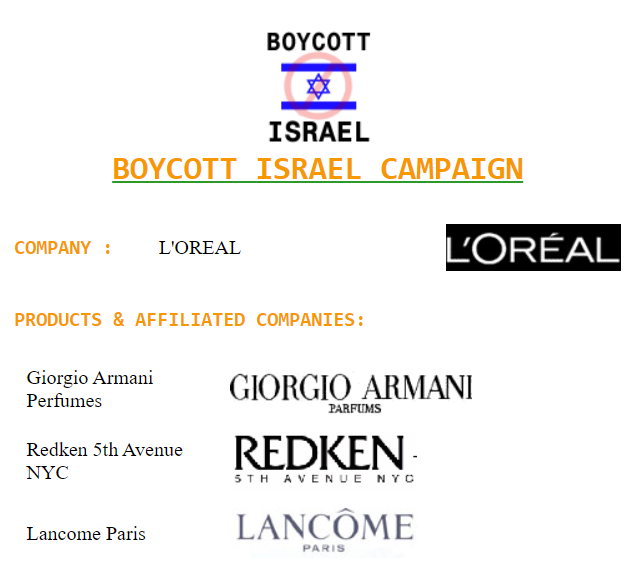
    L’Oreal, a global giant in the beauty industry, touts its significant investments and partnerships in Israel as a testament to its thriving commercial ventures in the Middle East. However, beneath the veneer of prosperity lies a troubling narrative of ethical compromise and complicity in human rights violations.

    From cozy relationships with the Israeli government to ventures in Occupied Palestine, the story behind L’Oreal’s involvement in Israel raises critical questions about corporate responsibility and ethical business practices.
    Lancome 1

    Also See: The Mountain Dew – Israel Connection Unraveled

    L’Oreal’s Operations in Israel

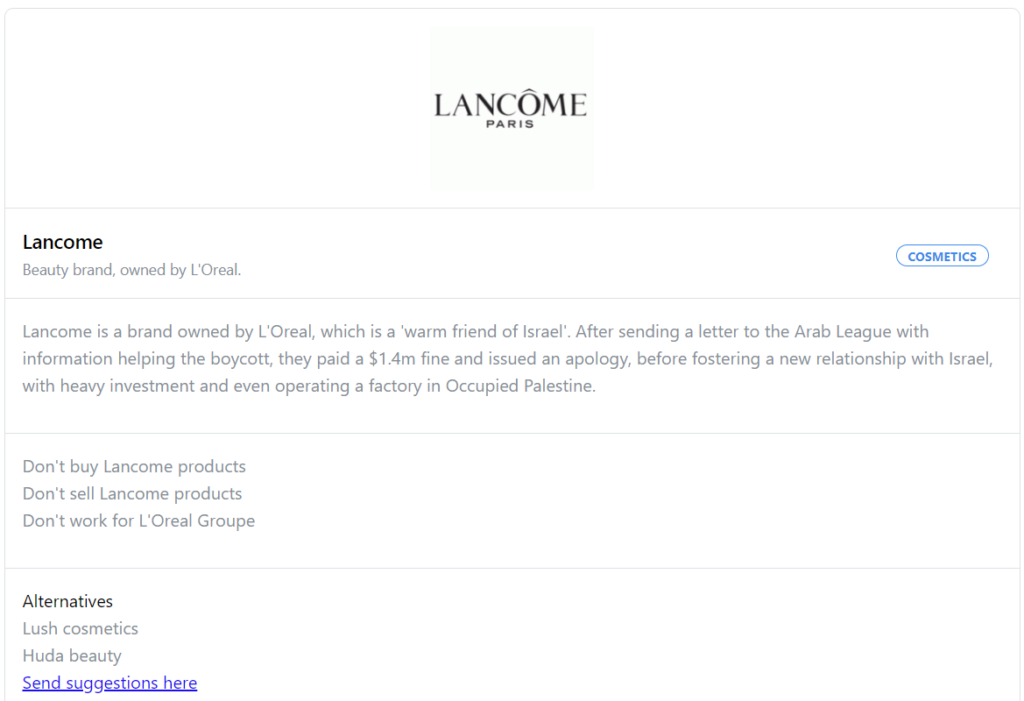
    Lancome, a brand under L’Oreal’s umbrella, has a murky history. Their attempt to navigate the Arab League boycott resulted in a hefty fine and an apology. Yet, this supposed remorse swiftly transformed into heavy investments in Israel, including setting up shop in Occupied Palestine. This move, veiled as progress, speaks volumes about their priorities—profits over principles.

    The company’s operations in Migdal Ha’emek, built on land once belonging to the ethnically cleansed Palestinian village of al-Mujaydil, serve as a bitter reminder of the displacement and denial of rights faced by the original inhabitants. L’Oreal’s exploitation of Dead Sea minerals, a significant portion of which lies in the Israeli-occupied West Bank, further underscores their disregard for Palestinian rights. While Palestinians are systematically denied access to the resources of the Dead Sea, Israel profits from international tourism and mining, perpetuating its image while suppressing an entire population.

    The connections don’t end there. L’Oreal’s support for the Weizmann Institute of Science, known for its involvement in clandestine research and development of weapons for the Israeli military, aligns them with institutions complicit in human rights violations. This association directly contradicts international law and supports a system that oppresses Palestinian rights.

    Therefore, it’s evident that behind L’Oreal’s façade of innovation and commerce lies a web of alliances contributing to the oppression and denial of rights to the Palestinian people. A conscientious consumer might consider alternatives like Lush cosmetics or Huda beauty, brands not entangled in such morally questionable associations. Furthermore, a call to abstain from supporting L’Oreal Groupe in any capacity resonates with the stance against complicity in such egregious actions.
    Lancome 2

    Explore More: New Balance’s Support for Israel: Examining the Details

    The intricacies of L’Oreal’s engagements in Israel extend beyond the world of cosmetics. Consumers are confronted with a crucial decision—whether to support a conglomerate entangled in ethically questionable partnerships or to choose alternatives that align with values of human rights and ethical business practices.

    As the veil lifts on L’Oreal’s operations, it’s evident that consumer choices wield immense power in shaping corporate accountability and societal ethics. The call for conscientious decision-making rings loud—to opt for brands that not only enhance external beauty but also uphold integrity and ethical standards.
  • Lidl – Israel Support: What You Need to Know

    Lidl – Israel Support: What You Need to Know

    Lidl, a prominent supermarket chain, finds itself entangled in a web of controversy as allegations of mislabeling Israeli products surface in France. The purported misrepresentation, masking Israeli origins with false labels of African or Spanish produce, has sparked outrage and skepticism among consumers.

    This controversy not only raises concerns about deceptive practices but also casts a shadow on the transparency and ethical standards of the retail giant.

    Lidl 1

    Also See: Is Lancome Supportive of Israel? Explained

    Unveiling Lidl’s Alleged Mislabeling Saga

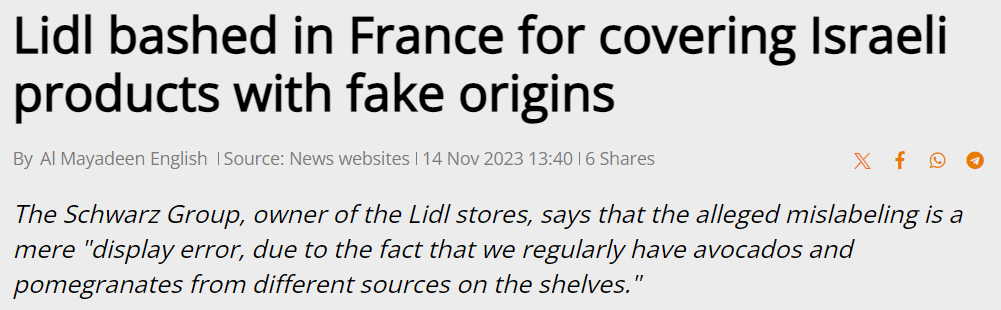
    The partnership between Lidl and Israel has recently been marred by controversy, shedding light on alleged deceptive practices adopted by the supermarket chain. Lidl stores in France faced severe backlash for reportedly mislabeling Israeli products as originating from different countries in an attempt to mask their true origins. The labeling scandal involved avocados and pomegranates purportedly being misrepresented as African or Spanish produce instead of their actual Israeli origins.

    Social media erupted with accusations as users shared photos of products showcasing both the original labels indicating Israeli origins and the secondary labels indicating alternative, misleading origins. Outraged customers denounced this practice as a scandal, revealing a disturbing trend of deliberate misrepresentation to deceive consumers.

    The timing of these incidents within the context of heightened tensions and the growing movement to boycott Israeli goods raised suspicions. Some individuals speculated that stores might have intentionally misrepresented these products to sidestep the boycott and ensure continuous sales, thereby benefiting from the misinformed consumers.

    In response to the allegations, Schwarz Group, the owner of Lidl stores, dismissed the claims as a mere “display error,” attributing it to the regular sourcing of avocados and pomegranates from various origins. However, this explanation did little to assuage concerns or quell the outrage among consumers and critics.

    Conflicting Interests

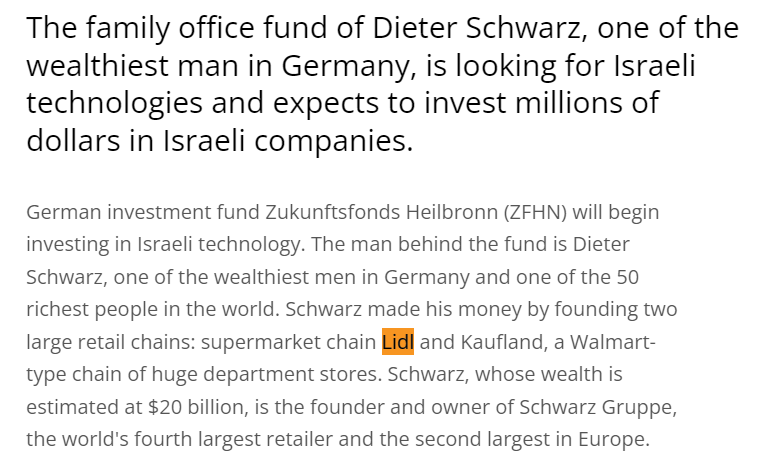
    Moreover, amidst this controversy, reports emerged of the Schwarz Group’s interest in seeking high-tech investments in Israel. Dieter Schwarz, the German billionaire behind the Schwarz Group, expressed intentions to invest millions of dollars in Israeli technologies through the family office fund. Despite the controversy surrounding Lidl’s practices, Schwarz’s interest in investing in Israeli companies reflects a conflicting narrative, raising questions about ethical considerations in business dealings.

    The situation has drawn the attention of France’s Directorate General for Competition Policy, Consumer Affairs, and Fraud Control (DGCCRF), which has initiated an investigation following consumer reports of these deceptive labeling practices.

    This intricate web of events exposes a disconcerting reality—a retail giant embroiled in controversy over alleged misrepresentation while its owner eyes lucrative investments in Israeli technology. Such actions, if proven true, not only undermine consumer trust but also pose ethical quandaries regarding transparency and fair business practices.

    Lidl 2

    Explore More: The Mountain Dew – Israel Connection Unraveled

    The unfolding controversy surrounding Lidl’s alleged mislabeling practices underscores a troubling reality—commerce overshadowing transparency. The supermarket chain’s attempts to mask the origins of Israeli products have not only sparked public outcry but also prompted regulatory scrutiny.

    The investigation initiated by France’s regulatory body reflects the gravity of these allegations and the imperative need for accountability.

  • Cinnabon’s Support for Israel: Examining the Details

    Cinnabon’s Support for Israel: Examining the Details

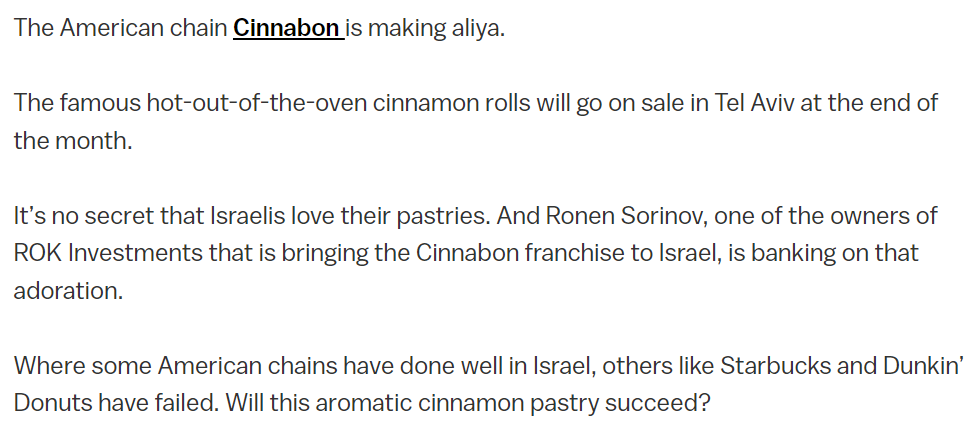
    The anticipation surrounding the arrival of Cinnabon in Tel Aviv is palpable, with promises of delectable cinnamon rolls captivating the locals’ imaginations. Yet, beyond the excitement of indulging in these iconic pastries lies a cloud of ethical ambiguity and controversy.

    As the aroma of freshly baked treats wafts through the air, questions emerge about the brand’s alignment with the complex socio-political landscape of Israel and Palestine. This article delves into the multi-layered concerns surrounding Cinnabon’s partnership in Israel, highlighting the ethical dilemmas and the implications of its arrival amidst regional tensions.

    Cinnabon 1

    Also See: Lidl – Israel Support: What You Need to Know

    Controversy Amidst Sweet Aromas

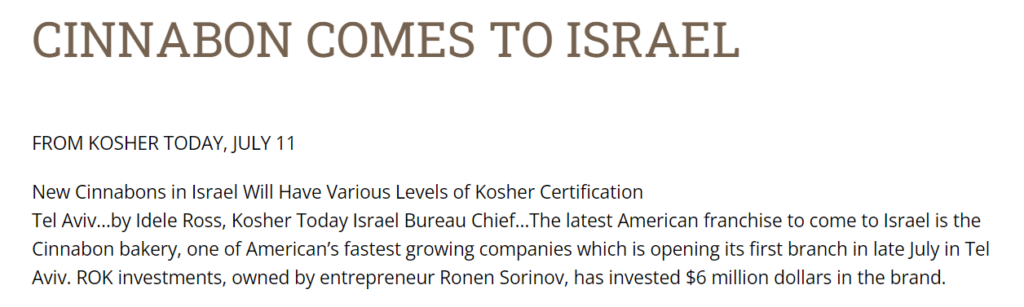
    The entry of Cinnabon, an American franchise, into Israel’s market has sparked heated debates about its implications. Ronen Sorinov, spearheading the venture through ROK Investments, aims to capitalize on Israelis’ fondness for pastries. But this seemingly innocent business move is shrouded in a cloud of ambiguity and potential ethical conflict.

    While Israelis eagerly anticipate sinking their teeth into these iconic cinnamon rolls, questions loom about the brand’s stance regarding the complex geopolitical landscape. Cinnabon’s silence on issues pertaining to Israel’s activities in Palestine casts a shadow over its newfound presence.

    Despite the enthusiasm for these delectable treats, concerns persist regarding Cinnabon’s lack of explicit support or acknowledgment of the socio-political dynamics in the region. The brand’s conspicuous silence on matters of social responsibility and ethical alignment with Israel’s policies in Palestine raises skepticism.

    Even as Cinnabon plans to expand its footprint with multiple branches across Tel Aviv, the absence of any visible commitment to address or support the local communities affected by the conflict remains starkly evident. The claim of a kosher branch on a prominent Tel Aviv road fails to address the broader ethical quandary surrounding the brand’s presence in the region.

    Moreover, the $6 million investment in the brand by ROK Investments raises eyebrows as it deepens the concern about potential complicity with activities that remain contentious on the global stage.

    Cinnabon 2

    Explore More: Is Lancome Supportive of Israel? Explained

    As the aroma of Cinnabon’s cinnamon rolls permeates the streets of Tel Aviv, the unresolved tensions regarding its partnership in Israel persist. The absence of visible support or acknowledgment of the region’s complex socio-political dynamics remains a glaring concern.

    The brand’s arrival, while seemingly innocuous, raises pertinent questions about the ethical responsibility of global franchises operating in regions embroiled in conflicts. Ultimately, the sweetness of Cinnabon’s treats is overshadowed by the bitter undertones of ethical ambiguity and silence in the face of significant socio-political issues.

    This chapter concludes the ethical dilemma surrounding Cinnabon’s presence in Israel, urging a deeper reflection on corporate responsibility amidst geopolitical complexities.