Tag: Boycott

  • Is Home Depot Supportive of Israel? Explained

    Is Home Depot Supportive of Israel? Explained

    In the bustling arena of commerce, where profit often shares the stage with ethical dilemmas, one of the retail giants, Home Depot, finds itself embroiled in controversy. The company’s affiliation with Israeli brands, notably through its largest supplier, Keter Plastics, has ignited a firestorm of debate and scrutiny.

    This partnership’s connection to the contentious West Bank settlements and allegations of biased media influence linked to Home Depot’s leadership have raised profound ethical concerns, prompting a critical examination of the company’s moral compass and business practices.
    Home Depot 1

    Also See: Lululemon – Israel Support: What You Need to Know

    Unveiling Home Depot’s Ethical Dilemma

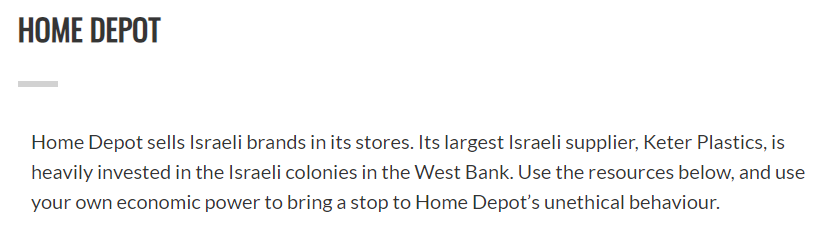
    Home Depot, a household name in the realm of home improvement, faces a brewing storm of controversy over its partnership with Israeli brands, particularly its reliance on Keter Plastics, a company deeply entrenched in the contentious Israeli settlements in the West Bank.

    The retail giant proudly showcases Israeli products on its shelves, notably supplied by Keter Plastics, a move that has ignited fierce criticism. Keter Plastics’ substantial investments in the disputed West Bank territories raise ethical red flags, drawing attention to Home Depot’s implicit support for this contentious issue.

    The West Bank settlements, deemed illegal under international law, perpetuate a complex geopolitical situation, fueling tensions and hindering peace efforts. By choosing to maintain ties with Keter Plastics, Home Depot inadvertently condones these controversial practices, raising questions about the company’s moral compass and commitment to ethical business practices.

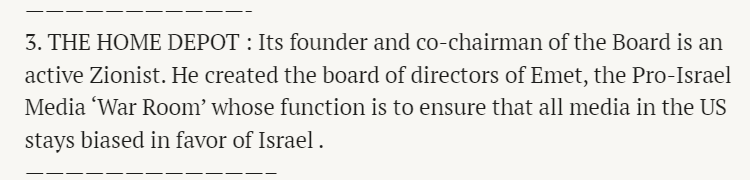
    Moreover, the founder and co-chairman of Home Depot’s Board’s alleged involvement in promoting a biased narrative through Emet, the Pro-Israel Media ‘War Room,’ adds another layer of concern. Accusations of steering US media towards a pro-Israel stance not only raise ethical concerns but also call into question the neutrality and impartiality of information circulated in the public sphere.

    While Home Depot emphasizes its dedication to corporate social responsibility, its association with entities tied to contentious geopolitical issues starkly contradicts this narrative. Critics argue that the pursuit of profit appears to supersede ethical considerations, highlighting the company’s prioritization of financial gains over ethical responsibilities.

    Consumers and activists are now leveraging their economic influence, calling for a boycott of Home Depot as a means to pressure the company into reevaluating its partnerships and taking a more conscientious stance. This movement aims to hold Home Depot accountable for its involvement with entities whose practices contradict widely recognized international standards of conduct.

    As the debate intensifies, Home Depot finds itself at a crossroads, facing mounting pressure to reassess its affiliations and uphold a more ethical business approach. The public’s response to this controversy may very well shape the future decisions of corporations, urging them to align their practices with broader ethical considerations beyond profit margins.
    Home Depot 2

    Explore More: Does Nike Stand with Palestine or Israel? Get the Definitive Answer

    As the discourse around Home Depot’s partnerships intensifies, it signifies a pivotal moment not only for the company but for the larger conversation surrounding corporate responsibility.

    The pushback and calls for ethical reconsideration underline the power of consumer activism in shaping corporate behavior. Whether Home Depot responds to these concerns by reassessing its affiliations or maintains its stance will undoubtedly have far-reaching implications, potentially reshaping how corporations navigate ethical dilemmas in an increasingly interconnected world.

    This controversy serves as a poignant reminder of the complexities faced by businesses in balancing profit motives and ethical imperatives, urging a more conscientious and accountable approach to corporate conduct on the global stage.
  • Celsius’s Support for Israel: Examining the Details

    Celsius’s Support for Israel: Examining the Details

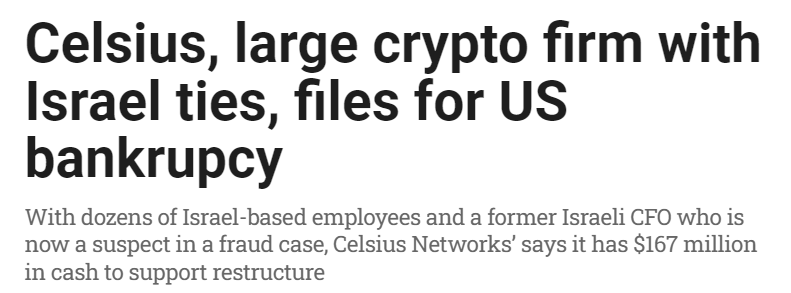
    Celsius Network, a cryptocurrency lending platform entwined with Israel, faces a severe crisis and bankruptcy filing, raising concerns about its operations and affiliations within the digital currency industry.

    Celsius 1

    Also See: Is Home Depot Supportive of Israel? Explained

    Celsius’ Bankruptcy and Israeli Connections

    Celsius Network’s recent bankruptcy filing has sent shockwaves across the cryptocurrency landscape. The company, with a significant presence in Israel and former Israeli leadership under scrutiny for alleged fraud, has suspended all withdrawals, leaving millions of users in limbo.

    Financial Turmoil and Withdrawal Freeze

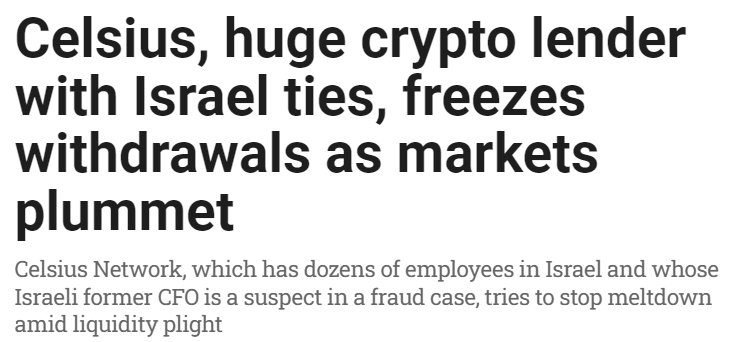
    Amidst market volatility, Celsius Network, known for its Israeli ties and significant Israeli workforce, has encountered liquidity issues, forcing a freeze on all withdrawals and transfers between accounts. With no clear timeline for reinstating access to user funds, uncertainty looms large for the platform’s 1.7 million customers.

    Dubious Practices and Generous Yields

    Celsius, established in 2017, operates as a crypto bank offering attractive yields of up to 19%, enticing users to deposit cryptocurrency. However, the platform’s lending practices and high yields have raised eyebrows, especially concerning the utilization of user deposits for lending, potentially contributing to the company’s financial woes.

    Israeli Involvement and Fraud Allegations

    The company’s ties to Israel, boasting over 100 employees, raise concerns amid the suspension of withdrawals and the involvement of a former Israeli CFO facing accusations in a fraud case. This connection adds complexity to the situation, amplifying scrutiny over Celsius’ financial strategies and leadership.

    Celsius 2

    Explore More: Lululemon – Israel Support: What You Need to Know

    The tumultuous situation surrounding Celsius Network’s bankruptcy and freeze on withdrawals signifies broader implications for the cryptocurrency sector.

    The company’s Israeli connections and financial crisis shed light on the risks associated with decentralized finance and the need for transparent and accountable practices within the industry.

  • The Prada – Israel Connection Unraveled

    The Prada – Israel Connection Unraveled

    The collaboration between luxury fashion house Prada and L’Oreal to produce the Prada Beauty range has come under intense scrutiny due to its entanglement with controversial Israeli ventures, sparking ethical concerns and calls for consumer action.

    Prada 1

    Also See: Celsius’s Support for Israel: Examining the Details

    Prada Beauty’s Association with L’Oreal’s Troubled History

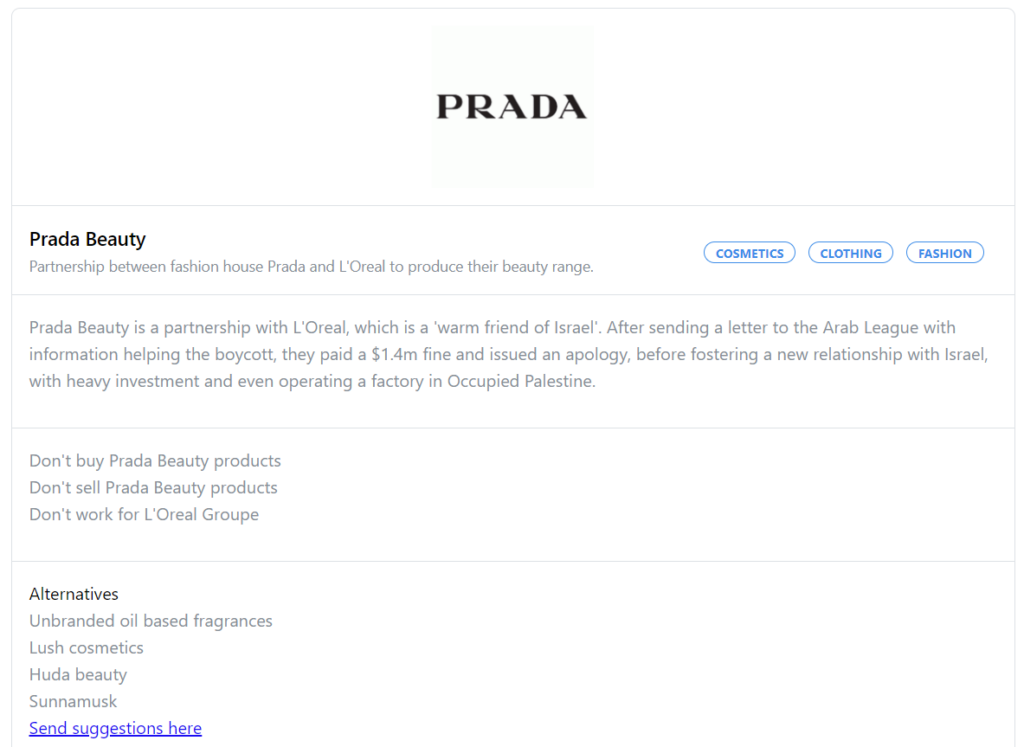
    Prada Beauty’s partnership with L’Oreal, known for its close ties with Israel, has a checkered past. L’Oreal faced scrutiny and a hefty fine for its alleged role in aiding a boycott by providing information to the Arab League, only to reestablish a relationship with Israel through significant investments and the establishment of a factory in Occupied Palestine.

    Rejecting Prada Beauty Products and Challenging L’Oreal’s Actions

    Calls for a boycott against Prada Beauty products have emerged, emphasizing the ethical imperative to abstain from buying or selling these cosmetics. Furthermore, there’s a push for individuals to reconsider affiliations with L’Oreal Groupe, denouncing their controversial ventures.

    Amidst the outcry against Prada Beauty’s associations, suggestions for ethical alternatives such as unbranded oil-based fragrances, Lush Cosmetics, Huda Beauty, and Sunnamusk have gained traction. This move emphasizes the power of consumer choices in advocating for ethical consumerism and challenging companies involved in contentious partnerships.

    L’Oreal’s Investment in Israel

    L’Oreal’s strategic establishment of Israel as its Middle East commercial hub has divided consumer sentiments. While pro-Palestine advocates have boycotted L’Oreal products, supporters of the company have increased their purchases. Additionally, controversies surrounding individuals associated with L’Oreal, such as model Amena Khan’s past comments, have highlighted the complexities surrounding the brand’s image and stance on geopolitical issues.

    Brand Portfolio and Ethical Ambiguities

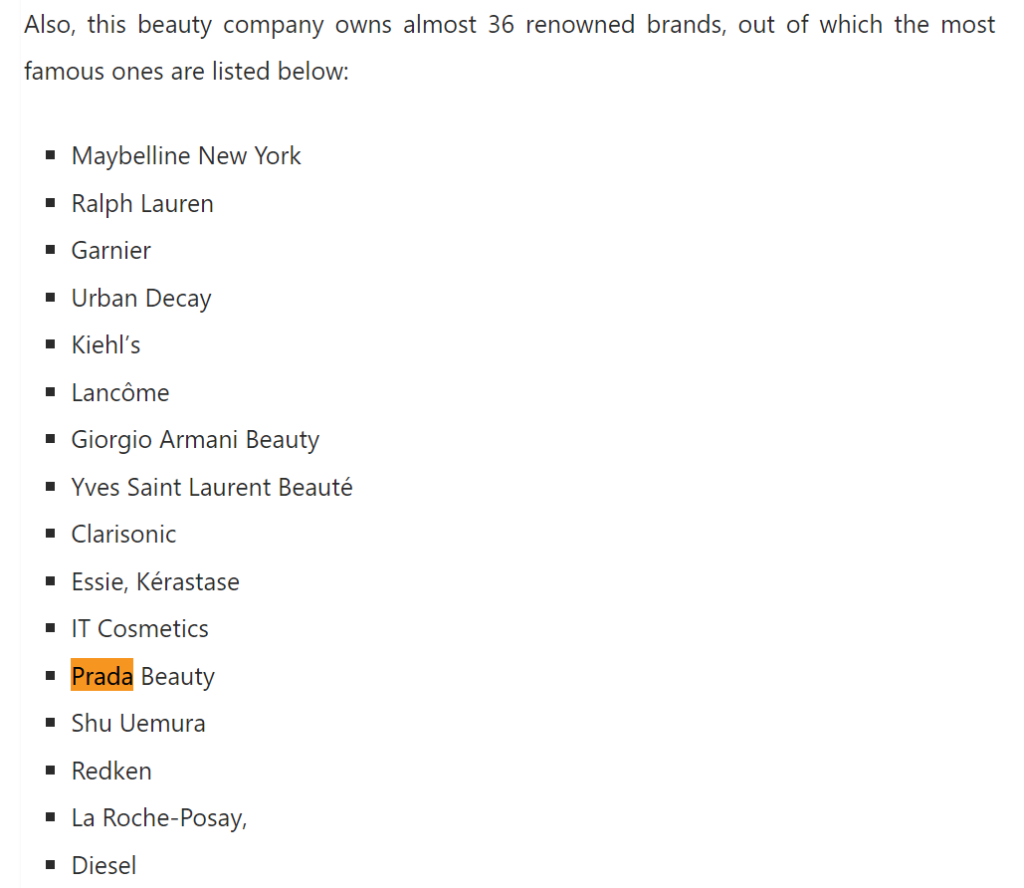
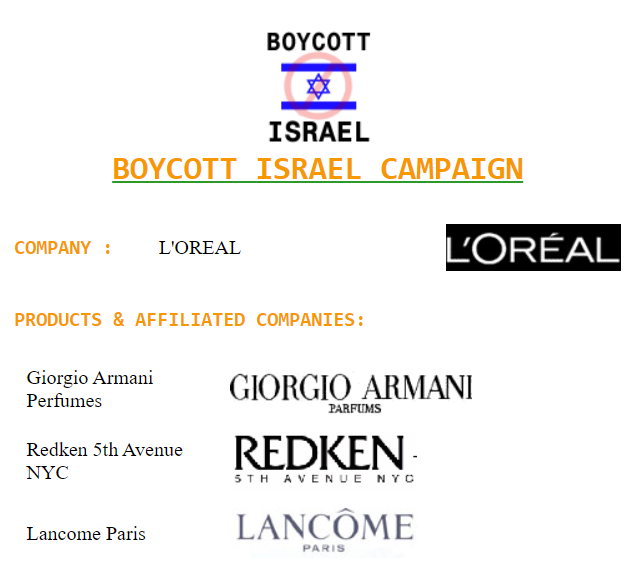
    L’Oreal’s extensive brand portfolio includes illustrious names like Maybelline New York, Ralph Lauren, Garnier, Urban Decay, Lancôme, and the controversial Prada Beauty among others. Ralph Lauren, particularly, has a history of supporting the region through donations, aligning with his Jewish heritage.

    Prada 2

    Explore More: Is Home Depot Supportive of Israel? Explained

    The ethical dilemma surrounding Prada Beauty’s partnership with L’Oreal underscores a broader conversation about corporate responsibility and ethical alliances.

    As consumer activism gains momentum, the spotlight remains on the choices individuals make and the impact these decisions have on challenging corporations engaged in contentious partnerships.

  • Nyx – Israel Support: What You Need to Know

    Nyx – Israel Support: What You Need to Know

    NYX Professional Makeup, a brand under the L’Oreal umbrella, finds itself embroiled in controversy due to its association with Israel, prompting ethical considerations and calls for consumer action against its products.

    Nyx 1

    Also See: The Prada – Israel Connection Unraveled

    L’Oreal’s Troubling Connections and NYX’s Foray into Israel

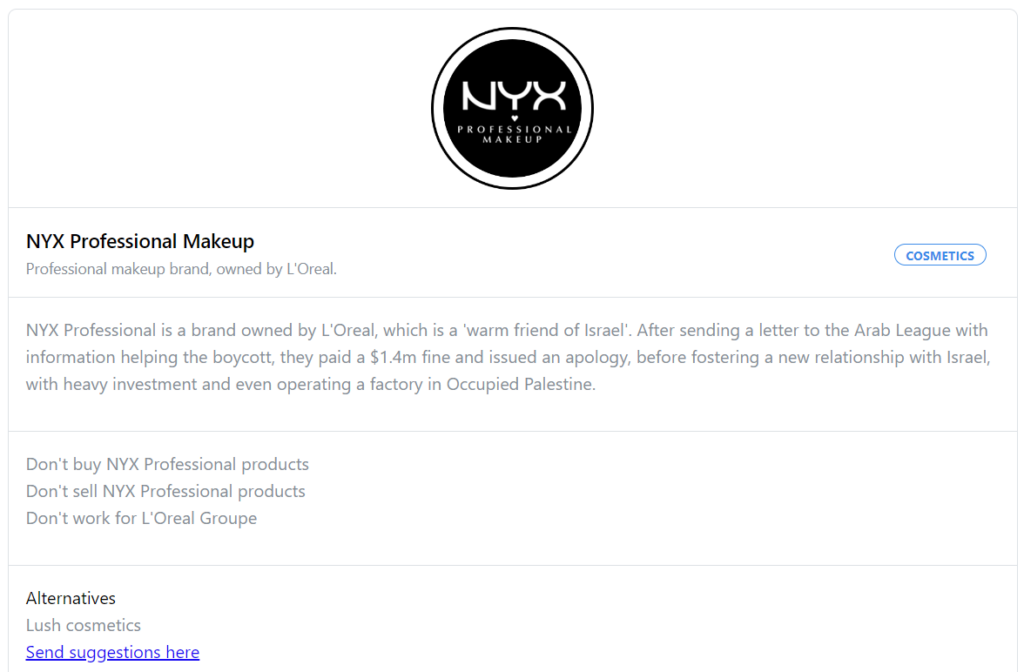
    L’Oreal, often lauded as a ‘warm friend of Israel,’ faced repercussions for allegedly aiding a boycott by providing information to the Arab League, resulting in a hefty fine and an apology. However, the company subsequently pivoted, nurturing a renewed relationship with Israel marked by substantial investments, including the operation of a factory in Occupied Palestine.

    Boycott NYX Professional Products, Challenge L’Oreal’s Alliances

    Calls for a boycott against NYX Professional Makeup products have gained traction, emphasizing the ethical imperative to refrain from purchasing, selling, or affiliating with L’Oreal Groupe. This collective action aims to hold the company accountable for its involvement in controversial ventures within Israeli territories.

    Consumers are urged to seek ethical alternatives to NYX Professional Makeup, with brands like Lush Cosmetics being highlighted as potential choices. The call for action emphasizes the significance of consumer choices in aligning with ethical standards and challenging corporations involved in contentious partnerships.

    L’Oreal’s Complex Entanglement in Israeli Ventures

    L’Oreal’s engagement in Israeli territories extends beyond NYX Professional Makeup, with its operations in Migdal Ha’emek, a settlement established on lands belonging to the displaced Palestinian village of al-Mujaydil. Furthermore, its production of products using Dead Sea minerals from the occupied West Bank raises ethical red flags, exploiting resources while denying access to Palestinians.

    L’Oreal’s Awards and Collusion

    L’Oreal’s engagement in Israel transcends cosmetics, with the company awarding a significant prize to a scientist at Israel’s Weizmann Institute of Science, an institution linked to clandestine research in military-related fields. Such affiliations underscore L’Oreal’s alleged collaboration in areas conflicting with international law and Palestinian human rights.

    NYX Cosmetics’ Entry into Israel

    Amidst reports of NYX Cosmetics’ impending launch in Israel, L’Oreal Israel acknowledges the demand for these products among Israeli consumers. However, concerns persist over the company’s strategic expansion and its potential implications within the context of contested territories.

    Nyx 2

    Explore More: Celsius’s Support for Israel: Examining the Details

    The ethical dilemma surrounding NYX Professional Makeup and its parent company, L’Oreal, prompts a critical examination of corporate allegiances and their impact on global geopolitics.

    As calls for boycotts grow louder, the spotlight remains on consumer choices and their role in holding corporations accountable for their partnerships entangled in contentious territories.

  • Is Fanta Supportive of Israel? Explained

    Is Fanta Supportive of Israel? Explained

    For decades, the Coca-Cola Company has stood as a pillar of support for Israel, receiving accolades and honors for its unwavering dedication to the nation.

    However, embedded within this allegiance lie connections to contentious Israeli ventures, raising ethical concerns and fueling calls for a global boycott of one of its popular brands, Fanta.

    Fanta 1

    Also See: Nyx – Israel Support: What You Need to Know

    Coca-Cola’s Enduring Support for Israel

    Coca-Cola’s ties with Israel span a long history, with the company being commended by the Government of Israel Economic Mission in 1997 for its steadfast backing over three decades. The annual backing of the American-Israel Chamber of Commerce Awards and the recognition of entities like Israel’s Lobby AIPAC have perpetuated Coca-Cola’s investment in Israel’s economy, even going as far as honoring lobbying efforts rejecting UN ceasefire calls during military conflicts.

    Coca-Cola’s Involvement in Israeli Ventures

    In 2008, Coca-Cola’s extraordinary agreement with the Israeli venture capital Challenge Fund marked an unprecedented move within Israel’s investment landscape, showcasing the company’s extraordinary commitment to the nation’s financial growth.

    Controversial Associations and Alleged War Crimes

    A particularly contentious episode unfolded in 2009 when Coca-Cola hosted an event at its headquarters honoring Brigadier-General Ben-Eliezer, a figure linked to severe allegations of war crimes during past conflicts. Ben-Eliezer’s involvement in the execution of Egyptian POWs and his role during the Jenin massacre raises grave ethical questions regarding Coca-Cola’s choice of allies and honorees.

    Fanta and Coca-Cola’s Presence in Illegal Settlements

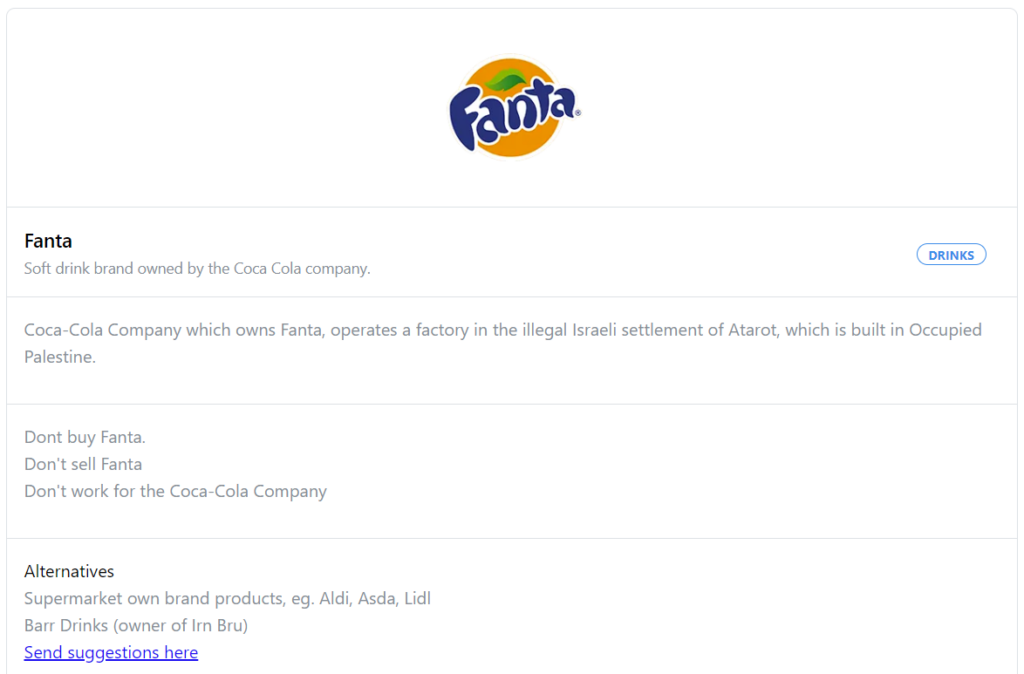
    Adding to the ethical dilemma, Coca-Cola’s subsidiary, Tara Dairies, operates within Israeli territories considered illegal under international law, such as the occupied Golan Heights and Jordan Valley. Fanta, a beloved soft drink brand under the Coca-Cola umbrella, operates from a factory situated in the illegal Israeli settlement of Atarot, further complicating the moral stance of consumers worldwide.

    Boycott Fanta, Challenge Coca-Cola’s Ethical Choices

    The revelation of Fanta’s and Coca-Cola’s ties to these controversial Israeli ventures has sparked global outrage, prompting a unified call to action. Voices advocating against supporting Fanta’s sale, employment within the Coca-Cola Company, and endorsing alternative products have gained momentum.

    Fanta 2

    Explore More: The Prada – Israel Connection Unraveled

    Fanta’s association with Coca-Cola’s operations in controversial territories presents a moral crossroads for the beloved soft drink brand and its parent company.

    As ethical considerations increasingly drive consumer choices, the stance against Fanta’s ties to illegal settlements in Israel stands as a testament to the power of conscientious consumerism, urging a reevaluation of corporate allegiances in favor of moral integrity.

  • New Balance’s Support for Israel: Examining the Details

    New Balance’s Support for Israel: Examining the Details

    The global landscape of corporate responsibility and ethical engagement faces a critical juncture as sportswear behemoth New Balance and the InterContinental Hotel Group come under intense scrutiny for their involvement in the Jerusalem marathon.

    The backdrop to this sponsorship is steeped in geopolitical tensions and human rights violations, setting the stage for a conflict of values between profit-driven alliances and adherence to international law.

    New Balance 1

    Palestinian Boycott, Divestment, and Sanctions National Committee’s Call to Action

    Also See: Is Fanta Supportive of Israel? Explained

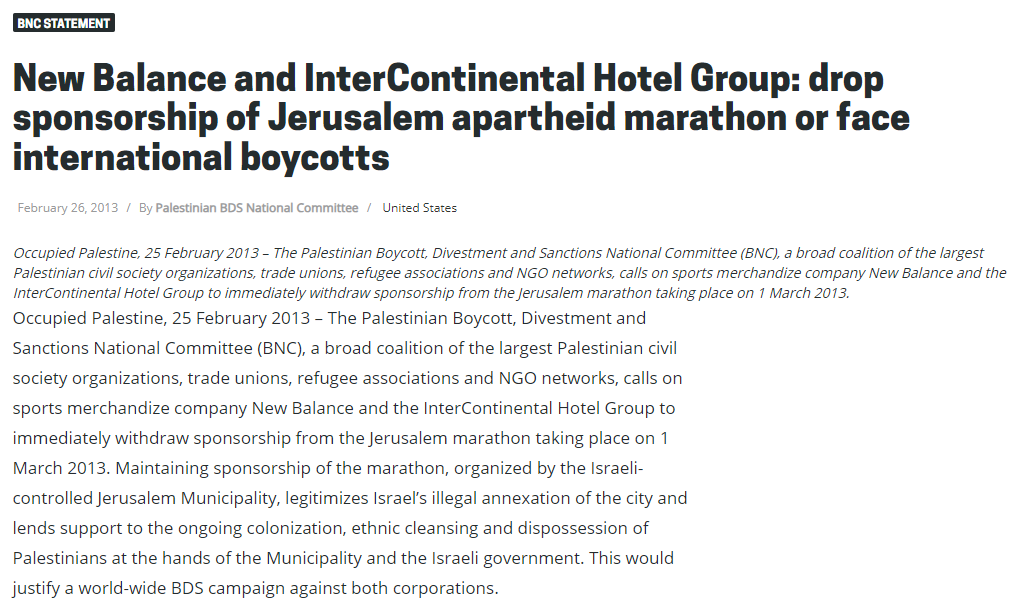
    This alliance with the marathon organized by the Israeli-controlled Jerusalem Municipality has sparked outrage, as it is perceived to endorse and legitimize Israel’s unlawful annexation of the city. The BNC, a coalition representing diverse Palestinian civil society organizations, trade unions, and NGO networks, has accused New Balance and the InterContinental Hotel Group of providing direct material support to a body responsible for perpetuating illegal policies. Such actions, as per a recent UN report endorsed by the General Assembly, potentially violate international criminal legislation.

    Despite prior appeals to disassociate from the marathon, New Balance and the InterContinental Hotel Group, including the Crowne Plaza chain, have blatantly disregarded these calls. Their continued sponsorship is seen as an implicit endorsement of Israel’s contentious actions, fueling ongoing colonization, ethnic cleansing, and the displacement of Palestinians—a situation recognized as a violation of international law.

    Global Momentum of BDS Movement and Corporate Accountability

    The growing global momentum of the Boycott, Divestment, and Sanctions (BDS) movement signals a significant shift. Corporations, including New Balance and Crowne Plaza, are increasingly finding themselves under scrutiny for profiting from associations linked to Israel’s disputed policies. The risk of severe repercussions, including reputational damage and the loss of lucrative contracts, looms large for those entities aligned with Israel’s controversial regime.

    The Jerusalem marathon sponsorship by New Balance and Crowne Plaza not only condones but actively promotes Israel’s narrative, painting a skewed picture of the city as a diverse cultural hub while disregarding the systematic efforts to displace the indigenous Palestinian population. These actions blatantly ignore international conventions and human rights laws, further exacerbating the conflict.

    New Balance 2

    Explore More: Nyx – Israel Support: What You Need to Know

    Despite repeated pleas and warnings from the BNC, New Balance and the InterContinental Hotel Group, notably the Crowne Plaza chain, have persisted in their sponsorship of the Jerusalem marathon.

    This persistent alignment is perceived as an unwavering commitment to profit from a contentious event, disregarding the grave human rights violations and international law violations associated with it.

  • The Mountain Dew – Israel Connection Unraveled

    The Mountain Dew – Israel Connection Unraveled

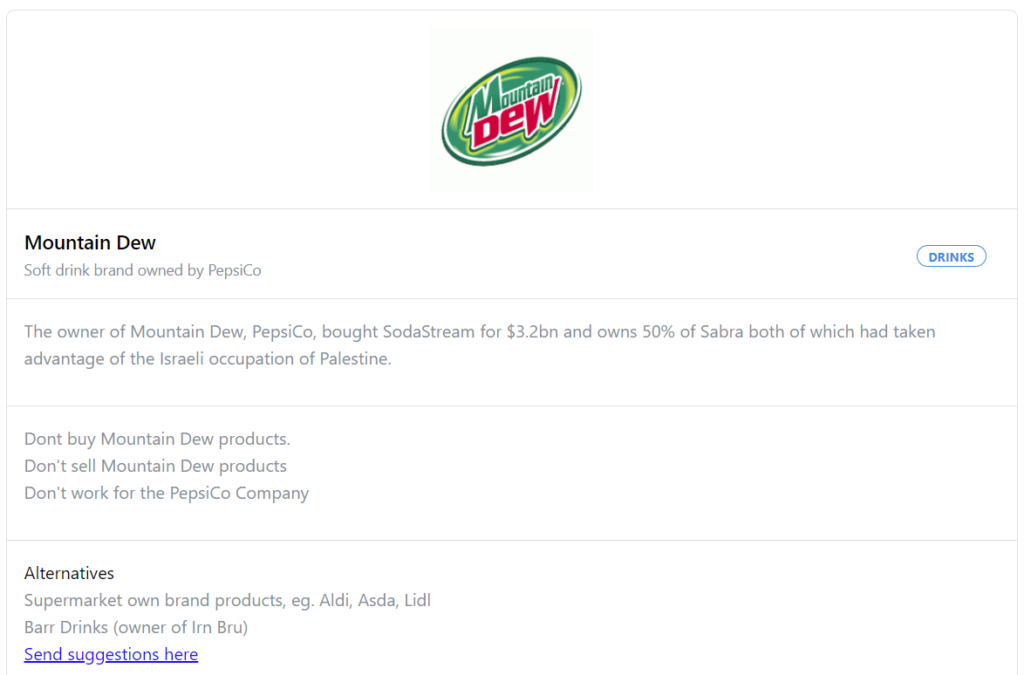
    The association between Mountain Dew, an iconic soft drink brand owned by PepsiCo, and its ties to companies embroiled in Israel’s contentious policies has ignited a firestorm of criticism.

    PepsiCo’s acquisitions, notably SodaStream and its joint venture in Sabra Hummus, have come under intense scrutiny due to their involvement in activities deeply entangled in the Israeli occupation of Palestine. This partnership raises profound ethical concerns about corporate responsibility, human rights, and the repercussions of such alliances on global markets.

    Mountain Dew 1

    Also See: New Balance’s Support for Israel: Examining the Details

    Unveiling PepsiCo’s Complicity in Israeli Controversies

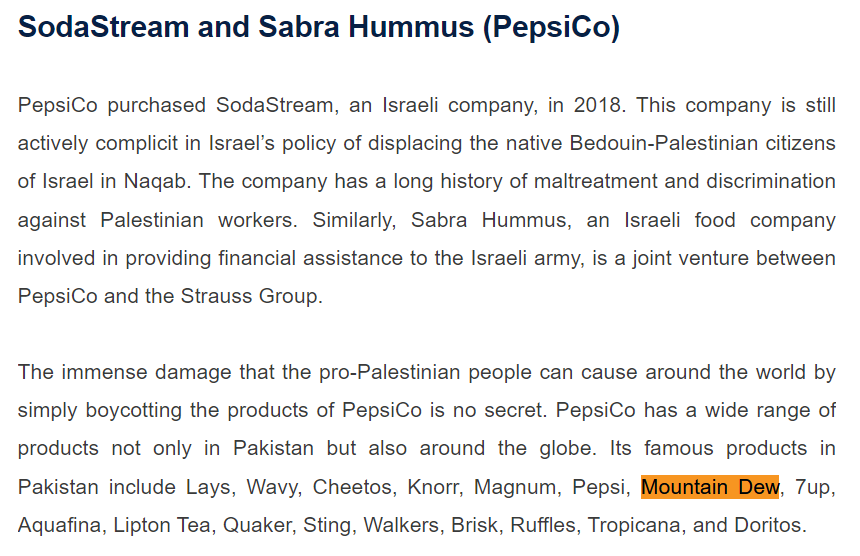
    PepsiCo’s purchase of SodaStream in 2018 has thrust the company into the spotlight for its role in perpetuating Israel’s displacement of native Bedouin-Palestinian citizens in Naqab. The distressing reports of maltreatment and discrimination against Palestinian workers within SodaStream’s operations highlight the ethical dilemmas posed by corporations involved in contentious geopolitical issues. Additionally, the joint venture of PepsiCo with the Strauss Group in Sabra Hummus, accused of aiding the Israeli army, adds further complexity to the ethical debate surrounding the company’s associations.

    The Global Impact

    The implications of supporting PepsiCo’s products extend far beyond borders, as the potential impact of a global boycott looms large. PepsiCo’s expansive product range, including household names like Lays, Cheetos, Pepsi, Mountain Dew, and others, has a significant presence not only in Pakistan but across the world. However, the company’s connections to entities complicit in the Israeli occupation of Palestine stand in stark contrast to ethical business practices and human rights considerations.

    The ownership of Mountain Dew by PepsiCo, along with its involvement in SodaStream and Sabra Hummus, reflects a pattern of profiting from situations entangled in controversy and human rights violations. Calls to boycott Mountain Dew products, refrain from selling them, and avoid employment with PepsiCo underscore the need to hold corporations accountable for their affiliations and actions.

    In seeking alternatives, consumers are encouraged to consider supermarket-owned brands like Aldi, Asda, or Lidl, along with Barr Drinks, the owner of Irn Bru, as ethically sound alternatives. This call for conscientious consumer behavior aims to leverage consumer power in favor of ethical and morally sound choices while fostering accountability within the corporate landscape.

    Mountain Dew 2

    Explore More: Is Fanta Supportive of Israel? Explained

    The controversy surrounding Mountain Dew and PepsiCo’s affiliations with SodaStream and Sabra Hummus underscores the intricate balance between corporate interests and ethical responsibility.

    The allegations of complicity in the Israeli occupation of Palestine raise fundamental questions about the ethical compass guiding corporate decisions and the societal impact of such partnerships. The scrutiny directed at PepsiCo’s involvement serves as a stark reminder of the moral obligations corporations bear in their global operations.

  • Is Lancome Supportive of Israel? Explained

    Is Lancome Supportive of Israel? Explained

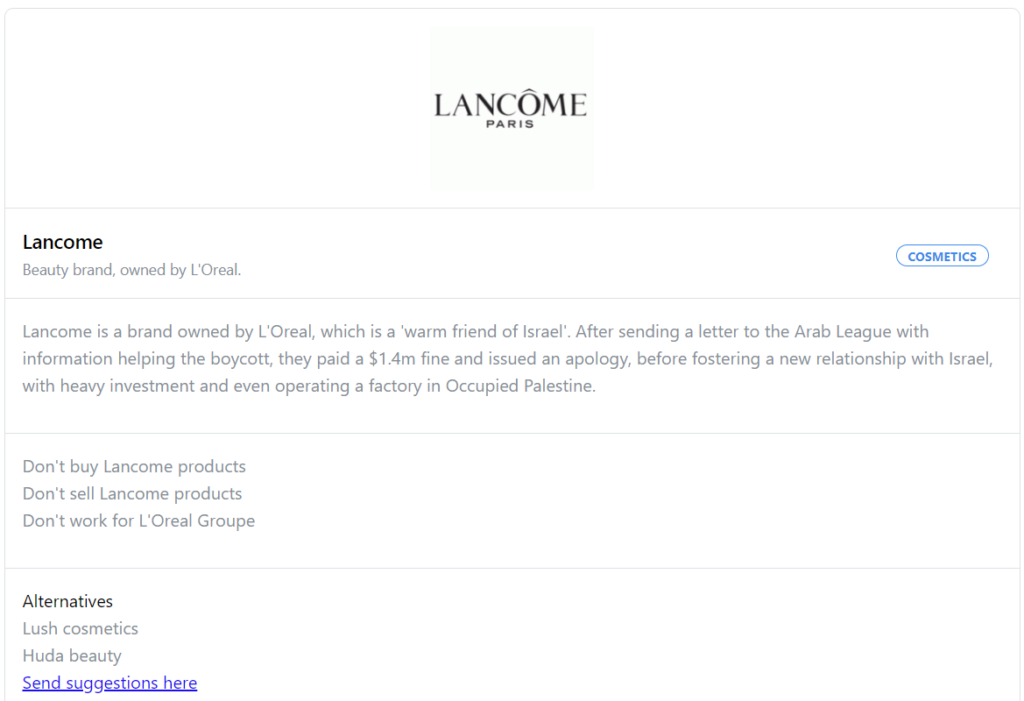
    L’Oreal, a global giant in the beauty industry, touts its significant investments and partnerships in Israel as a testament to its thriving commercial ventures in the Middle East. However, beneath the veneer of prosperity lies a troubling narrative of ethical compromise and complicity in human rights violations.

    From cozy relationships with the Israeli government to ventures in Occupied Palestine, the story behind L’Oreal’s involvement in Israel raises critical questions about corporate responsibility and ethical business practices.

    Lancome 1

    Also See: The Mountain Dew – Israel Connection Unraveled

    L’Oreal’s Operations in Israel

    Lancome, a brand under L’Oreal’s umbrella, has a murky history. Their attempt to navigate the Arab League boycott resulted in a hefty fine and an apology. Yet, this supposed remorse swiftly transformed into heavy investments in Israel, including setting up shop in Occupied Palestine. This move, veiled as progress, speaks volumes about their priorities—profits over principles.

    The company’s operations in Migdal Ha’emek, built on land once belonging to the ethnically cleansed Palestinian village of al-Mujaydil, serve as a bitter reminder of the displacement and denial of rights faced by the original inhabitants. L’Oreal’s exploitation of Dead Sea minerals, a significant portion of which lies in the Israeli-occupied West Bank, further underscores their disregard for Palestinian rights. While Palestinians are systematically denied access to the resources of the Dead Sea, Israel profits from international tourism and mining, perpetuating its image while suppressing an entire population.

    The connections don’t end there. L’Oreal’s support for the Weizmann Institute of Science, known for its involvement in clandestine research and development of weapons for the Israeli military, aligns them with institutions complicit in human rights violations. This association directly contradicts international law and supports a system that oppresses Palestinian rights.

    Therefore, it’s evident that behind L’Oreal’s façade of innovation and commerce lies a web of alliances contributing to the oppression and denial of rights to the Palestinian people. A conscientious consumer might consider alternatives like Lush cosmetics or Huda beauty, brands not entangled in such morally questionable associations. Furthermore, a call to abstain from supporting L’Oreal Groupe in any capacity resonates with the stance against complicity in such egregious actions.

    Lancome 2

    Explore More: New Balance’s Support for Israel: Examining the Details

    The intricacies of L’Oreal’s engagements in Israel extend beyond the world of cosmetics. Consumers are confronted with a crucial decision—whether to support a conglomerate entangled in ethically questionable partnerships or to choose alternatives that align with values of human rights and ethical business practices.

    As the veil lifts on L’Oreal’s operations, it’s evident that consumer choices wield immense power in shaping corporate accountability and societal ethics. The call for conscientious decision-making rings loud—to opt for brands that not only enhance external beauty but also uphold integrity and ethical standards.

  • Lidl – Israel Support: What You Need to Know

    Lidl – Israel Support: What You Need to Know

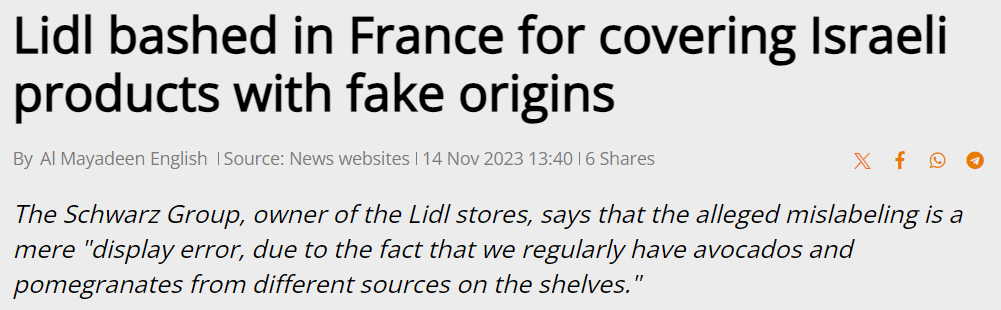
    Lidl, a prominent supermarket chain, finds itself entangled in a web of controversy as allegations of mislabeling Israeli products surface in France. The purported misrepresentation, masking Israeli origins with false labels of African or Spanish produce, has sparked outrage and skepticism among consumers.

    This controversy not only raises concerns about deceptive practices but also casts a shadow on the transparency and ethical standards of the retail giant.

    Lidl 1

    Also See: Is Lancome Supportive of Israel? Explained

    Unveiling Lidl’s Alleged Mislabeling Saga

    The partnership between Lidl and Israel has recently been marred by controversy, shedding light on alleged deceptive practices adopted by the supermarket chain. Lidl stores in France faced severe backlash for reportedly mislabeling Israeli products as originating from different countries in an attempt to mask their true origins. The labeling scandal involved avocados and pomegranates purportedly being misrepresented as African or Spanish produce instead of their actual Israeli origins.

    Social media erupted with accusations as users shared photos of products showcasing both the original labels indicating Israeli origins and the secondary labels indicating alternative, misleading origins. Outraged customers denounced this practice as a scandal, revealing a disturbing trend of deliberate misrepresentation to deceive consumers.

    The timing of these incidents within the context of heightened tensions and the growing movement to boycott Israeli goods raised suspicions. Some individuals speculated that stores might have intentionally misrepresented these products to sidestep the boycott and ensure continuous sales, thereby benefiting from the misinformed consumers.

    In response to the allegations, Schwarz Group, the owner of Lidl stores, dismissed the claims as a mere “display error,” attributing it to the regular sourcing of avocados and pomegranates from various origins. However, this explanation did little to assuage concerns or quell the outrage among consumers and critics.

    Conflicting Interests

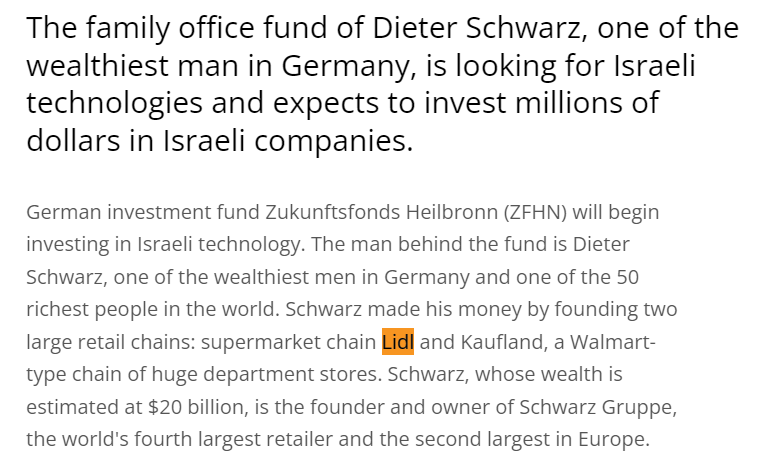
    Moreover, amidst this controversy, reports emerged of the Schwarz Group’s interest in seeking high-tech investments in Israel. Dieter Schwarz, the German billionaire behind the Schwarz Group, expressed intentions to invest millions of dollars in Israeli technologies through the family office fund. Despite the controversy surrounding Lidl’s practices, Schwarz’s interest in investing in Israeli companies reflects a conflicting narrative, raising questions about ethical considerations in business dealings.

    The situation has drawn the attention of France’s Directorate General for Competition Policy, Consumer Affairs, and Fraud Control (DGCCRF), which has initiated an investigation following consumer reports of these deceptive labeling practices.

    This intricate web of events exposes a disconcerting reality—a retail giant embroiled in controversy over alleged misrepresentation while its owner eyes lucrative investments in Israeli technology. Such actions, if proven true, not only undermine consumer trust but also pose ethical quandaries regarding transparency and fair business practices.

    Lidl 2

    Explore More: The Mountain Dew – Israel Connection Unraveled

    The unfolding controversy surrounding Lidl’s alleged mislabeling practices underscores a troubling reality—commerce overshadowing transparency. The supermarket chain’s attempts to mask the origins of Israeli products have not only sparked public outcry but also prompted regulatory scrutiny.

    The investigation initiated by France’s regulatory body reflects the gravity of these allegations and the imperative need for accountability.