Tag: Supporting Israel

  • Garnier – Israel Support: What You Need to Know

    Garnier – Israel Support: What You Need to Know

    Garnier, a renowned brand in skincare, hair care, and cosmetics, falls under the umbrella of L’Oreal, a global giant in the beauty industry. However, recent discussions have surfaced regarding the affiliations of these brands with Israel, prompting questions about their ethical stances.
    Garnier 1

    Also See: BIOTHERM’s Support for Israel: Examining the Details

    Corporate Ties

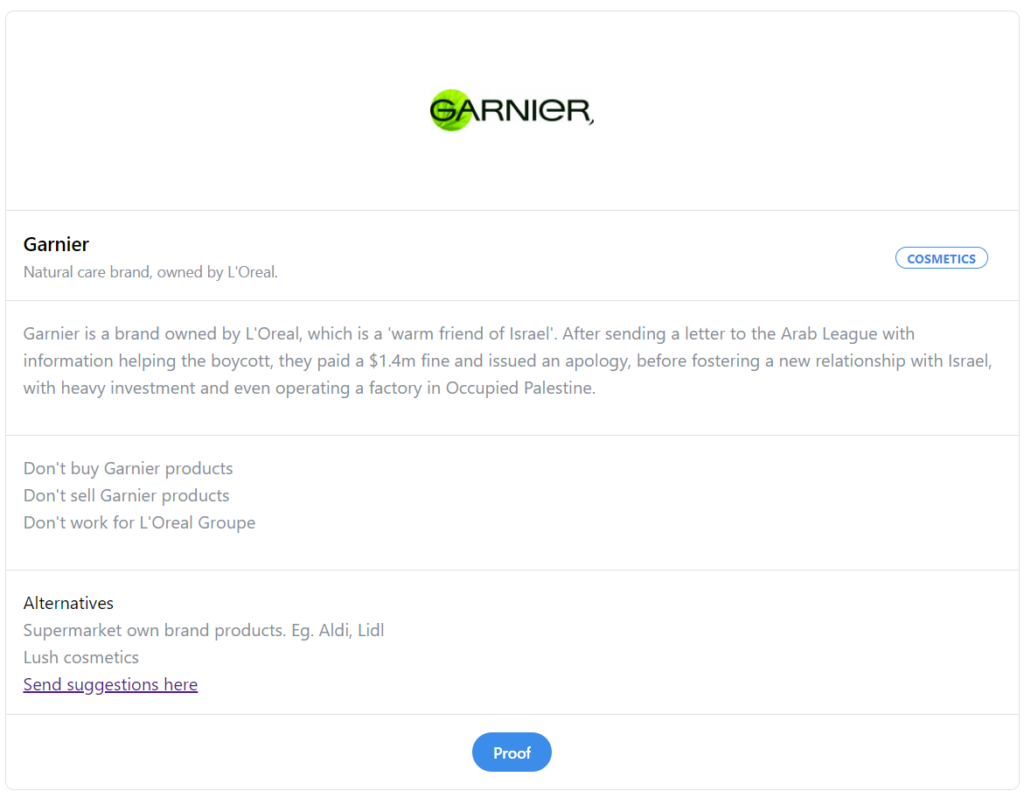
    L’Oreal, the parent company of Garnier, has faced scrutiny for its alleged support for Israel. Reports suggest that L’Oreal had a tumultuous past involving a $1.4 million fine after sending information to the Arab League, which was seen as supporting a boycott against Israel. This led to an apology and a subsequent shift towards a new relationship with Israel. Notably, L’Oreal operates a factory in an area considered part of Occupied Palestine.

    Consumer Concerns

    These reported affiliations have raised concerns among consumers, urging some to reconsider their support for Garnier products and prompting discussions about the ethical considerations involved in their purchases.

    For individuals seeking alternatives to Garnier or L’Oreal products due to these concerns, various options exist. Supermarket own-brand products from retailers like Aldi or Lidl offer alternatives for skincare and hair care needs. Additionally, brands like Lush Cosmetics, recognized for their ethical stance and diverse product range, provide alternatives for those aiming to distance themselves from controversies or perceived affiliations.

    The complexities surrounding corporate affiliations and ethical considerations demonstrate the evolving landscape of consumerism. As consumers become more conscientious about the impacts of their purchases, transparency and ethical accountability within the corporate world have gained importance.

    Explore More: Is Bath & Body Works Supportive of Israel? Explained
    Garnier 2

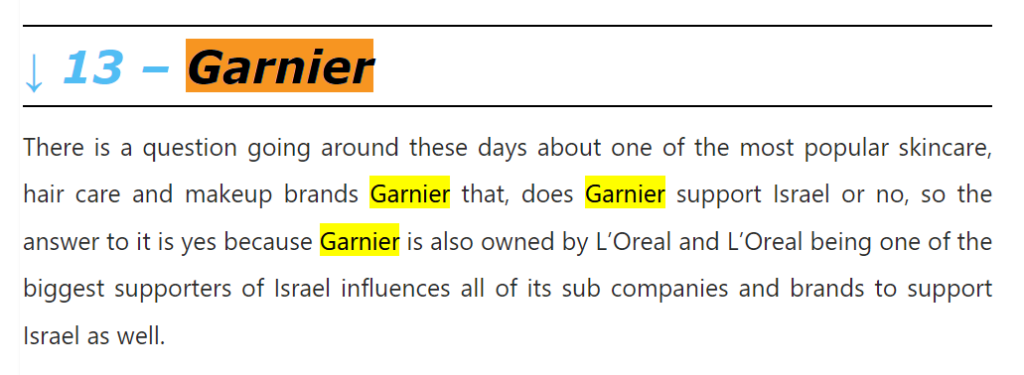
    While Garnier and L’Oreal remain influential players in the beauty industry, the discussions around their alleged connections with Israel underscore the significance of informed consumer choices. Whether opting for alternative brands or continuing with familiar choices, consumers are increasingly considering the ethical implications of their purchases.

    As consumer consciousness continues to shape market dynamics, the need for transparency and ethical accountability within corporate practices becomes increasingly vital. The discourse around Garnier and L’Oreal’s reported affiliations emphasizes the importance of informed consumer decisions in today’s conscientious marketplace.
  • Is Bath & Body Works Supportive of Israel? Explained

    Is Bath & Body Works Supportive of Israel? Explained

    Bath & Body Works, a renowned retailer offering a wide range of body care and home fragrance products, has been under scrutiny due to its parent company’s affiliations and connections.

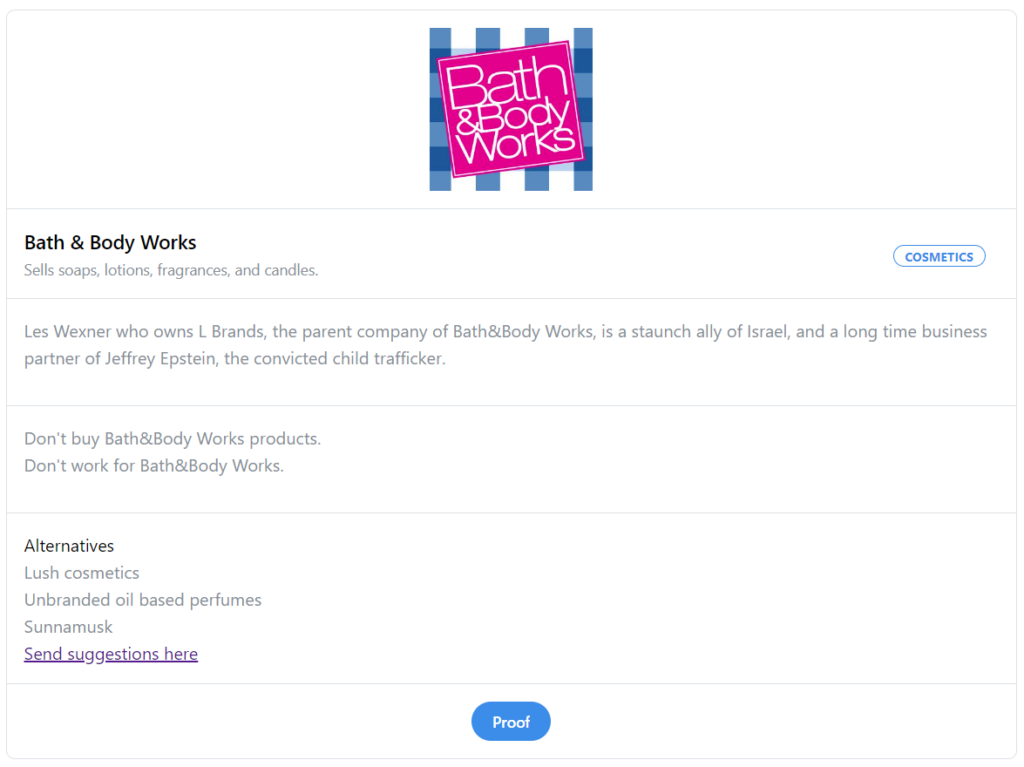
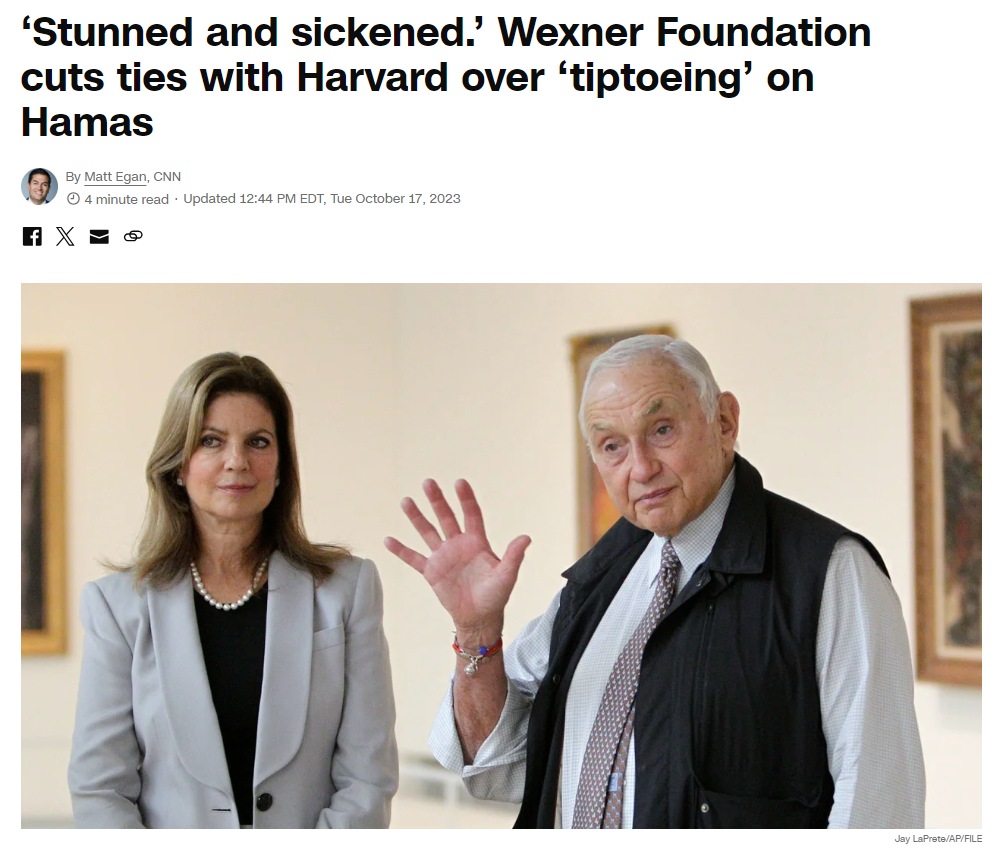
    The owner of L Brands, which oversees Bath & Body Works, Les Wexner, has drawn attention for his strong support of Israel and his past business associations, including a long-time partnership with Jeffrey Epstein, a convicted child trafficker. These connections have sparked discussions about Bath & Body Works’ potential associations and ethical implications.

    Bath & Body Works 1

    Also See: Garnier – Israel Support: What You Need to Know

    Corporate Ownership

    The parent company of Bath & Body Works, L Brands, is owned by Leslie H. Wexner. Wexner, a prominent figure in the business world, has been associated with controversies and connections that have stirred debates about Bath & Body Works’ ethical stance.

    Wexner’s strong support for Israel and his past business dealings, notably his long-time partnership with Jeffrey Epstein, a convicted child trafficker, have sparked concerns about the brand’s associations and potential ethical implications.

    Bath & Body Works Products

    Here is a list of the 20 most popular products under Bath & Body Works:

    1. Japanese Cherry Blossom
    2. A Thousand Wishes
    3. Blackberry & Basil
    4. Coconut Limeade
    5. Sweeter than Honey
    6. Parisian Nights
    7. Warm Vanilla Sugar
    8. Mahogany Teakwood
    9. Champagne Toast
    10. Sea Island Cotton
    11. Twilight Woods
    12. Cactus Flower
    13. Moonlight Path
    14. Endless Weekend
    15. Be Enchanted
    16. Twisted Peppermint
    17. Saltwater Breeze
    18. Hello Beautiful
    19. Forever Sunshine
    20. Sun-Kissed Glow

    Consumer Concerns

    This association has led some consumers to question whether their purchases at Bath & Body Works indirectly support causes or individuals they may not align with ethically. As consumer consciousness grows, inquiries into a company’s connections and ethical standpoint have become more prevalent.

    For those seeking alternatives to Bath & Body Works, there are various options available. Brands like Lush cosmetics, recognized for their ethical sourcing and manufacturing practices, or unbranded oil-based perfumes from companies like Sunnamusk, offer alternatives that distance consumers from perceived controversies.

    The discussion around Bath & Body Works highlights the power consumers hold in shaping market dynamics. As individuals become more conscientious about their purchases, transparency and ethical considerations within the corporate sphere gain importance.

    Explore More: BIOTHERM’s Support for Israel: Examining the Details

    Bath & Body Works 2

    While Bath & Body Works remains a prominent brand in the body care industry, the controversies surrounding its parent company’s affiliations underscore the significance of informed consumer choices. Whether opting for alternative brands or continuing with familiar favorites, consumers are increasingly considering the ethical implications of their purchases.

    The evolving landscape of consumerism emphasizes the need for transparency and ethical accountability in corporate practices. As consumers navigate their shopping preferences, being well-informed about a brand’s connections and values becomes a pivotal aspect of conscientious consumption.

  • BIOTHERM’s Support for Israel: Examining the Details

    BIOTHERM’s Support for Israel: Examining the Details

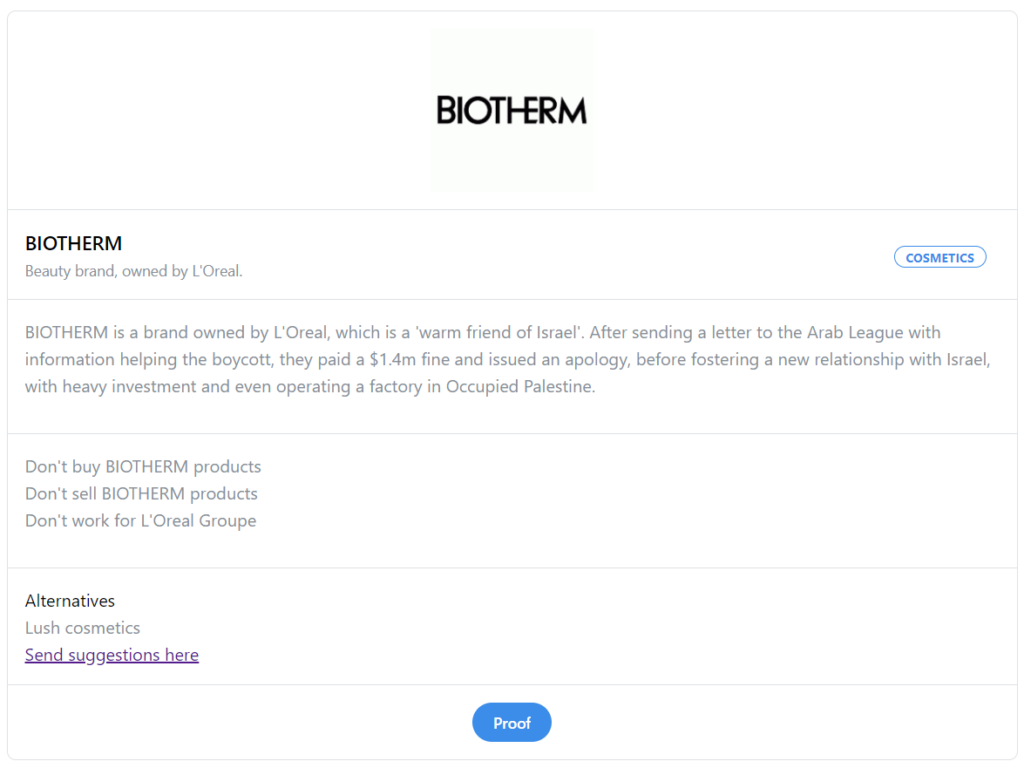
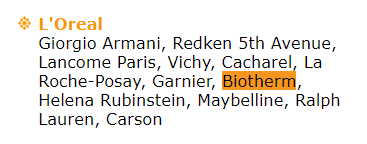
    BIOTHERM, a prominent beauty brand owned by L’Oreal, has found itself entangled in controversy regarding its relationship with Israel. Over the years, its association with geopolitical issues has raised concerns and sparked debates surrounding its operations and connections.

    Biotherm 1

    Also See: Is Bath & Body Works Supportive of Israel? Explained

    BIOTHERM’s Turbulent Past

    In the past, BIOTHERM found itself in the midst of tensions as it faced allegations of supporting a boycott against Israel. It sent a letter to the Arab League with information aiding the boycott, resulting in a substantial fine of $1.4 million. Following this incident, BIOTHERM issued an apology and embarked on a path to establish a new rapport with Israel. This shift was marked by substantial investments, including the operation of a factory in what is termed as “Occupied Palestine.”

    However, it’s crucial to note that this narrative is multifaceted and can be contentious. The terminology used, such as “Occupied Palestine,” reflects varying perspectives and geopolitical stances on the region. Discussions around companies and their involvement in politically sensitive areas often spark debate and diverse opinions, making it a highly charged and complex topic.

    Ethical Considerations and Responsible Engagement

    Furthermore, calls for boycotts of certain brands or companies due to their connections with specific regions or political affiliations are not uncommon. Such calls may arise from ethical considerations or to voice solidarity with particular causes. However, it’s essential for individuals to conduct thorough research, consider multiple viewpoints, and verify information from reliable sources before making informed decisions about their purchasing habits.

    It’s important to understand that discussing these relationships involves navigating a landscape of geopolitical intricacies, ethical considerations, and varying interpretations. Encouraging informed discussions and critical thinking allows individuals to engage with these issues responsibly and constructively.

    Explore More: Garnier – Israel Support: What You Need to Know

    Biotherm 2

    The relationship between BIOTHERM, L’Oreal, and Israel epitomizes the complex interplay between business, geopolitics, and ethical considerations. Engaging with such connections requires navigating through layers of differing opinions and geopolitical complexities.

    Encouraging informed discussions and critical thinking empowers individuals to make conscientious choices in an increasingly interconnected global landscape.

  • The Skittles – Israel Connection Unraveled

    The Skittles – Israel Connection Unraveled

    Within the realm of Mars Wrigley, crafting brands that evoke joy and create memorable moments for millions resonates deeply. Iconic products like M&M’S®, SNICKERS®, MALTESERS®, EXTRA®, and SKITTLES® are relished in over 180 countries, symbolizing moments of delight shared globally.

    This commitment transcends consumer satisfaction, signifying a broader dedication to positively impact the planet and its inhabitants. With over 34,000 devoted associates, Mars Wrigley tirelessly endeavors to revolutionize sourcing, production, and marketing, ensuring consumers relish their favorite treats even more.

    Significant initiatives include a $1 billion investment to transform the cocoa supply chain, advancements in sustainable mint through plant science, and the “Nourishing Wellbeing” commitment aimed at fostering healthier and happier lives for billions worldwide.

    Skittles 1

    Also See: The M&M’s – Israel Connection Unraveled

    Probing Allegations of Israeli Support

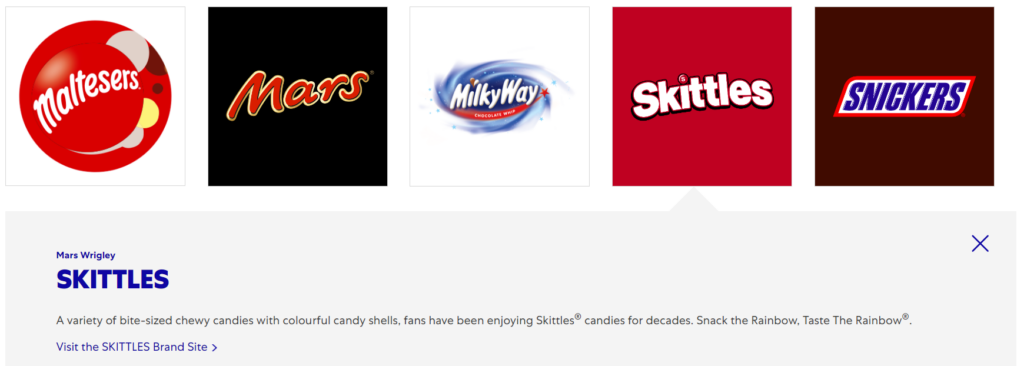
    Skittles, a variety of bite-sized chewy candies with colorful candy shells, has been a beloved snack for decades. Its slogan “Snack the Rainbow, Taste The Rainbow®” encapsulates the joyful experience of indulging in these vibrant treats.

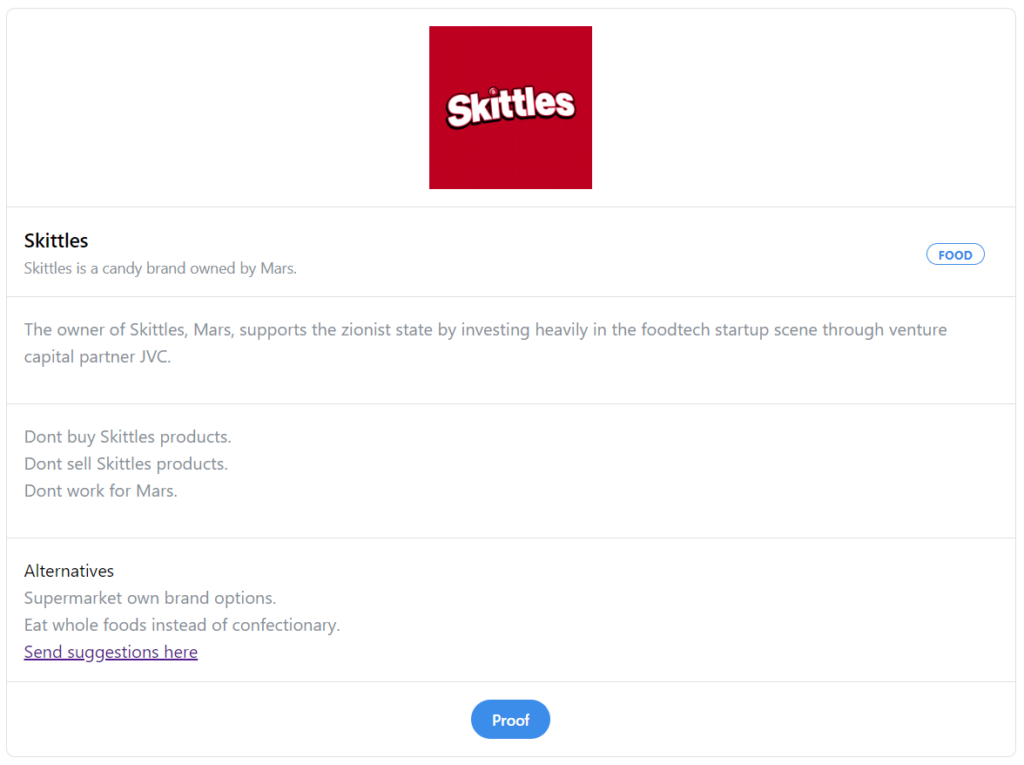
    Recent allegations have emerged concerning a potential link between Skittles and support for Israel through its parent company, Mars. Accusations suggest that Mars, the owner of Skittles, heavily supports Israel’s foodtech startup landscape through substantial investments via its venture capital partner, JVC. This revelation has sparked discussions and activism, urging consumers to refrain from purchasing or promoting Skittles products and discouraging potential employment with Mars, citing ethical concerns over its alleged support for the Zionist state.

    Navigating Choices Amidst Activism

    In response to mounting scrutiny and activism, a movement advocating against the consumption and endorsement of Skittles products has gained momentum. Recommendations extend towards exploring alternatives offered by supermarket-owned brands and advocating for a dietary shift towards whole foods, advocating against processed confectionery.

    Check Out: Snickers’s Support for Israel: Examining the Details

    Skittles 2

    The controversy surrounding Skittles’ alleged support for Israel via its association with Mars underscores the growing importance of ethical consumerism. It prompts individuals to reflect on the ethical implications of their consumer choices and align them with their values.

    As discussions persist, it highlights the heightened awareness among consumers about corporate geopolitical associations and their ethical ramifications. This emphasizes the intricate interplay between consumer decisions and global socio-political landscapes.

    In essence, the scrutiny surrounding Skittles’ alleged ties to Israel via its parent company, Mars, calls for a more thoughtful evaluation of the ethical aspects of consumer purchases. It encourages deeper introspection on the interconnection between consumer choices, corporate actions, and international socio-political contexts.

  • Milky Way – Israel Support: What You Need to Know

    Milky Way – Israel Support: What You Need to Know

    In the expansive realm of Mars Wrigley, crafting brands that evoke smiles and create cherished moments for millions stands as a source of immense pride. With iconic products like M&M’S®, SNICKERS®, MALTESERS®, EXTRA®, and SKITTLES® enjoyed in over 180 countries, these treats symbolize moments of delight experienced globally.

    This commitment transcends mere consumer satisfaction, emphasizing a broader dedication to positively impact the planet and its populace. With over 34,000 dedicated associates, Mars Wrigley tirelessly endeavors to revolutionize sourcing, production, and marketing, ensuring consumers relish their favorite treats even more.

    Key initiatives include a $1 billion investment to transform the cocoa supply chain, advancements in sustainable mint through plant science, and the “Nourishing Wellbeing” commitment aiming to foster healthier and happier lives for billions worldwide.

    Milky Way 1

    Also See: The Skittles – Israel Connection Unraveled

    Understanding Milky Way: A Timeless Delight

    Launched in 1935, Milky Way® stands as a cherished family favorite. Its light whipped center, cloaked in delectable milk chocolate, promises an experience that satisfies appetites while inviting moments of playful indulgence.

    Unveiling Allegations of Israeli Support

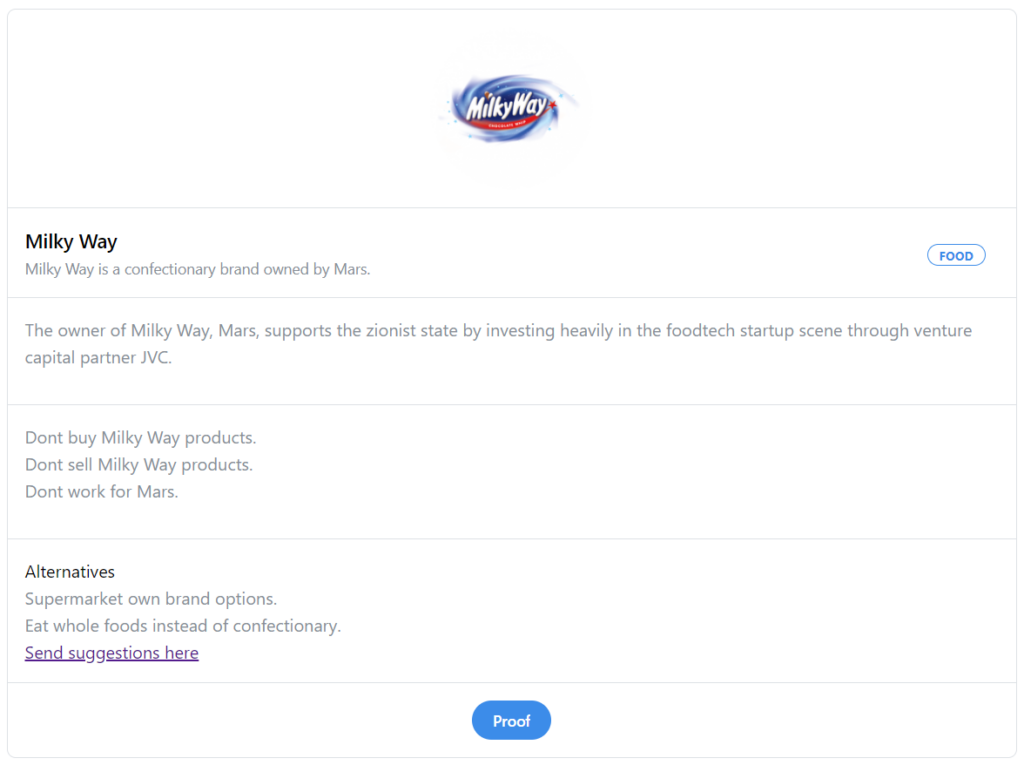
    Recent claims have surfaced regarding a potential link between Milky Way and support for Israel through its parent company, Mars. Accusations suggest that Mars, the owner of Milky Way, heavily supports Israel’s foodtech startup landscape via substantial investments through its venture capital partner, JVC. This revelation has triggered discussions and activism, urging consumers to refrain from purchasing or promoting Milky Way products and discouraging potential employment with Mars, citing ethical concerns over its alleged support for the Zionist state.

    Navigating Choices in Light of Activism

    In response to mounting scrutiny and activism, a movement advocating against the consumption and endorsement of Milky Way products has gained momentum. Recommendations extend towards exploring alternatives offered by supermarket-owned brands and promoting a dietary shift towards whole foods, advocating against processed confectionery.

    Check Out: The M&M’s – Israel Connection Unraveled

    Milky Way 2

    The controversy surrounding Milky Way’s alleged support for Israel via its association with Mars emphasizes the growing importance of ethical consumerism. It prompts individuals to deliberate on the ethical implications of their consumer choices and align them with their moral values.

    As discussions persist, it underscores the heightened awareness among consumers regarding corporate geopolitical associations and their ethical implications. This highlights the intricate interplay between consumer decisions and global socio-political landscapes.

    In essence, the scrutiny surrounding Milky Way’s alleged ties to Israel via its parent company, Mars, calls for a more thoughtful evaluation of the ethical aspects of consumer purchases. It encourages deeper introspection on the interconnection between consumer choices, corporate actions, and international socio-political contexts.

  • Is Twix Supportive of Israel? Explained

    Is Twix Supportive of Israel? Explained

    Within the domain of Mars Wrigley, the commitment to crafting brands that evoke smiles and create cherished moments for millions resonates deeply. Iconic products like M&M’S®, SNICKERS®, MALTESERS®, EXTRA®, and SKITTLES® are savored in over 180 countries, symbolizing moments of joy globally.

    This dedication transcends consumer satisfaction, reflecting a focus on positively impacting both the planet and its inhabitants. With over 34,000 committed associates, Mars Wrigley tirelessly strives to revolutionize sourcing, production, and marketing, ensuring consumers relish their favorite treats even more.

    Notable commitments include a $1 billion investment to reform the cocoa supply chain, sustainable advancements in mint through plant science, and a “Nourishing Wellbeing” initiative aimed at fostering healthier and happier lives for billions worldwide.

    Twix 1

    Also See: Milky Way – Israel Support: What You Need to Know

    Probing Allegations of Israeli Support

    Twix offers a delectable blend of milk chocolate, caramel, and crunchy biscuit, encapsulated in a delicious bar, embodying the simple joy of indulgence.

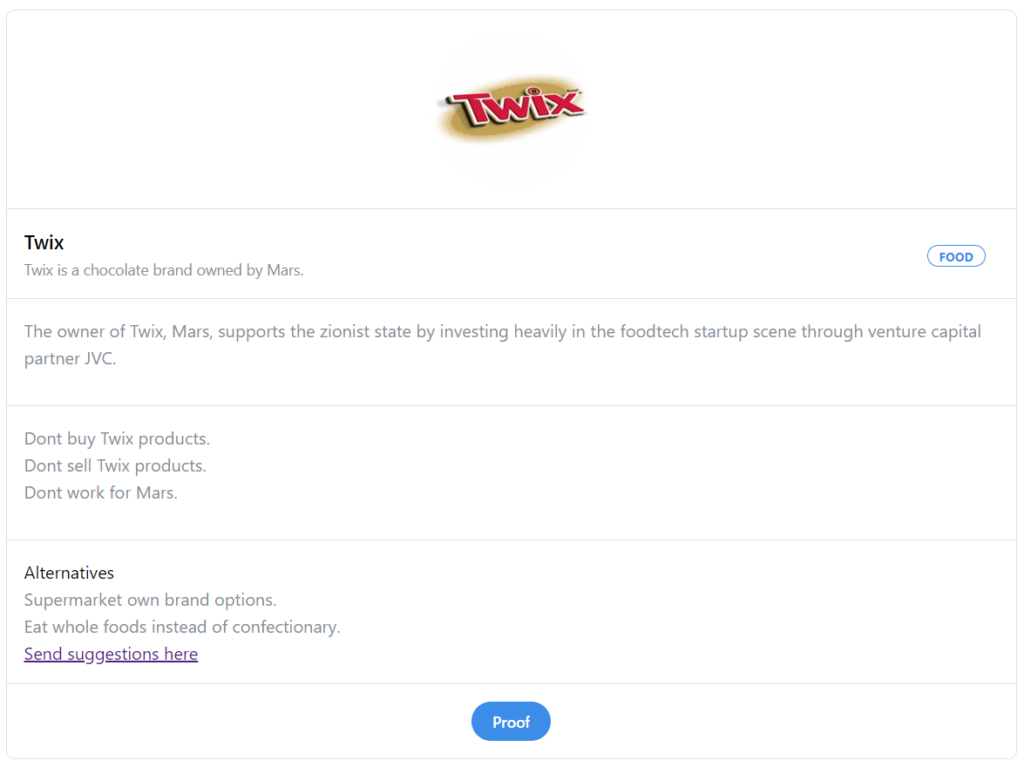
    Recent allegations have surfaced concerning a potential connection between Twix and support for Israel through its parent company, Mars. Accusations point towards Mars’ substantial investments in Israel’s foodtech startup landscape via its venture capital partner, JVC. This revelation has sparked discussions and activism, urging consumers to refrain from purchasing or promoting Twix products and discouraging potential employment with Mars, citing ethical concerns over its alleged support for the Zionist state.

    Navigating Amidst Activism

    In response to mounting scrutiny and activism, a movement has emerged, advocating against the consumption and endorsement of Twix products. Suggestions include exploring alternatives offered by supermarket-owned brands and promoting a dietary shift towards whole foods, advocating against processed confectionery.

    Check Out: The Skittles – Israel Connection Unraveled

    Twix 2

    The controversy surrounding Twix’s alleged support for Israel through its association with Mars emphasizes the increasing significance of ethical consumerism. It encourages individuals to deliberate on the ethical implications of their consumer choices and align them with their values.

    As discussions persist, it underscores the heightened awareness among consumers regarding corporate geopolitical associations and their ethical ramifications. This emphasizes the intricate interplay between consumer decisions and global socio-political landscapes.

    In essence, the scrutiny surrounding Twix’s alleged ties to Israel via its parent company, Mars, calls for a more thoughtful evaluation of the ethical aspects of consumer purchases. It encourages deeper introspection on the interconnection between consumer choices, corporate actions, and international socio-political contexts.

  • Snickers’s Support for Israel: Examining the Details

    Snickers’s Support for Israel: Examining the Details

    Within the realm of Mars Wrigley, pride resonates in creating brands that not only bring smiles to faces but also craft moments cherished by millions globally. Iconic products like M&M’S®, SNICKERS®, MALTESERS®, EXTRA®, and SKITTLES® have become staples in over 180 countries, delighting consumers across the globe.

    This commitment transcends mere consumer satisfaction, emphasizing a dedication to positively impact the world and its inhabitants. With over 34,000 dedicated associates, Mars Wrigley relentlessly endeavors to revolutionize sourcing, production, and marketing practices, ensuring consumers relish their favorite treats even more.

    Key commitments include a $1 billion investment to reform the cocoa supply chain, developing sustainable mint through plant science, and advancing a “Nourishing Wellbeing” initiative to facilitate healthier and happier lives for billions globally.

    Snickers 1

    Also See: Is Twix Supportive of Israel? Explained

    Understanding the Snickers Legacy

    Snickers, renowned as the world’s number one chocolate bar, stands as a hunger-busting treat packed with peanuts, caramel, nougat, all enveloped in milk chocolate. Its iconic slogan, “YOU’RE NOT YOU WHEN YOU’RE HUNGRY,” speaks to its ability to satisfy cravings and restore individuals to their usual selves.

    Scrutinizing Allegations of Israeli Support

    Recent claims have surfaced, indicating a potential link between Snickers and support for Israel through its parent company, Mars. Accusations point to Mars’ substantial investments in Israel’s foodtech startup ecosystem via its venture capital partner, JVC. This revelation has triggered discussions and activism, urging consumers to abstain from purchasing or promoting Snickers products and discouraging potential employment with Mars, citing ethical concerns over its alleged support for the Zionist state.

    Navigating Choices Amid Activism

    In response to the intensifying scrutiny and activism, a movement has emerged, advocating against the consumption and promotion of Snickers products. Recommendations extend towards exploring supermarket-owned brand alternatives and advocating for a dietary shift towards whole foods, advocating against processed confectionery.

    Check Out: Milky Way – Israel Support: What You Need to Know

    Snickers 2

    The controversy surrounding Snickers’ alleged support for Israel through its affiliation with Mars highlights the growing importance of ethical consumerism. It prompts individuals to contemplate the ethical implications of their consumer choices and align them with their moral compass.

    As discussions persist, it underscores the heightened awareness among consumers about the geopolitical associations of corporations and the ethical implications of their affiliations. This spotlights the intricate interplay between consumer decisions and global socio-political contexts.

    In essence, the scrutiny surrounding Snickers’ alleged ties to Israel via its parent company, Mars, calls for a more critical evaluation of the ethical aspects of consumer purchases. It stimulates deeper introspection on the interconnection between consumer choices, corporate actions, and international socio-political landscapes.

  • Royal Canin – Israel Support: What You Need to Know

    Royal Canin – Israel Support: What You Need to Know

    At the core of Mars Petcare’s ethos lies the unwavering belief that pets significantly enhance our world. Striving for ‘A Better World For Pets™,’ their 100,000 Petcare Associates dedicate themselves to the well-being of the 400 million pets globally.

    Their efforts span from tailoring nutrition, through brands like PEDIGREE®, WHISKAS®, and ROYAL CANIN®, to providing top-notch medical care via BANFIELD® Pet Hospitals, VCA®, and AniCura. Addressing broader societal issues, they actively combat pet homelessness and work towards easing veterinary student debt. Fueling innovations at the Waltham Petcare Science Center, they continually drive advancements in pet health through nutrition, data, and veterinary care.

    Royal Canin 1

    Understanding Royal Canin’s Position

    Established in 1968, ROYAL CANIN® stands as a global frontrunner in pet health nutrition. Amidst an ever-evolving industry, their commitment remains steadfast: observing, learning, respecting, and acknowledging the unique traits of cats and dogs. Their life’s work revolves around tailoring nutrition precisely to meet the individual needs of each pet, considering factors such as breed, environment, age, weight, gender, digestion, genetic makeup, and lifestyle.

    Unraveling Allegations of Israeli Support

    Recent claims have surfaced concerning Royal Canin’s ties to Israel through its parent company, Mars. Allegations suggest that Mars, the owner of Royal Canin, heavily supports Israel’s foodtech startup sector via significant investments through its venture capital partner, JVC. This revelation has triggered widespread discussions, urging consumers to refrain from purchasing or promoting Royal Canin products and discouraging potential employment with Mars, citing ethical concerns over its support for the Zionist state.

    Exploring Alternatives in Light of Activism

    In response to the mounting scrutiny and activism, a movement advocating against the consumption and endorsement of Royal Canin products has gained momentum. The call extends to exploring alternatives such as supermarket-owned brands and advocating for a shift towards whole foods over processed confectionery.

    Royal Canin 2

    The controversy surrounding Royal Canin’s purported support for Israel through its affiliation with Mars emphasizes the evolving landscape of ethical consumerism. It prompts individuals to consider the moral dimensions of their consumer choices and align them with their values.

    As discussions persist, it underscores the increasing awareness among consumers about the geopolitical associations of corporations and the implications of their affiliations. This highlights the intricate interplay between consumer decisions and global socio-political landscapes.

    In essence, the scrutiny surrounding Royal Canin’s ties to Israel via its parent company, Mars, calls for a more critical assessment of the ethical implications of consumer purchases. It encourages deeper introspection on the interconnection between consumer choices, corporate actions, and international socio-political contexts.

  • Is Whiskas Supportive of Israel? Explained

    Is Whiskas Supportive of Israel? Explained

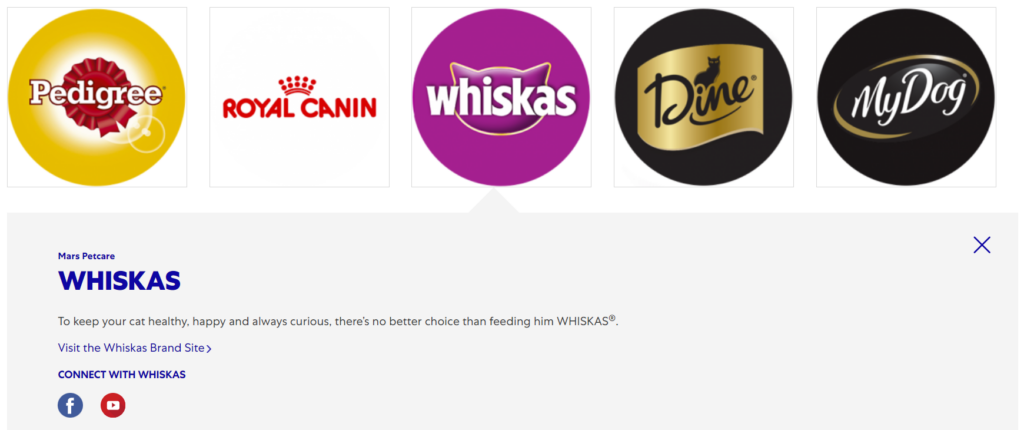
    Mars Petcare stands firm in the belief that pets contribute significantly to the enrichment of our world. In their pursuit of ‘A Better World For Pets™,’ their 100,000 Petcare Associates channel their efforts towards the well-being of the world’s 400 million pets.

    Ranging from nutritional considerations through brands like PEDIGREE®, WHISKAS®, and ROYAL CANIN®, to top-tier medical care provided by BANFIELD® Pet Hospitals, VCA®, and AniCura, Mars Petcare aims to elevate pet lives holistically. Additionally, they tackle larger societal issues, such as pet homelessness, and strive to alleviate student debt for veterinarians. Innovations emerging from the Waltham Petcare Science Center further fuel advancements in pet health through nutrition, data, and veterinary care.

    Among the roster of Mars Petcare’s brands stands WHISKAS®, a stalwart in feline nutrition, aimed at ensuring the health, happiness, and natural curiosity of cats.

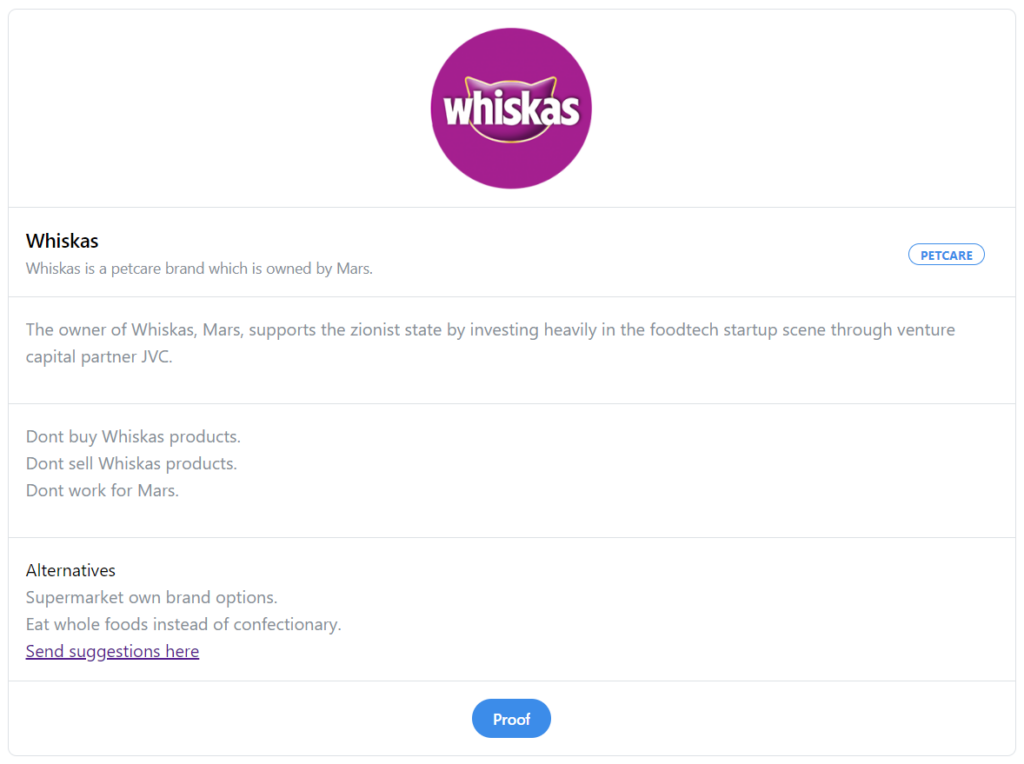
    Whiskas 1

    Exploring Whiskas’ Association with Israel

    Recent claims have surfaced regarding Whiskas’ ties to Israel through its parent company, Mars. Allegations suggest that Mars, the owner of Whiskas, significantly supports Israel’s foodtech startup scene by heavily investing through its venture capital partner, JVC. This revelation has sparked discourse and activism, urging individuals to abstain from purchasing or selling Whiskas products and discouraging employment with Mars, citing ethical concerns over its support for the Zionist state.

    The Call for Alternatives

    In response to the scrutiny and activism, a movement has gained traction, advocating against the consumption and promotion of Whiskas products. The call extends to exploring alternative options, such as supermarket-owned brands, as well as promoting a dietary shift towards whole foods over processed confectionery.

    The controversy surrounding Whiskas’ purported support for Israel via Mars’ investments has triggered a broader conversation about ethical consumerism. It prompts individuals to consider the moral implications of their consumer choices and align them with their ethical compass.

    Whiskas 2

    As discussions persist, it highlights the growing awareness among consumers about the socio-political landscapes corporations operate within and the implications of their affiliations. This underscores the evolving relationship between consumer decisions and global socio-political dynamics.

    In essence, the scrutiny surrounding Whiskas’ ties to Israel via its parent company, Mars, emphasizes the need for consumers to critically assess the ethical ramifications of their purchases. It prompts a deeper reflection on the interconnectedness of consumer choices, corporate actions, and global socio-political contexts.