Category: News

  • Mango Position on the Israeli-Palestine Conflict

    Mango Position on the Israeli-Palestine Conflict

    The recent surge in hostilities between Israel and Palestine has sparked a proactive response from key Spanish fashion brands, prominently Mango, within the region.

    Mango, alongside revered Spanish labels such as Zara, Pull&Bear, and Tous, has opted to shutter nearly all of its approximately 50 stores in Israel, managed through franchise partnerships. This strategic move underscores the reverberations of geopolitical unrest on the operational landscape of global businesses.
    Mango
    Mango

    Check Out: Wingstop Stand on Israel-Palestine

    Impact on Retail Dynamics

    In the wake of the unprecedented hostilities between Israel and Hamas, and subsequent retaliatory Israeli airstrikes on Gaza, several Spanish fashion retailers, including Mango, have taken the decision to temporarily cease operations in Israel. This collective action among these brands highlights a unified stance in reaction to the volatile environment, with only a select few outlets remaining operational pending further developments. Moreover, the closure of Tous, a notable jewelry brand with a dozen franchise-operated stores in Israel, exemplifies the widespread impact reverberating across retail chains.

    Larger Business Ramifications

    Beyond the retail sphere, the escalating tensions in the Middle East hold implications for various Spanish corporations engaged in business dealings within Israel. For instance, entities like Comsa, part of a Spanish-Israeli consortium involved in a forthcoming tramline construction project in Jerusalem, have noted a minimal immediate impact owing to the project’s pre-commencement status and the absence of deployed personnel in the country. This underscores the potential ripple effect across diverse industries in the face of the ongoing conflict.

    Explore More: Boycott List: Fashion Companies Supporting Israel You Should Be Aware Of
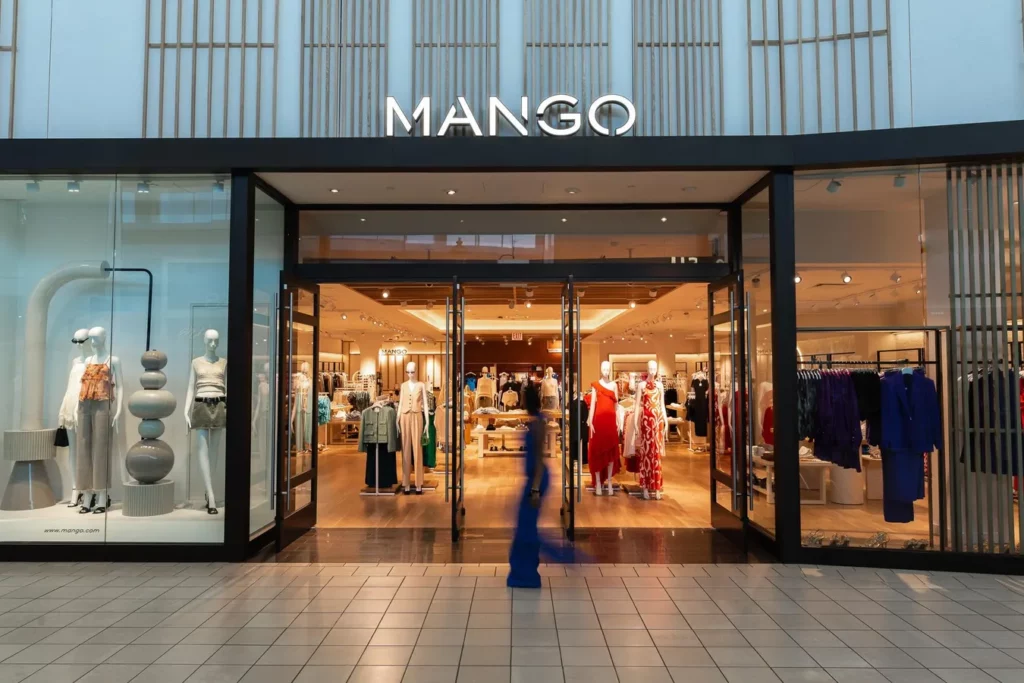
    Mango Store
    Mango Store

    Mango’s substantial decision to predominantly close its Israeli outlets, aligned with the actions of other Spanish brands, mirrors the overarching trend of businesses reacting to the escalated tensions in the region. Notably, no concrete evidence linking Mango directly to Israel has emerged.

    The closures serve as a testament to the intricate repercussions of geopolitical conflicts on multinational corporations, necessitating a reassessment and adaptation of operational strategies. The evolving situation continues to pose multifaceted challenges and uncertainties for businesses, influencing their decision-making processes and operational conduct within the region.
  • Takis’s Support for Israel: Examining the Details

    Takis’s Support for Israel: Examining the Details

    Takis, a brand nestled under the Grupo Bimbo banner, recently made headlines for its investment in EatSane, an Israeli startup dedicated to crafting healthier, low-carb products.

    However, this move has spurred skepticism and debates, posing questions about the brand’s image and the coherence of its investment strategy within the food industry.

    Takis
    Takis

    Check Out: The Kellogg’s – Israel Connection Unraveled

    Takis’ Investment in EatSane

    The investment by Takis, a snack powerhouse within Grupo Bimbo, into EatSane has highlighted contradictions. Despite EatSane’s emphasis on health-centric offerings, Takis is known for its snack portfolio often criticized for additives and artificial ingredients. This partnership raises questions about the harmony between Takis’ current product lineup and the investment in a health-oriented startup.

    Grupo Bimbo’s Influence and Investment

    With Grupo Bimbo as Takis’ parent company, the investment in EatSane sparks ethical quandaries. The conglomerate boasts an array of snack products, leading to skepticism regarding the authenticity of the investment’s intent in promoting healthier food alternatives. This disparity in product portfolios calls into question the depth of commitment towards fostering a healthier food landscape.

    Explore More: Discovering the Top Israeli Food Brands

    Takis Variations
    Takis Variations

    The collaboration between Takis, Grupo Bimbo, and EatSane amplifies a compelling narrative within the food industry. This partnership invites scrutiny into the alignment between messaging and tangible actions, emphasizing the need for coherence between investment strategies and actual product offerings.

    As stakeholders observe the unfolding dynamics, transparency and authenticity in corporate partnerships will be pivotal in shaping consumer perceptions and fostering trust within the industry.

  • Android Stand on Israel-Palestine

    Android Stand on Israel-Palestine

    Amidst the widespread usage of Android, a globally dominant operating system, questions have arisen about its alleged involvement in Israeli activities in Palestine. To delve into these claims, a closer examination of recent events and the platform’s stance on controversial content is imperative.

    Android
    Android

    Check Out: Takis’s Support for Israel: Examining the Details

    The Blocking of Telegram and Google’s Strict Policies

    In recent occurrences, Telegram, a social messaging platform, took action to block Hamas channels specifically on Android devices, citing violations of Google’s app store guidelines. This move, confined to Android users, highlights Google’s stringent policy against violent or terrorist-related content within apps. It mirrors similar actions taken by other social media platforms, collectively striving to regulate such contentious content. However, this effort also revealed the challenges of content moderation during conflict, as Telegram’s CEO expressed hesitance in completely shutting down Hamas-related channels.

    Android’s Position and the Lack of Conclusive Evidence

    Despite ongoing speculation tying Android to Israeli affairs, concrete evidence supporting these claims remains elusive. No official releases or campaigns from Android’s official channels explicitly connect the operating system to Israel or its activities in the region. This absence of a direct association implies a dearth of substantial proof corroborating the alleged connections.

    Explore More: Boycott Alert: Tech Companies in Support of Israeli Occupation

    Android Logo
    Android Logo

    The recent incident involving Telegram’s actions against specific Hamas channels on Android devices underscores the platform’s dedication to upholding content guidelines.

    Nevertheless, the absence of documented support or involvement by Android in Israeli affairs points to unverified claims. While discussions persist, compelling evidence validating Android’s direct ties to Israeli activities is still absent. This accentuates the necessity for solid proof to substantiate such allegations.

  • Puma Ceases Israel Sponsorship: Latest Updates

    Puma Ceases Israel Sponsorship: Latest Updates

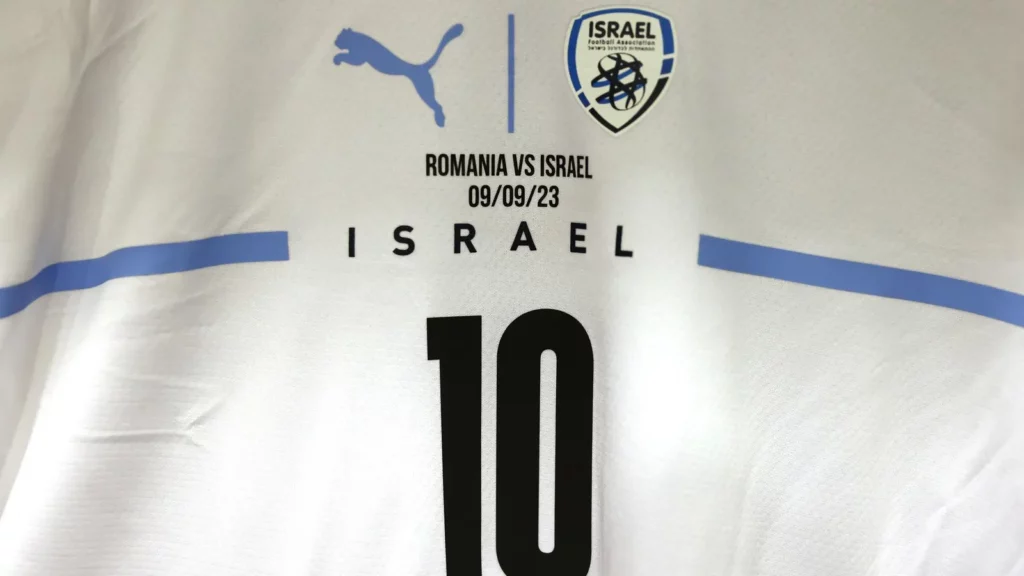
    Puma’s recent decision to terminate its sponsorship with Israel’s national football team by 2024 has ignited significant controversy and raised questions about corporate actions within politically charged contexts.

    This move, set to take effect in a year, has spurred debates regarding its timing and underlying motives, drawing attention from activists and critics alike.

    Puma
    Puma

    Check Out: Android Stand on Israel-Palestine

    The BDS Campaign and Puma’s Response

    At the heart of the controversy lies Puma’s association with the Israel Football Association (IFA), which includes teams situated in settlements viewed as illegal under international law. Advocates, primarily through the BDS movement, have consistently pressed Puma to sever ties with the IFA, employing various tactics such as protests, online campaigns, and calls for boycotts. However, Puma contends that this decision isn’t a direct response to the pressure from boycott movements. Instead, the sportswear giant asserts that it’s part of a strategic shift aimed at revising its partnerships and adopting a “fewer-bigger-better” approach with other national teams.

    Corporate Reactions Amid Conflict

    Puma’s move comes amid a broader landscape where companies confront criticism for their affiliations or actions during periods of geopolitical tension. Notably, brands like Zara have faced backlash and accusations of insensitivity due to their marketing strategies amid sensitive times. The discussions surrounding Puma’s decision reflect a larger discourse about corporate responsibility and the influence of societal movements in holding companies accountable for their choices in contentious geopolitical settings.

    Explore More: Exploring Puma’s Relationship with Israel

    Puma Israel
    Puma Israel

    Puma’s decision to sever ties with Israel’s national football team has sparked discussions on the role of corporations in politically charged scenarios. While Puma maintains that its move is not a direct reaction to the boycott calls, the ongoing BDS campaign perceives this as a triumph.

    This episode highlights the increasing influence of societal movements in urging corporate accountability amidst geopolitical conflicts and underscores the intricate interplay between business decisions and political sensitivities.

  • Lenovo – Israel Support: What You Need to Know

    Lenovo – Israel Support: What You Need to Know

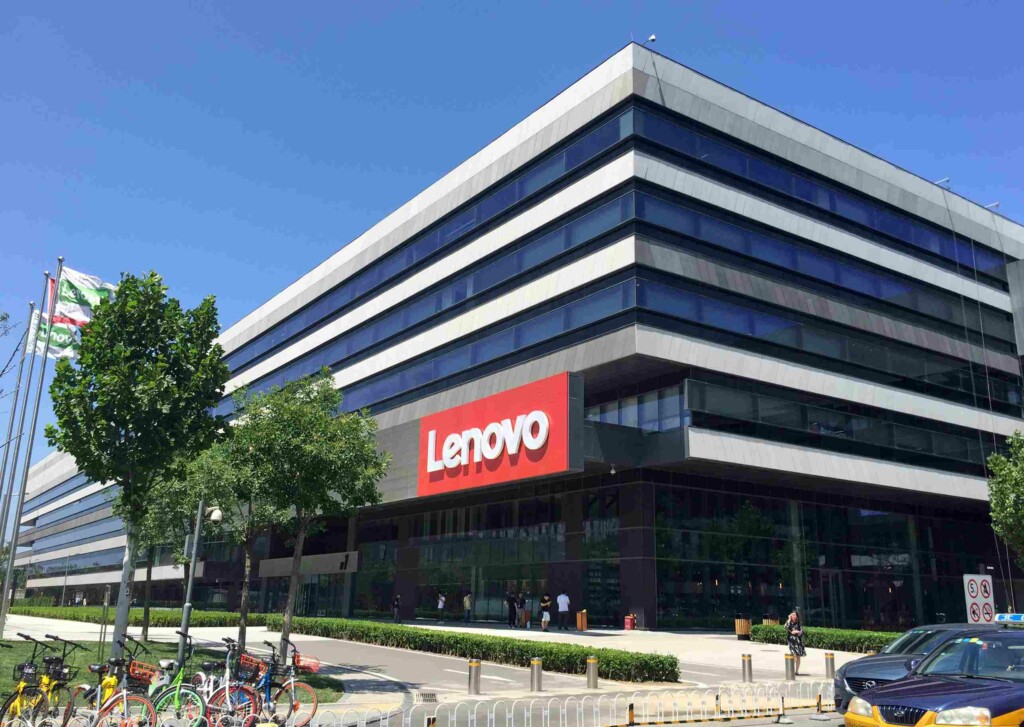
    Lenovo, a global tech juggernaut, has recently taken a prominent stride in Israel’s tech scene with the inception of the Lenovo Cybersecurity Innovation Center (LCIC) in collaboration with Ben-Gurion University of the Negev.

    This initiative signifies a concerted effort by Lenovo to fuse technological advancements with a steadfast dedication to cybersecurity, addressing the dynamic challenges posed by an increasingly digital landscape.

    Lenovo
    Lenovo

    Check Out: Puma Ceases Israel Sponsorship: Latest Updates

    Synergy of Expertise

    The partnership between Lenovo and Ben-Gurion University marks the convergence of academic research and commercial cybersecurity expertise. This collaboration serves as a proactive stance towards cybersecurity research for Lenovo, ensuring that security solutions evolve in tandem with the ever-morphing threat landscape. Simultaneously, the university gains access to practical applications, empowering researchers to tackle real-world cybersecurity challenges by marrying academic knowledge with industry insights.

    Elevating ThinkShield

    The LCIC’s primary thrust revolves around bolstering Lenovo’s ThinkShield portfolio through innovations in zero-trust architecture, particularly in hardware cybersecurity. ThinkShield, Lenovo’s comprehensive security suite, encapsulates a security-first approach in its hardware, software, and services. This strategic move ensures security is an intrinsic part of the innovation process, dispelling the notion that robust security stifles business opportunities or user experiences.

    Explore More: Boycott Alert: Tech Companies in Support of Israeli Occupation

    Lenovo Co.
    Lenovo Co.

    Lenovo’s establishment of the LCIC exemplifies its commitment to leading the charge in secure digital transformation. By blending cutting-edge advancements in zero-trust architecture and amalgamating academic and commercial expertise, Lenovo aims to reinforce its position as a provider of robust security solutions without compromising on innovation.

    This endeavor underscores the pivotal role played by innovation-driven cybersecurity in an ever-evolving digital landscape.

  • Is Pringles Supportive of Israel? Explained

    Is Pringles Supportive of Israel? Explained

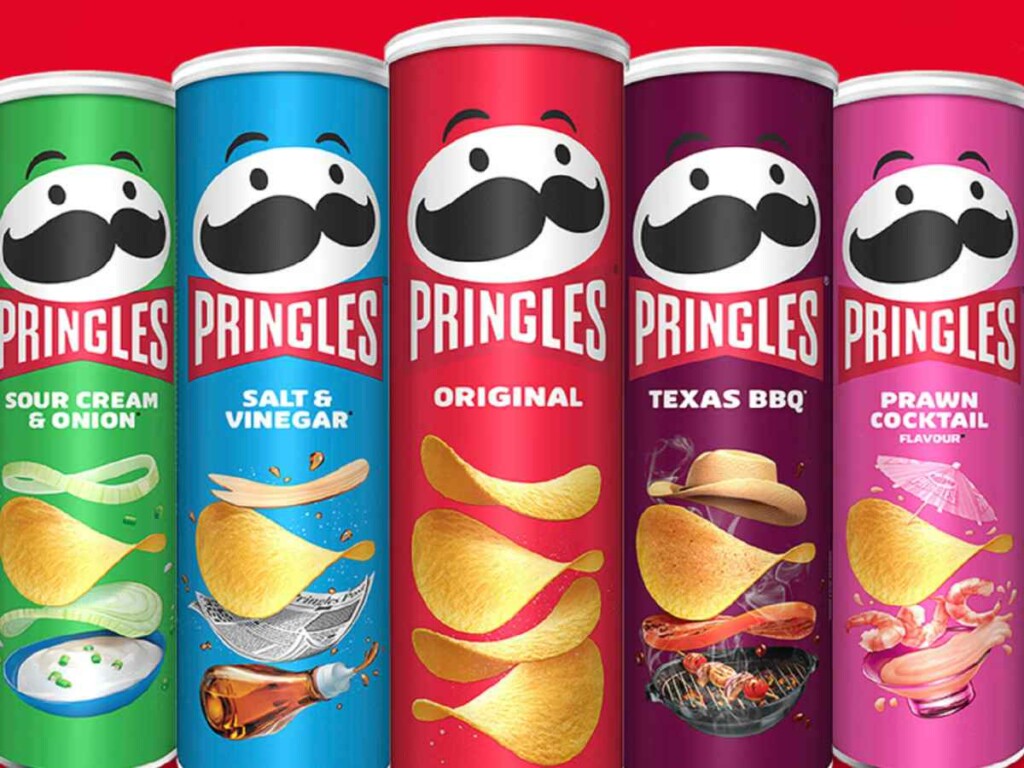
    Pringles, the beloved American snack brand famed for its stackable potato crisps, has encountered a challenging journey within the Israeli market under the helm of Kellogg’s ownership.

    The story of Pringles’ struggles mirrors Kellogg’s difficulties in establishing a strong foothold in Israel’s competitive breakfast cereal industry.

    Pringles
    Pringles

    Check Out: Lenovo – Israel Support: What You Need to Know

    Kellogg’s Israeli Market Turmoil

    Despite its global dominance, Kellogg’s faced considerable setbacks in Israel’s market landscape. The recent sale of its Israeli franchise for $15 million to S. Schestowitz Ltd. signifies a turning point, marking a decline from its former dominance in the Israeli market. Kellogg’s gradual decline, dropping from a 20% market share to a mere 11%, stands in stark contrast to competitors like Telma and Nestle, holding 63% and 12% respectively in Israel’s breakfast cereal industry, estimated at NIS 300 million.

    Pringles’ Influence and the Larger Context

    Pringles, nestled under Kellogg’s umbrella, felt the reverberations of the conglomerate’s challenges in Israel. While Pringles’ direct role might not be overt, the struggles of Kellogg’s resonate within Pringles’ landscape. Despite Pringles’ global acclaim, its sway within Israel faced limitations, reflecting the broader issues Kellogg’s encountered in establishing a stronghold within Israel’s breakfast cereal market.

    Explore More: Discovering the Top Israeli Food Brands

    Pringles Variations
    Pringles Variations

    Pringles’ story in Israel echoes the wider challenges Kellogg’s grappled with while striving to carve a solid presence in Israel’s fiercely competitive breakfast cereal sector.

    The complex interplay of market dynamics and cutthroat competition elucidates the intricate journey Pringles navigated under Kellogg’s ownership within Israel’s breakfast cereal terrain. The brand’s indirect struggles within Israel symbolize the complex path multinational brands tread when trying to entrench themselves in specific regional markets.

  • Corn Flakes’s Support for Israel: Examining the Details

    Corn Flakes’s Support for Israel: Examining the Details

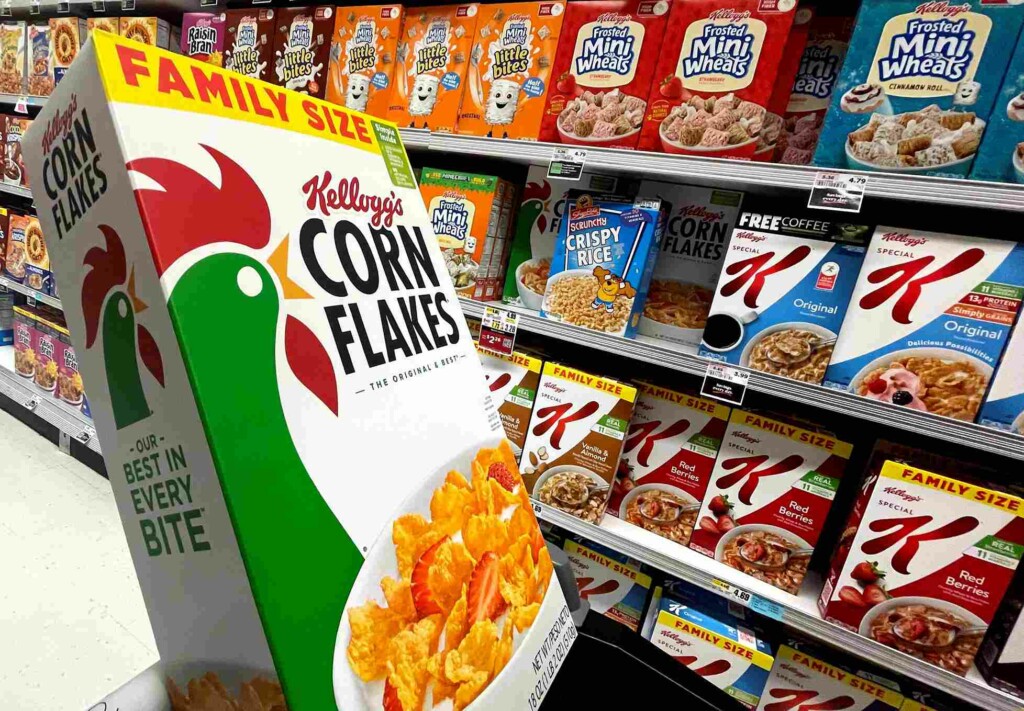
    Kellogg’s, the iconic creator of Corn Flakes, has been turning heads beyond its delicious cereals with a spotlight on its kosher-certified production process.

    The Trafford Park factory in Manchester, known as the world’s largest cereal-producing plant, recently underwent a meticulous kosher inspection, shedding light on Kellogg’s stringent efforts to maintain kosher standards.

    Kellogg's Corn Flakes
    Kellogg’s Corn Flakes

    Check Out: Is Pringles Supportive of Israel? Explained

    Kosher Commitment at Scale

    Within the colossal one-million-square-foot facility, Kellogg’s daily output of a million boxes, totaling 185,000 tonnes of Corn Flakes and other cereal favorites for the UK and Europe, includes a significant portion certified as kosher. The Trafford Park site has emerged as a significant hub for kosher-certified production, ensuring a broad kosher-supervised operation within the country.

    Rigorous Checks and Manufacturing Mastery

    Under the vigilant eye of Dayan Yehuda Osher Steiner, overseeing kosher compliance for a decade, Kellogg’s meticulous inspections extend across 60 global factories. The kosher certification process involves comprehensive examinations, meticulously analyzing ingredients and scrutinizing production machinery to ensure alignment with kosher laws. From inspecting grape derivatives to monitoring the sweeteners’ composition, every detail undergoes thorough inspection.

    Explore More: Discovering the Top Israeli Food Brands

    Corn Flakes
    Corn Flakes

    Kellogg’s enduring dedication to kosher certification transcends a mere stamp; it’s a commitment to ethics and inclusivity. By catering to diverse consumer needs through kosher and halal certifications, Kellogg’s Corn Flakes and other products aim to resonate with a broader audience.

    The intense kosher supervision at the Trafford Park factory signifies Kellogg’s unwavering pledge to uphold spiritual values and dietary preferences, symbolizing more than just a morning meal choice.

  • The Kellogg’s – Israel Connection Unraveled

    The Kellogg’s – Israel Connection Unraveled

    Kellogg’s, a global giant commanding a significant share of the breakfast cereal market worldwide, recently made headlines by selling its Israeli franchise to S. Schestowitz Ltd. for a reported $15 million.

    This shift in strategy signifies a significant change in Kellogg’s approach to the Israeli market, an arena where it has lagged behind competitors.

    Kellogg's
    Kellogg’s

    Check Out: Corn Flakes’s Support for Israel: Examining the Details

    Transition in Kellogg’s Israeli Franchise

    Despite its dominant presence globally, Kellogg’s has struggled to maintain a substantial foothold in Israel, allowing competitors like Telma and Nestle to secure larger market shares. Kellogg’s reportedly controlled only 11% of the Israeli market, trailing significantly behind Telma’s substantial 63% and Nestle’s 12% market shares. While the Israeli breakfast cereal market experienced robust growth, Kellogg’s found itself falling behind.

    Schestowitz’s Foray and Business Shift

    The sale of Kellogg’s Israeli franchise to S. Schestowitz Ltd., primarily known for its ventures in cosmetics and toiletries, marks a significant change for both companies. Schestowitz, having recently entered the food sector and importing established brands, has signaled an intent to diversify its business portfolio. This acquisition reflects Schestowitz’s ambition to expand into the food industry, potentially reshaping the market landscape.

    Explore More: Discovering the Top Israeli Food Brands

    Kellogg's Products
    Kellogg’s Products

    Kellogg’s decision to sell its Israeli franchise to S. Schestowitz Ltd. represents a pivotal shift in its approach to the Israeli market. While aiming for a stronger market presence, Kellogg’s faces persistent challenges and criticisms, particularly concerning its use of genetically modified organisms (GMOs).

    Addressing these concerns and ensuring transparency about product safety measures will be critical as Kellogg’s navigates this transition and seeks to regain consumer trust and market share in Israel’s competitive breakfast cereal industry.

  • Examining the Claims: Is Shein Truly Unsupportive of Israel?

    Examining the Claims: Is Shein Truly Unsupportive of Israel?

    In the dynamic landscape of the Israel-Palestine conflict, one brand has taken a stand that has captivated the attention of many – Shein, the renowned online fast fashion retailer headquartered in Singapore. As the world’s largest fashion retailer in 2022, Shein has found itself at the center of a controversy surrounding its purported support for Palestine.

    Upon closer examination, it becomes apparent that Shein has embraced a position aligned with Palestine in the ongoing Middle East conflict, sparking positivity among certain circles. Let’s delve into some noteworthy aspects:

    Shein Support For Palestine
    Shein Support For Palestine
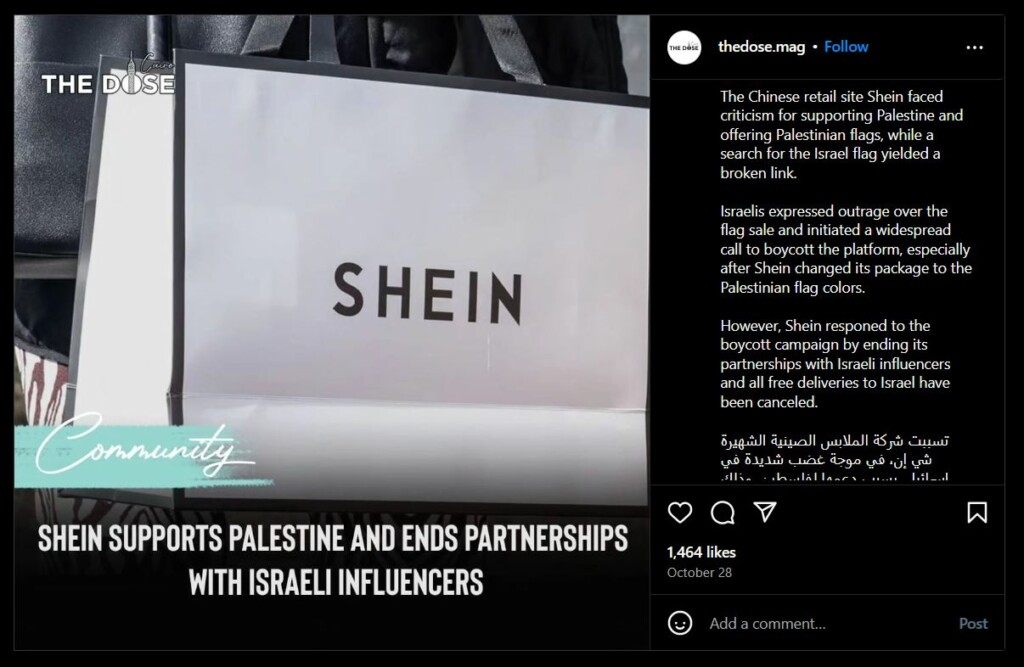
    1. Solidarity in Action: Shein made headlines by suspending the sale of Israeli flags, demonstrating a tangible gesture of solidarity with Palestine. This move, although met with criticism from some Israeli customers, resonated positively with those advocating for Palestinian rights.
    2. Empowering Symbols: The decision to continue selling Palestinian flags while ceasing Israeli flag sales underscored Shein’s commitment to supporting Palestinian narratives. The platform’s colorful packaging featuring the Palestinian flag colors became a symbol of empowerment for those sympathetic to the Palestinian cause.
    3. Taking a Stand: In response to the boycott calls and outrage from certain quarters, Shein responded by terminating partnerships with Israeli influencers and canceling free deliveries to Israel. This assertive stance showcased Shein’s dedication to principles it believes in, garnering support from individuals who share similar sentiments.
    4. Maintaining Dignified Silence: While criticism mounted from Israel, Shein opted not to issue an official statement, allowing its actions to speak volumes. This dignified silence left room for interpretation, fostering a sense of mystery around the company’s motives and sparking curiosity among consumers.
    5. Exploring Alternatives: Reports speculating about Shein’s actions being a form of “punishment” for Israel have generated intrigue. Without an official statement, these speculations add an air of mystery to Shein’s narrative, engaging consumers in discussions about the intersection of commerce and geopolitics.

    See also: Do Lindt Chocolate support Israel?

    In conclusion, Shein’s alleged supportive stance towards Palestine has injected a positive and empowering dimension into the conversation surrounding the Israel-Palestine conflict. As consumers navigate through these nuanced discussions, the impact on Shein’s reputation and customer base remains uncertain, yet the brand’s bold actions have undoubtedly left an indelible mark on the ongoing discourse.