Lancôme is a prestigious French luxury cosmetics and skincare brand that was founded by Armand Petitjean in 1935. The parent company of Lancôme is L’Oréal, one of the largest cosmetics companies globally. Armand Petitjean, a French entrepreneur, had an extensive background in the fragrance and cosmetics industry before establishing Lancôme. He previously worked for Coty Inc., a leading fragrance and cosmetics company, and had a successful career as the CEO of its French operations. It was his vision to create a brand that would embody elegance, sophistication, and French luxury, which led to the birth of Lancôme.
Armand Petitjean’s recognition as the founder of Lancôme stems from his remarkable marketing strategies and commitment to quality. He named the brand after the ruins of a castle called Le Château Lancosme, which embodied the essence of French beauty and femininity. Through innovative formulations, Lancôme became renowned for its high-quality skincare products and high-end perfumes. Petitjean’s vision of providing women with personalized beauty and indulgence reflected in Lancôme’s commitment to creating effective products that enhance both inner and outer beauty. Today, Lancôme is recognized worldwide for its iconic products such as the Advanced Génifique serum, the Hypnôse mascara, and the La Vie Est Belle fragrance.
See also: Cinnabon’s Support for Israel
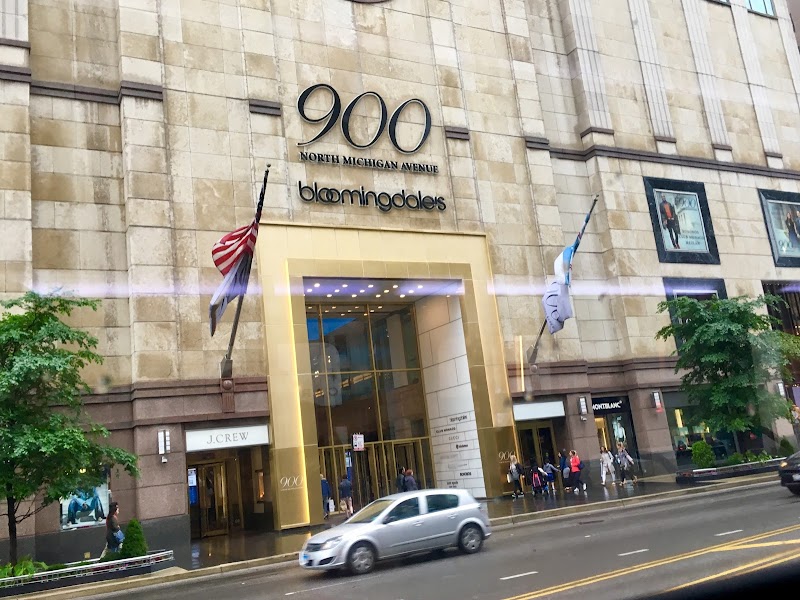
Lancome in the United States
With the data at hand, we need supplementary information to thoroughly examine whether Lancome endorses Israeli activities and plays a role in the occupation of Palestinian territories. The subsequent analysis presents the outcomes of our comprehensive review for further insight.
Participate in our enlightening quiz on Palestine and Israel. Test your knowledge, foster dialogue, and broaden your perspective.
Unpacking Claims: Lancome’s Suspected Ties to Israel
Amidst the persistent conflicts between Israel and Palestine, consumers are actively seeking ways to express solidarity with the Palestinian people. One impactful strategy involves boycotting products that are known to provide support, either morally or materially, to Israeli authorities. Notably, refraining from purchasing items associated with Lancome is seen as a concrete step in resisting the Israeli occupation in Palestinian territories.
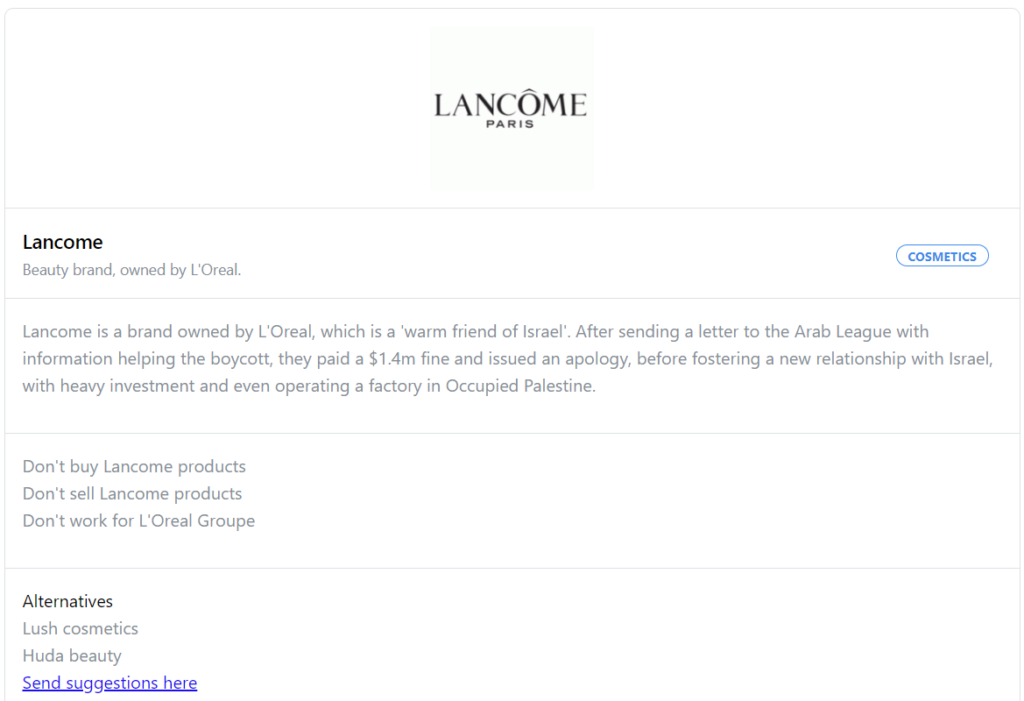
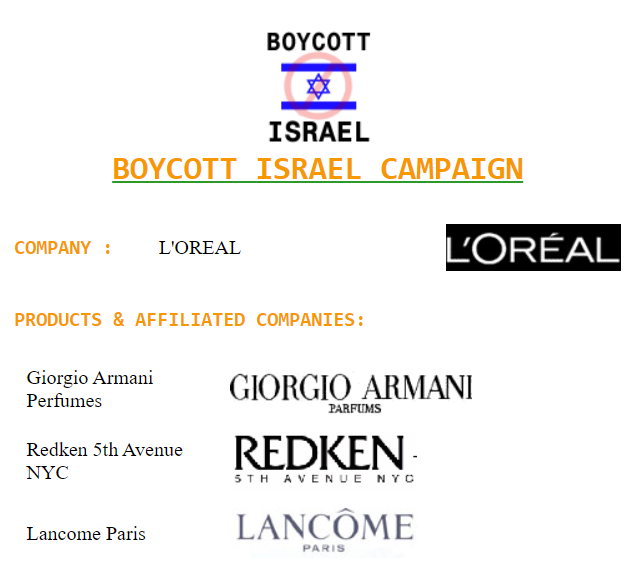
Lancome is not officially listed on the BDS boycott list, but it is included on a website like Thewitness.news that lists companies that are connected to the Israeli occupation.
While may not be explicitly listed on the official boycott list, the website includes this company in connection with the Israeli occupation. Furthermore, the evidence presented below strongly suggests its involvement in supporting Israeli activities against the Palestinian population.
To explore a comprehensive list of companies associated with Israel or with roots originating from the region, follow these simple steps:
- Enter the brand or product name in the designated field.
- Hit enter to commence the search.
- Reveal in-depth insights into the brand’s connections with Israel.
This article delves into Lancome’s involvement in the ongoing Israeli-Palestinian conflict. Additionally, you can refer to our previously published article for an extensive list of well-known companies affiliated with Israel across various sectors such as fast food chains and fashion corporations from around the globe.
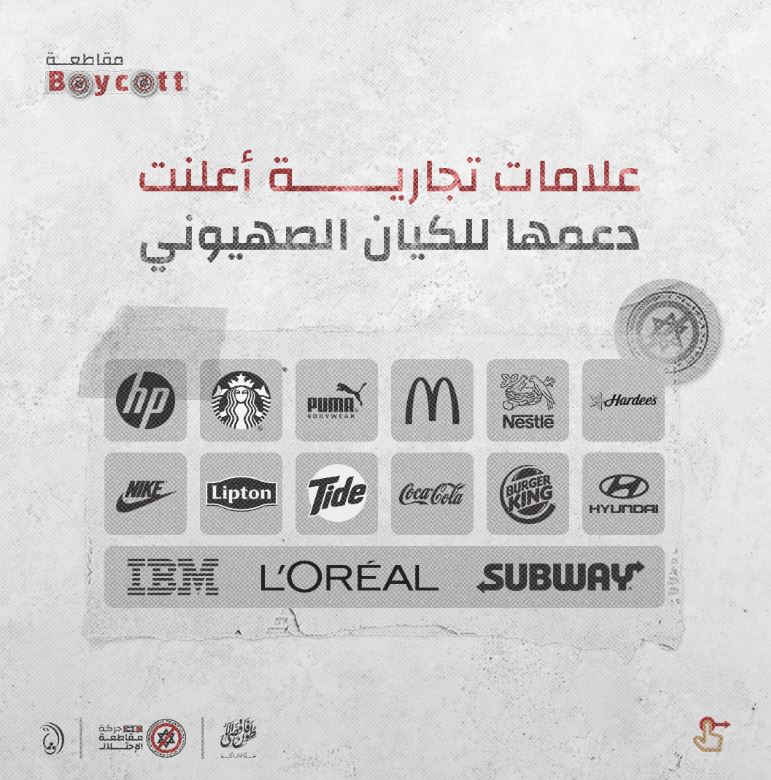
View the complete list of companies and brands affiliated with Israel, along with their latest proofs.
In summary, the comprehensive review above provides a deep insight into the Lancome brand’s association and stance concerning Israel. For a more in-depth exploration of this topic, platforms like whoprofits.org offer detailed information on companies benefitting from the Israeli occupation of Palestine.
Moreover, consulting official documents from the United Nations can offer valuable insights into the matter. This holistic approach ensures a well-informed perspective on the intricate interplay between businesses, geopolitics, and societal issues in the region.